


Vet recommended dog shampoo: a thoughtful guide to choosing well

A vet recommendation can be a useful signal, but it doesn’t tell you on its own whether a shampoo suits your dog. The phrase “vet recommended dog shampoo” may sound reassuring, yet the wording alone won’t explain what informed the recommendation or how the product fits your dog’s skin, coat and bathing routine.
It’s understandable to want a clear answer when labels make different promises and ingredient details can be hard to compare. Start with your dog’s needs, the current product label and any guidance your vet has given you. If your dog has ongoing skin concerns, check with a veterinarian before changing shampoo.
This guide explains what vet-recommended wording does and doesn’t tell you, which product details are useful to compare, and when to involve your vet. Use it to weigh everyday grooming options and identify questions that need professional advice.
Key Takeaways
- Read “vet recommended” as one helpful signal, not a guarantee that a shampoo will suit every dog.
- Use the current label to compare intended use, ingredient information and directions with your dog’s needs.
- Assess vet recommended dog shampoo options by the scope of the recommendation and the available details, rather than relying on the phrase alone.
- Introduce a new shampoo according to its directions, then observe your dog during and after grooming.
- Consider where OSCAR & ZO Skin & Coat Shampoo may fit in an everyday grooming routine, and when to discuss product choices with your vet.
What does vet-recommended dog shampoo mean when you are choosing a product?
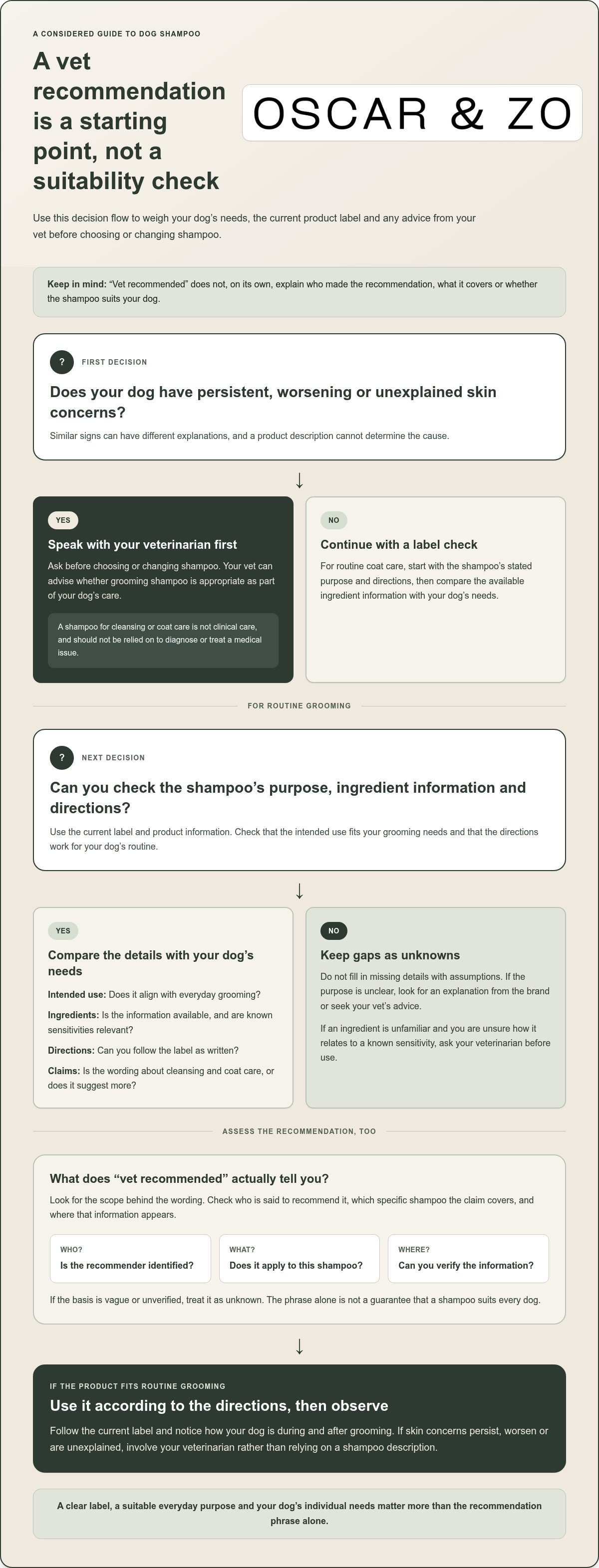
A vet-recommended shampoo is described as recommended by a veterinarian, but the phrase alone doesn’t tell you who made the recommendation, what it covers or whether the product suits your dog. Treat it as a prompt to look closer, not as a guarantee of universal professional endorsement or a promise that every dog will respond in the same way.
Dog shampoos can be made for different grooming purposes. Some are intended for everyday cleansing and coat care, while others have specific uses. A general overview of different types of pet shampoos can help explain this range, but it can’t establish whether a particular product is right for your dog. Keep routine grooming separate from veterinary diagnosis and treatment.
What should a vet-recommended claim tell you?
Look for the scope behind the wording. Who made the recommendation, and does it apply to the specific shampoo, its general approach or a broader range of products? A clear explanation gives you something to assess. If the wording is vague, check the product information and current label rather than treating the claim as a substitute for those details.
If the basis for a recommendation isn’t explained, you can’t reliably infer who was involved, what they reviewed or which dogs the advice may suit. The phrase “vet recommended dog shampoo” is most useful when considered alongside the product’s stated purpose, available label information and your dog’s individual needs.
When should shampoo selection involve your vet?
For routine coat care, start with the product’s intended use and directions. If your dog has persistent, worsening or unexplained skin concerns, ask your veterinarian before choosing or changing shampoo. A product description can’t determine the cause of a concern, and similar signs may have different explanations.
Your vet can advise whether grooming shampoo is appropriate as part of your dog’s care. A shampoo intended for cleansing or coat care isn’t clinical care and shouldn’t be relied on to diagnose or treat a medical issue. If you’re unsure, take the product label or details to your vet. This helps keep everyday grooming in its proper place.
Which dog shampoo details help you assess skin and coat suitability?
Start with the current product label, not just the front-of-pack wording. Check what the shampoo is intended for, the ingredient information provided and the directions for use. Then consider your dog’s known sensitivities, coat and usual bathing routine. A formula described as suitable for a particular need may still not be the right match for every dog.
How do you read a dog shampoo label?
Look across the label and product information for the ingredient list, stated purpose and directions. A familiar ingredient doesn’t, by itself, show how the whole formula may suit your dog or how well it will work. If an ingredient is unfamiliar and you’re unsure about its relevance to a known sensitivity, ask your veterinarian before using the product.
Directions matter, too. They show how the product is meant to be used, rather than leaving you to make assumptions based on another shampoo. Check the current label before deciding, as product information can change. The FDA’s overview of pet product regulation offers general context, but it isn’t a guide to Australian requirements.
Which shampoo claims deserve a closer look?
Words such as “gentle”, “nourishing” and “vet-recommended” can sound reassuring, but consider what they refer to and what information supports them. Does the wording describe cleansing, coat feel or appearance, or suggest a health outcome? These are different kinds of claims. A description of a soft-looking coat, for example, doesn’t establish that a shampoo is suitable for a dog with a particular skin concern.
Natural-sounding language isn’t a shortcut to suitability. Compare the claims with the information available and your dog’s needs, rather than assuming that a particular ingredient or phrase guarantees a result. If the product’s stated purpose is unclear, look for an explanation from the brand or seek your vet’s advice.
- Intended use: Does it align with your everyday grooming needs?
- Ingredients: Is the information available, and are any known sensitivities relevant?
- Directions: Can you follow the label as written within your dog’s routine?
- Claims: Is the wording about cleansing and coat care, or does it imply more?
These checks can help you assess any vet recommended dog shampoo with care. To see how OSCAR & ZO presents its everyday grooming approach, review its Skin & Coat Shampoo product information and current label.
How to compare vet-recommended dog shampoos before choosing
A side-by-side comparison turns reassuring product language into practical questions. Compare the same details for each shampoo, then weigh them against your dog’s coat, known sensitivities and bathing routine. If a label or brand page doesn’t provide an answer, record it as unknown rather than filling the gap with an assumption.
What belongs in a dog shampoo comparison?
Use the current label and product information to compare purpose, directions and available ingredient details. Include a vet recommendation only when you can verify who made it and what it applies to. Keep cleansing and coat-care descriptions separate from health claims. A grooming description doesn’t establish that a product is veterinary treatment.
| Compare | What to record | How to weigh it |
|---|---|---|
| Recommendation scope | Who is said to recommend it, what product the claim covers, and where that information appears. Mark unverified details as unknown. | A specific, explained claim gives more context than general wording, but doesn’t guarantee the shampoo will suit your dog. |
| Intended use | The purpose stated on the label or product page. | Consider whether it fits your everyday grooming needs and your dog’s coat. |
| Directions | The instructions on the current label. | Check that you can follow them as written within your dog’s routine. |
| Available label information | Ingredient details and any relevant suitability information provided. | Compare this with known sensitivities. Missing details remain unknown, not proof of suitability or unsuitability. |
Does vet-recommended mean the shampoo suits every dog?
No. Dogs have different coat needs, sensitivities and grooming routines, so a recommendation isn’t a guarantee of a particular result for your dog. A product that suits one dog may not be right for another. If your dog has ongoing or unexplained skin concerns, seek veterinary advice before making a change.
Use your comparison to identify what you know, what matters to your dog and what still needs checking. If you can’t find the directions or the recommendation’s scope, don’t treat those details as settled. You can also explore Oscar & Zo Skin & Coat Shampoo and review its current product information as part of your everyday grooming research.
How to introduce a new dog shampoo with care
A considered introduction starts before bath time. Read the current label and follow its directions rather than borrowing instructions from another product. This keeps your routine grounded in the shampoo’s intended use and helps you notice how your dog responds, without assuming every product should be used in the same way.
What should you check before bath time?
Check the label for the product’s purpose, directions and any stated precautions. Consider your dog’s known sensitivities and whether the shampoo fits their coat and regular grooming routine. If you’re unsure about suitability, ask your veterinarian before use.
Keep the experience steady and familiar where you can. Avoid introducing several unfamiliar grooming products at once, so it’s easier to identify what may have contributed if you notice a change. Use the shampoo only as directed. Don’t add your own dilution or application steps unless the label or your vet advises them.
- Read: Check the current directions, intended use and precautions.
- Consider: Take known sensitivities and your dog’s usual routine into account.
- Use: Follow the product label rather than applying a universal bathing rule.
- Observe: Pay attention to your dog during grooming and afterwards.
Notice whether your dog seems comfortable during the wash and watch for changes afterwards. If you see a concerning reaction, stop using the product and contact your veterinarian for advice. A vet recommended dog shampoo is still a grooming product, and a recommendation doesn’t guarantee a particular response for your dog.
When is a skin concern a reason to call the vet?
Seek veterinary advice if a skin concern is persistent, worsening or unexplained, or if you’re unsure whether grooming is appropriate. A product description can’t determine the cause, and shampoo alone shouldn’t be relied on to resolve a medical issue. Your vet can advise whether to continue ordinary grooming or take another approach.
Keep the product label or its details handy if you contact the clinic. Sharing what you used and when gives your vet useful context without asking you to interpret symptoms yourself. If you’re considering an everyday grooming option, you can review Oscar & Zo Skin & Coat Shampoo details and check its current directions before deciding whether it fits your dog’s routine.
Where OSCAR & ZO Skin & Coat Shampoo fits in a considered routine
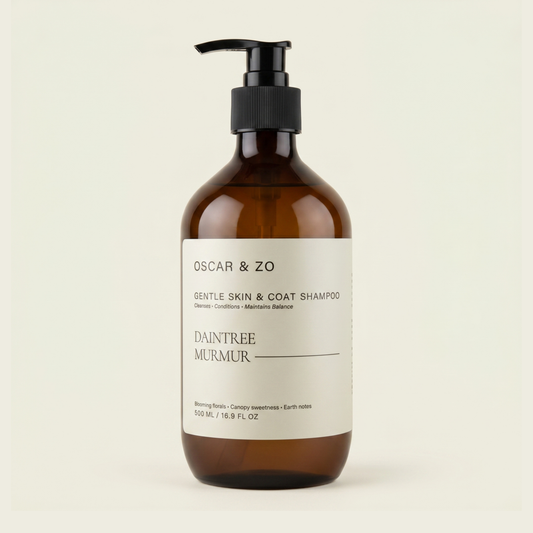
After comparing a shampoo’s purpose, directions and available label information, consider whether it may suit your dog’s everyday grooming routine. OSCAR & ZO Skin & Coat Shampoo is a product offered by the Australian independent pet-care brand. The brand describes its grooming products as vet-recommended, but that wording doesn’t replace checking specific product information or considering your dog’s individual needs.
What is OSCAR & ZO’s approach to everyday coat care?
OSCAR & ZO describes its products as thoughtfully crafted for sensitive skin and coats, with cleansing without stripping so the coat is left soft and fresh. This expresses the brand’s approach to everyday care; it isn’t a promise of a particular result or a claim that the shampoo treats a skin condition. That distinction helps keep the product in its place as part of a grooming routine, not veterinary care.
A vet recommended dog shampoo is one option to assess, not an automatic match for every dog. A recommendation doesn’t tell you by itself whether a product aligns with your dog’s coat, known sensitivities or bathing routine. The current product label and information remain important to your decision.
How can you decide whether to explore the shampoo?
Before choosing, consider a few practical questions:
- Does the stated purpose fit the kind of everyday grooming you’re looking for?
- Have you checked the current label for its directions and available suitability information?
- Does your dog have known sensitivities or an ongoing skin concern that needs veterinary guidance?
If you’re managing a persistent, worsening or unexplained concern, speak with your veterinarian before changing your dog’s grooming routine. A product page can’t assess the cause, and shampoo shouldn’t take the place of professional advice.
If the product appears relevant to your everyday grooming needs, take a calm next step: explore OSCAR & ZO and review the current information for Skin & Coat Shampoo. Check its label and directions before use, and ask your vet if you’re uncertain about suitability. This keeps your choice grounded in your dog’s needs, the product details available and professional guidance when it matters.
Choose with care, then make it part of your routine
A vet recommendation can help guide your choice, but it’s only one part of the picture. Compare the shampoo’s intended use, current label and directions with your dog’s coat, known sensitivities and grooming routine. If skin concerns are persistent, worsening or unexplained, ask your vet before changing products.
OSCAR & ZO is an Australian independent pet-care brand that describes its grooming products as vet-recommended. Its Skin & Coat Shampoo is an option to consider for everyday grooming, not veterinary treatment. As with any vet recommended dog shampoo, review the current product information and consider whether it fits your dog’s individual needs.
To learn more, explore OSCAR & ZO Skin & Coat Shampoo and read the available product details. Check its label and directions before use, and ask your vet if you’re uncertain about suitability.
Frequently asked questions
Is vet-recommended dog shampoo better than regular dog shampoo?
Not automatically. A vet recommendation can offer useful context, but it doesn’t show on its own what the recommendation covers or whether the shampoo suits your dog. Review the current label, including the intended use and directions, and consider your dog’s coat, known sensitivities and bathing routine. If your dog has an ongoing skin concern, ask your veterinarian which type of product may be suitable before changing the routine.
Can vet-recommended dog shampoo treat itchy skin?
Not based on that wording alone. “Vet-recommended” doesn’t mean a shampoo is a medical treatment, and itching can have different causes. If your dog is persistently itchy, uncomfortable or showing worsening skin changes, seek veterinary advice rather than relying on shampoo alone. Follow the product label and ask your vet whether it’s suitable for your dog. A grooming product shouldn’t take the place of professional assessment or care.
What should I look for in a vet-recommended dog shampoo?
Check the intended use, available ingredient information, directions and explanation of the recommendation. Then consider how those details align with your dog’s coat, known sensitivities and bathing routine. Don’t assume that a familiar ingredient or words such as “natural” guarantee suitability. If the product information leaves you unsure, or your dog has a skin concern, discuss the choice with your veterinarian before use.
How often should I wash my dog with shampoo?
There isn’t one bathing schedule that suits every dog. Coat type, lifestyle, skin needs and the shampoo’s directions can all affect what’s appropriate. Follow the current label, and ask your vet for guidance if your dog has sensitive skin or an ongoing concern. Avoid changing how often you bathe your dog to try to address a skin problem without professional advice, as shampoo may not resolve its cause.
Can I use human shampoo on my dog?
Choose a shampoo intended for dogs rather than assuming a product made for people is suitable. Follow the dog shampoo’s label directions, and check with your veterinarian before introducing a new product if your dog has known sensitivities. If you’ve already used another shampoo and notice discomfort or a reaction, contact your veterinary clinic for advice. Keep the product packaging or details available to share with them.
What should I do if my dog reacts to a new shampoo?
Stop using the shampoo and contact your vet for advice, particularly if the reaction is severe, persistent or worsening. Keep the packaging or ingredient information handy so you can tell the clinic which product you used. Don’t apply additional grooming products to mask the concern, and don’t assume that changing your bathing routine will resolve it. Follow your veterinarian’s guidance on what to do next.
Does vet-recommended mean a shampoo is suitable for every dog?
No. Dogs can have different sensitivities, coat needs and health histories, so a recommendation can’t guarantee that a product will suit every individual dog. Read the current label and follow its directions. If you’re uncertain about your dog’s circumstances, ask your veterinarian before use. Treat “vet-recommended” as a reason to look more closely at the product, not as a universal guarantee or substitute for advice tailored to your dog.