




Preparing Your Dog for Visitors to Help Them Feel at Ease

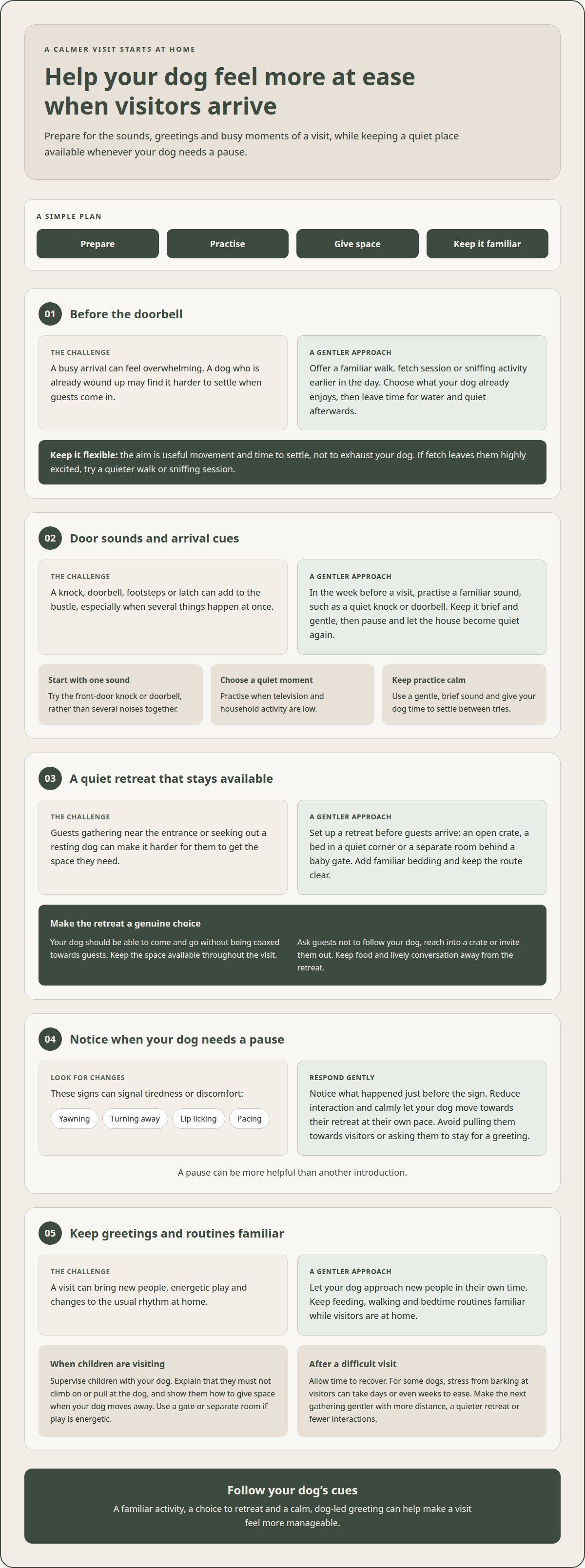
A calm visit begins before the doorbell rings. Getting your dog ready for visitors can start with a walk or sniffing session earlier in the day, quiet practice with familiar sounds and a comfortable place to retreat. Keep greetings gentle and your dog’s usual routine steady.
It’s natural to hope your dog will welcome guests as easily as you do, but a busy arrival can feel overwhelming for some dogs. A little preparation can make home feel more familiar and give your dog space to approach at their own pace.
This guide shares practical ways to prepare, from practising door sounds and planning introductions to recognising when your dog needs a break. You’ll also learn how to keep routines predictable, helping visits feel calmer for everyone at home.
Key Takeaways
- Offer your dog a walk, a game of fetch or a sniffing session earlier in the day to help them settle before guests arrive.
- Practise quiet door knocks or familiar visitor sounds at a gentle volume, keeping the experience calm and gradual.
- Let your dog approach new people in their own time, with a quiet retreat available whenever they need space.
- Watch for signs of tiredness or discomfort, such as yawning, turning away, lip licking or pacing, and guide your dog to their safe space.
- Keep feeding, walking and bedtime routines familiar while visitors are at home.
Downtime and stress signals
- Choose a retreat before visitors arrive. An open crate, a bed in a quiet corner or a separate room behind a baby gate can provide space. Set it up with familiar bedding and keep the route clear. Your dog should be able to come and go without being coaxed towards guests.
- Watch for early signs that your dog needs a pause. Yawning, turning away, lip licking and pacing can signal tiredness or discomfort. Notice what happens just before each sign. For example, your dog may start pacing when several people gather near the entrance. Treat these changes as a cue to reduce interaction.
- Guide your dog towards their retreat when these signs appear. Use a calm voice and let them move at their own pace. Avoid pulling them towards visitors or asking them to stay for a greeting. When getting your dog ready for visitors, remember that a pause can be more helpful than another introduction.
- Keep the safe space available throughout the visit. A nervous dog can stay somewhere they feel secure for the entire gathering. Ask guests not to enter the area to seek them out. For example, a baby gate can separate a quiet room from the living area, giving your dog space to rest.
- Let guests know how to respect your dog’s space. Ask them not to reach into a crate, follow your dog or invite them out. A dog who chooses to rest is communicating clearly. Keep food and lively conversation away from the retreat, so it stays calm while people move around.
- Supervise children whenever they are with your dog. Explain that they must not climb on or pull at the dog, and show them how to give space when your dog moves away. If children are playing energetically, use a gate or separate room to give your dog a quieter place to settle.
- Allow time to recover after a difficult visit. For some dogs, stress from barking at visitors can take days or even weeks to ease. Make the next gathering gentler with more distance, a quieter retreat or fewer interactions. Getting your dog ready for visitors also means allowing rest afterwards, rather than trying another greeting straight away.
Exercise before guests arrive
- Plan a familiar activity earlier in the day. A walk, fetch session or sniffing game can help your dog settle before visitors arrive. Choose something they already enjoy instead of introducing a new challenge. For example, take a familiar route and let your dog explore at a comfortable pace. Familiar movement keeps preparation simple and predictable.
- Match the activity to your dog’s usual routine. A dog who enjoys sniffing might prefer exploring grass and garden edges. A dog who likes retrieving may enjoy a familiar game of fetch. Follow your dog’s known preferences instead of assuming every dog needs the same exercise before company arrives.
- Keep the activity calm enough to leave room for rest. The aim is to offer useful movement earlier in the day, not to exhaust your dog. If fetch leaves your dog highly excited, choose a quiet walk or sniffing session instead. Notice how they respond, then give them time to settle at home.
- Choose a walk that suits the day’s conditions. In warm Australian weather, plan for a cooler part of the day and carry water for your dog. Keep to a familiar route and avoid busy stops if crowds make your dog alert. A steady outing offers movement and exploration without extra surprises.
- Prepare for the activity before the household gets busy. Put the lead, harness or favourite toy near the door, then leave time afterwards for water and quiet. For example, finish a morning walk before setting the table or arranging the guest room. This separates exercise from the bustle of visitors arriving.
- Notice whether activity leaves your dog settled or more wound up. After fetch, some dogs may need a quiet pause before doorbell practice or greetings begin. If your dog keeps racing around, try a slower sniffing activity next time. Choose the type and pace that best support calm behaviour at home.
- Keep expectations flexible for each visit. A short walk may suit one dog, while another prefers a gentle sniff around the garden. Use familiar activities and observe your dog’s response. If they seem tired, uncomfortable or unusually restless, end the outing and let them rest before guests arrive.
Exercise can support preparation for rest and greetings, but it doesn’t have to do all the work of helping your dog settle. In the days before guests arrive, encourage your dog to relax in a safe space. After a familiar outing, guide them there while the house is quiet, and keep it available as a retreat. Practise greeting routines for a few minutes each day before visitors arrive. Keep sessions brief and familiar, so your dog can learn what to expect without making arrival practice another demanding activity.
Owners can also practise their visitor-preparation plan a week before the visit, including when to offer exercise and when to make the safe space available. Ask visitors to give a few minutes' notice before arriving, so you can prepare your dog’s environment before the door opens. That preparation can help whether the household expects one or twenty guests: the outing can still be familiar, and your dog can have a calm place to settle. Adjust the plan to your dog’s response, leaving time for rest after activity and before greetings.
Gradually introducing visitor sounds
- Choose the sounds your dog will hear at home. Start with the front-door knock or doorbell, rather than several noises together. Include familiar arrival sounds, such as footsteps on the path or the latch turning. Practise during a quiet part of the day, when the television and household activity are low.
- Practise a quiet knock or ring the bell a few times in the week before your guests arrive. Keep each sound gentle and brief. You can knock yourself or ask someone in the household to ring while you stay beside your dog. Then pause and let the house become quiet again.
- Pair a recording with a relaxed moment. Play a recording of a knock or doorbell at low volume while your dog is resting. Keep it soft enough for them to continue settling. For example, play it while they lie on their bed, rather than turning it up to compete with active play.
- Observe your dog’s response after each sound. Notice whether they remain settled, turn towards the noise or move away. If the recording interrupts their rest, lower the volume or pause the practice. Try a quieter sound later instead of repeating a louder version.
- Keep each practice session simple and consistent. Use the same sound, volume and calm setting before introducing another visitor noise. For example, practise the knock first, then try a recording of footsteps on the path another time. This makes it easier to identify which sound needs gentler preparation.
- Practise sounds separately from real arrivals. A visitor at the door brings movement, voices and a greeting, not just a knock. Keep sound practice focused on listening, then let your dog return to resting. In the week before guests arrive, a few quiet repetitions can make familiar household sounds less surprising.
Keep the recording under your control, so you can stop it if your dog seems unsure or the sound interrupts their relaxation. There’s no need to raise the volume to make it more realistic. Let your dog hear the sound gently while they’re at ease, then give them enough quiet to settle again. If you’re unsure whether the sound feels comfortable, lower the volume and keep practice brief.
Let your dog’s comfort guide whether to continue. A relaxed posture and a return to resting are useful cues to proceed gently. If your dog hesitates or moves away, pause rather than coaxing them closer to the sound. You can try again another time at a lower volume, keeping the recording separate from an actual visitor’s arrival. This lets you prepare calmly without asking your dog to manage a knock, voices and a greeting all at once.
Helping wary or excitable dogs meet people
- Practise a simple greeting routine before the visit. Spend a few minutes each day having one person approach the door and enter calmly. Keep your dog at a comfortable distance and reward settled behaviour. A lead or baby gate can help manage the entrance. Don’t pull your dog towards someone they don’t know.
- Choose a reward your dog already enjoys and can eat comfortably. Offer a small piece of familiar food when they remain settled or choose to approach. Practise around tempting food before visitors arrive. Keep rewards separate from guests’ plates, and ask visitors not to offer food without your permission.
- Use a lead, baby gate, open crate or separate room to manage arrivals. Choose an option that gives your dog space and prevents an excited rush through the doorway. Keep the lead loose and supervise closely. An open crate or quiet room should be a retreat, not a place to force a greeting.
- Let your dog decide whether to meet each visitor. Some dogs may be ready after 10 minutes, while others need longer. A dog may need a couple of hours or multiple visits before feeling ready. Reintroduce them by allowing them to approach freely, then increase contact only while they stay comfortable.
- Keep greetings low-pressure for a wary dog. Ask visitors to avoid direct eye contact, leaning over, reaching out or facing the dog head-on. Don’t ask anyone to touch or coax a fearful dog. If your dog stays in their safe space, let them remain there throughout the visit.
- Set clear safety expectations for everyone at home. Children should always be supervised around dogs and must not climb on or pull at them. Watch carefully when visitors stand or move between rooms, as some dogs may nip at unfamiliar heels. Use a barrier and calmly create distance if needed.
- Adjust the plan to your dog’s response, not a fixed schedule. If they move away, pause the greeting and give them space. Try again later only if they choose to return. A relaxed visit may mean no face-to-face meeting at all, especially if your dog remains unsure around unfamiliar people.
Keeping routines predictable
- Keep your dog’s usual feeding times steady during visits. Serve meals in their familiar spot, away from the busiest guest area. For example, if guests gather in the kitchen, feed your dog in their usual quiet space. A familiar meal setting avoids adding another change to an already different day.
- Keep walks close to your dog’s usual routine. If visitors arrive in the afternoon, organise the regular outing beforehand where practical. Avoid shifting every activity around the guest schedule. Familiar timing and routes give your dog recognisable parts of the day, even while people move through the home.
- Protect your dog’s usual bedtime routine. Keep their evening settling cues, sleeping place and household rhythm familiar. If guests are still chatting, let your dog rest in their usual sleeping area or another quiet space. Don’t keep them awake or expect them to join the gathering simply because people are still in the living room.
- Ask visitors to give you a few minutes’ notice before arriving. This gives you time to prepare the entrance, settle your dog in their chosen space and put away tempting food. For example, you can close a baby gate before opening the front door, rather than managing everything as guests step inside.
- Keep the arrival routine consistent from guest to guest. Decide where your dog will be, who will open the door and how visitors should enter. Share the plan before anyone arrives. A familiar sequence, such as your dog resting behind a gate while guests come in, can reduce sudden movement.
- Make a simple household plan for busy moments. Agree who will supervise your dog and who will greet visitors. If someone needs to carry bags from the car, settle your dog in their familiar area first. This avoids leaving the front door open while several people move through the entrance.
- Keep household cues clear during the visit. Use the same words and calm tone you normally use when settling your dog or moving between rooms. Ask guests not to call your dog repeatedly. If your dog rests on their bed, for instance, let that familiar cue mean quiet time, not an invitation to socialise.
- Return to the usual routine after guests leave. Offer the next meal, walk and bedtime as normal, rather than filling the evening with extra activity. Notice whether your dog settles into familiar habits. If the visit changed their day, returning calmly to ordinary patterns gives them predictable cues again.
Oscar & Zo: Skin & Coat Shampoo
Oscar & Zo Skin & Coat Shampoo can be part of your dog’s grooming routine before visitors arrive. Choose a calm moment for washing, rather than adding grooming to the busy arrival period. Afterwards, give your dog time to settle in familiar surroundings, with their usual bed and routine nearby.
A bath is optional, not a requirement for a comfortable visit. Keep your dog’s preferences in mind, especially if washing tends to unsettle them. A gentle, familiar grooming ritual can help you care for their coat while keeping the focus on their comfort.
For a thoughtful addition to your dog’s care routine, visit oscarandzo.com.au.
Make your next visit feel more familiar
Each gathering offers a chance to learn what helps your dog feel settled. Notice which moments feel easiest, where your dog chooses to rest and how they respond to new people. Use those observations to shape your next plan, keeping what suits your dog and adjusting anything that feels too busy.
Getting your dog ready for visitors can also include a gentle grooming ritual, separate from the excitement of arrivals. Oscar & Zo offers Pet Fragrance and Ritual Sets as part of its pet care range. Choose familiar care that feels comfortable for your dog, rather than introducing new experiences on the day.
For a considered addition to your dog’s routine, explore Oscar & Zo’s pet care range. With thoughtful preparation and room to take things at your dog’s pace, you can create a more comfortable welcome for every member of the household.