

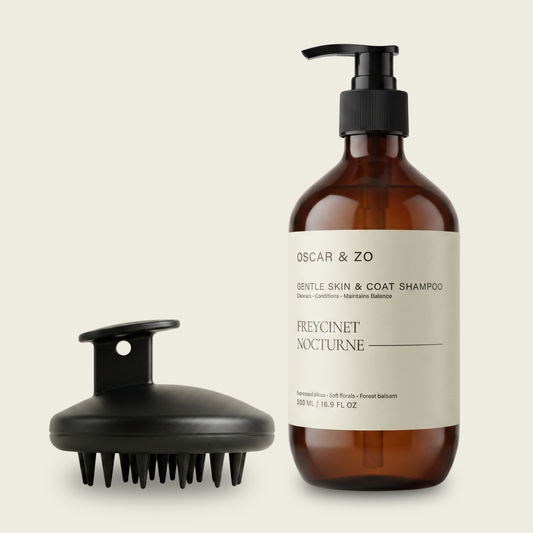

Pet grooming tools Australia: a thoughtful buying guide

The best grooming kit may be the one with fewer tools. If you’re comparing pet grooming tools in Australia, start by asking what you need to do at home. A brush for routine coat care, a comb for checking a smaller area and a nail-care tool each serve a different purpose. Choosing for the task, your pet’s coat and their comfort can help you avoid buying items that won’t suit your routine.
That choice is personal. A tool that works well for one coat or grooming task may not suit another, and a calm routine depends on your pet’s comfort as much as the result. Consider how the tool feels in your hand and how your pet responds when you introduce it.
This guide explains what common grooming tool categories are used for and how to compare them. You’ll find practical points to consider when looking at coat type, purpose, handling and cleaning, along with signs that it’s time to pause. The aim is a considered home kit built around the care you can carry out gently and comfortably.
Key Takeaways
- Choose tools for the grooming task, your pet’s coat and what feels comfortable for them.
- Compare pet grooming tools in Australia by category, purpose and ease of handling.
- Brushes, combs and nail-care tools serve different everyday grooming needs.
- Before buying, consider coat suitability, comfortable handling and how straightforward the tool is to clean.
- Build a home grooming kit around tools you have a clear reason to use and can handle gently.
Pet grooming tools in Australia: start with the care your pet needs
Choosing pet grooming tools in Australia can feel unclear when each item seems designed for a different job. Start with the care your pet needs at home rather than the size of the range. Think about their coat, the task you want to do, how they respond to handling, and whether you can use and clean the tool comfortably.
These details help narrow the choice. A tool that looks appealing or is popular with other pet parents may not suit your pet’s coat or your routine. Begin with a familiar grooming task and consider what would make it more comfortable and manageable for both of you.
What counts as a pet grooming tool?
Pet grooming tools are items used to carry out a grooming task. Brushes and combs are used for coat care, while nail-care tools are intended for a separate part of routine maintenance. Shampoos and pet fragrances are grooming products, not tools, and professional grooming services are a different type of care. Each has its own place in a pet’s routine.
This distinction makes it easier to shop with a purpose. Look at what a tool is designed to do, then consider whether that task belongs in your routine. For background on the range of dog grooming practices and tools, you can explore how grooming tasks and equipment vary. Then bring the decision back to your pet: what do you need to do, and how can you do it comfortably?
Which grooming tasks happen at home?
Home grooming may include regular coat maintenance, such as brushing or combing, as well as occasional tasks like nail care. The right balance depends on your pet and what you feel comfortable doing. Notice which tasks fit calmly into your routine and which ones your pet finds difficult. You don’t need to take on every grooming task yourself.
Let the task determine the tool. Choose for what you need to do, not for what looks most appealing.
Before buying, picture the task from start to finish. Where will you groom your pet? Can you hold the tool steadily while keeping your other hand free to reassure them? Does the task involve handling your pet in a way they find unsettling? These practical questions help you assess comfort as well as usefulness.
A considered home kit can be simple. Start with tools for the care you already provide, then add something only when a clear need arises. If your pet becomes uncomfortable, pause rather than pushing through. If a task feels difficult to manage safely, speak with your veterinarian about an appropriate next step. The aim is a gentle routine suited to your pet, not a large collection or a particular look.
How to choose pet grooming tools for coat type and comfort
A useful way to compare pet grooming tools in Australia is to work through three considerations: the task, your pet’s coat and how comfortable the tool is to handle. This keeps the decision grounded in suitability rather than appearance or trend.
- Start with the task. Decide whether you’re maintaining the coat, checking for tangles or carrying out another grooming task. A clear purpose helps narrow the type of tool to consider.
- Notice the coat. Consider its length and texture, and whether it tends to knot or tangle. These observations can help guide your choice without assuming that one tool suits every pet.
- Assess comfort and handling. Consider whether you can hold and guide the tool gently. Introduce it gradually and pay attention to how your pet responds.
Match the tool to the coat, not a trend
Coats can be short or long, smooth or textured, fine or dense. Some stay relatively free of tangles, while others may knot more readily, particularly where hair rubs together. The grooming task can therefore range from general coat maintenance to gently working through an area that needs attention. Coat type alone does not determine a single tool or technique.
Look at your pet’s coat as it is, rather than relying only on a general breed description or a popular product. If you notice an unexpected change in the coat or skin, seek advice from your veterinarian before changing your grooming routine. For a sense of how grooming needs can differ, Petsense’s overview of grooming services and options provides examples beyond at-home care.
Let your pet’s response guide the choice
Introduce an unfamiliar tool at a time when your pet is settled. Let them see and smell it before bringing it near the coat, then watch their response as you begin. A relaxed posture and willingness to stay nearby can indicate they’re comfortable in that moment. Turning away, moving off, becoming stiff or repeatedly pulling back are reasons to pause, not to insist.
If you notice pressure, tugging or repeated signs of discomfort, stop and reassess your approach. Check that you’re working gently and that the task is suitable to continue at home. If your pet remains unsettled, seek guidance from your veterinarian or a grooming professional. No single tool suits every pet, and comfort can vary between tasks and days.
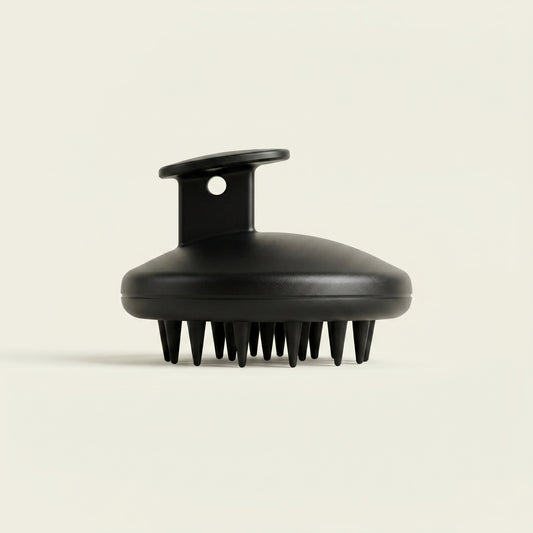
Choose a tool that suits the task and coat, and that you can use gently while your pet remains comfortable. That’s a more dependable starting point than a trend or a large grooming collection. Explore Oscar & Zo grooming tools with these selection points in mind.
Brushes, combs and nail tools: compare grooming tools by task
Once you know which grooming tasks are part of your routine, it becomes easier to compare tool categories. This table is a starting point for pet parents choosing pet grooming tools in Australia. Your pet’s coat, response to handling and your confidence with the task all matter.
| Tool category | Common task | Selection consideration |
|---|---|---|
| Brushes | General coat maintenance | Consider coat length and texture, and whether your pet is comfortable with the sensation. |
| Combs | Working through or checking smaller areas of the coat | Think about where you plan to use it and whether you can guide it gently. |
| Nail-care tools | Occasional nail care | Choose only if the task feels manageable and you can handle the tool calmly. |
Coat tools for routine detangling and tidying
Brushes and combs have related but distinct roles in coat care. A brush is generally used across coat areas, while a comb can help you focus on smaller sections. The right category depends on the coat’s length, texture and tendency to tangle, as well as what your pet tolerates. For more on coat-specific considerations, explore everyday brushes for canine coats.
These descriptions can help narrow your options, but they don’t point to one correct choice for every pet. If your pet pulls away or the coat seems to catch, pause and reconsider how the tool feels in use. Ease of handling matters too: choose a tool you can guide gently rather than one selected for its appearance or popularity.
Tools for occasional grooming tasks
Nail-care tools belong to a different category from brushes and combs because they’re used for a separate, occasional task. Consider whether you feel confident handling the tool and whether your pet can remain settled. If nail care feels difficult, causes concern or is uncomfortable for your pet, pause and seek guidance from a veterinarian or grooming professional.
Use the table to identify a category, then refine your choice by considering the specific task and your pet’s comfort. A tool’s general purpose doesn’t mean it will suit every coat or animal. Choosing with care can keep your home kit focused on tools you have a clear reason to use.
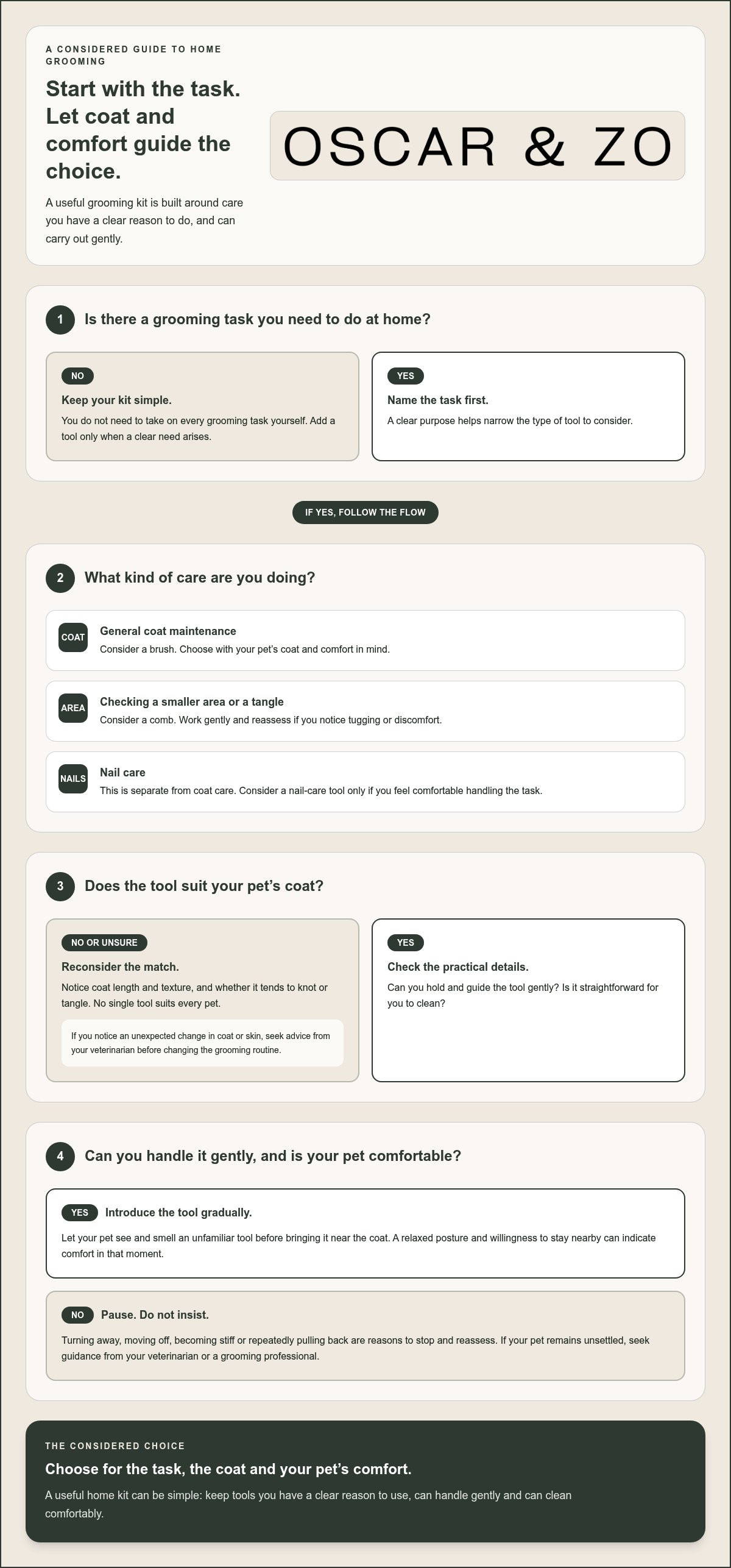
Checklist for buying and caring for pet grooming tools
A little thought before buying can help keep your grooming kit useful, comfortable and easy to manage. Use this checklist when comparing pet grooming tools in Australia, then revisit it if your routine changes. A good choice is one you can use gently and care for without adding unnecessary steps.
A considered checklist before choosing
Before bringing a tool home, consider a few practical questions. They can help you decide whether it belongs in your routine or would simply duplicate something you already have.
- Task: What specific grooming task will this tool help with? Is it something you already do at home?
- Coat suitability: Have you considered your pet’s coat length, texture and tendency to tangle?
- Your pet’s response: How do they react to being handled for this task? Can you introduce the tool calmly and pause if they seem uncomfortable?
- Comfortable handling: Can you hold and guide the tool steadily, without needing to pull or press hard?
- Everyday practicality: Is it straightforward to store and maintain as part of your usual routine?
A tool that meets these considerations is more likely to feel manageable in everyday care. If you’re unsure about a task, or your pet consistently resists handling, pause rather than buying more tools in the hope of making it easier. A veterinarian or grooming professional can help you consider an appropriate next step.
Keeping tools clean and ready to use
Simple upkeep can help keep grooming tools ready for their next use. Follow the care instructions supplied with each tool, as cleaning guidance can differ. After use, remove visible hair and make sure the tool is dry before putting it away. Don’t assume that the same cleaner, soaking method or cleaning routine is suitable for every tool.
Store tools somewhere they’re easy to find and keep tidy between grooming sessions. If a tool is difficult to clean or put away, it may be less practical for your household. Ease of care is part of choosing well, alongside coat suitability and comfortable handling.
Use the checklist as a guide, not a shopping target. A small selection of tools for tasks you can carry out calmly may suit your pet’s routine better than a larger collection. Explore Oscar & Zo grooming tools when you’re ready to choose for your home kit.
Oscar & Zo grooming tools in a thoughtful everyday care ritual
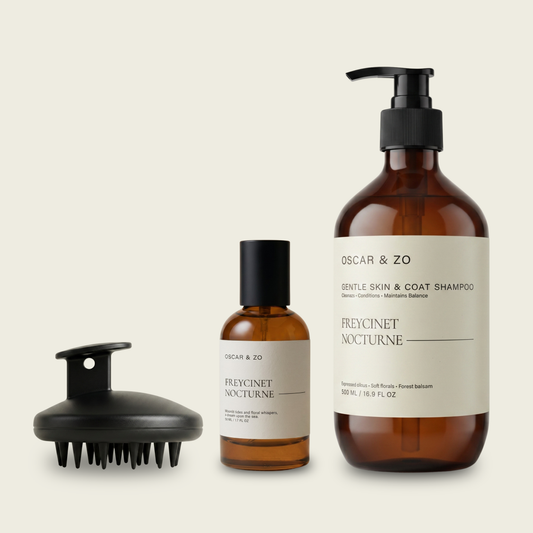
A considered grooming routine doesn’t need to be elaborate. Begin with a simple task your pet is comfortable with and a tool chosen for their needs and your household. Oscar & Zo offers grooming tools as part of its range, guided by the message: “Your pet’s grooming ritual, re-imagined.”
For pet parents comparing pet grooming tools in Australia, the aim isn’t to collect every type of tool. It’s to make everyday care manageable and calm. A familiar, unhurried routine can also give you a chance to notice how your pet responds to handling and pause when they need a break.
A simple ritual, shaped around your pet
Let your pet’s comfort set the pace. Choose a quiet moment, keep the session manageable and stay attentive to whether your pet seems settled. The purpose is everyday care and connection, not achieving a particular appearance or promising a specific coat or health outcome. Your pet’s response can help you decide what feels comfortable to include in the routine.
If you’re considering how individual care steps might sit together, this guide to curated pet grooming sets offers context for thinking about a broader routine. Keep it personal: the most useful ritual is one that fits your pet and feels practical to repeat.
Explore tools alongside gentle coat care
Grooming tools have a different role from washing products. Brushes, combs and other tools are used for particular grooming tasks, while shampoo is used during bathing. Keeping those purposes clear can help you choose what belongs in your routine without treating every grooming product as interchangeable.
If bathing is part of your pet’s care, explore this vet-recommended dog shampoo guidance to consider shampoo separately from tool selection. Pet fragrance is another distinct care product, not a grooming tool, and should be considered on its own terms. Each item has a different purpose, so choose what makes sense for the routine you’re building.
A thoughtful home kit can remain simple: tools for tasks you’re comfortable doing, care products for their separate uses, and enough flexibility to follow your pet’s cues. Explore Oscar & Zo’s grooming tools and choose what fits naturally into your everyday care ritual.
Make your next grooming moment a gentle one
Let your next grooming session be guided by what your pet is comfortable with today. A small, familiar moment of care can help you build a routine at a pace that suits you both, without turning grooming into another task to perfect. The most useful pet grooming tools in Australia are those that feel practical for your household and comfortable for your pet.
Oscar & Zo is an Australian-owned, vet-founded pet care brand, with grooming tools as part of its range. The guiding thought, “Your pet’s grooming ritual, re-imagined,” is an invitation to approach everyday care with patience and intention.
When you’re ready to build your home routine, explore Oscar & Zo grooming tools. Choose for the task, your pet’s coat and their comfort.
Frequently asked questions
Can I use a human hairbrush on my pet?
A human hairbrush isn’t always suitable for a pet’s coat, so a tool designed for pet grooming is generally a more considered choice. Brush designs vary, and one intended for human hair may catch or pull rather than feel comfortable on your pet. When comparing pet grooming tools in Australia, look for a tool intended for your pet’s grooming task and coat, and stop if brushing seems uncomfortable.
Is a grooming glove suitable for every dog or cat?
No, a grooming glove won’t suit every pet. Some may be comfortable with the feel of a hand moving over their coat, while others may dislike the contact or find it unhelpful for their coat or grooming task. If you try one, introduce it calmly and watch your pet’s response. A glove is one category to consider, not a universal replacement for other coat-care tools.
How can I tell if a grooming tool is uncomfortable for my pet?
Look for changes during handling, such as flinching, turning away, trying to leave, vocalising or becoming tense when the tool approaches. A pet that was settled but begins avoiding contact may be signalling that they need a pause. Stop rather than holding them in place to finish. If discomfort continues even with gentle handling, avoid the affected task and ask your veterinarian for advice.
Do pet grooming tools need special care after use?
Follow the care instructions supplied with each tool, as they explain how that particular item should be maintained. Don’t assume that a method suitable for one tool is suitable for another. If the instructions are missing or unclear, avoid trying an unfamiliar cleaning method that could damage the tool. Keeping the care guidance with the item can make it easier to follow next time.
Can I use one grooming tool for all my pets?
Possibly, but don’t assume a tool that suits one pet will suit another. Their coats, grooming tasks and tolerance for handling may differ, even within the same household. A tool used for one pet’s routine coat care may not feel comfortable or be appropriate for another. Consider each pet individually, and clean the tool between uses according to its care directions.
Should I groom my pet if their skin looks irritated?
Avoid brushing or using grooming products on an area that looks irritated until you’ve spoken with your veterinarian. Grooming could cause further discomfort, and appearance alone doesn’t explain what’s happening. If the skin change is new, persists or seems to be bothering your pet, seek veterinary guidance before continuing with that part of the routine. You can still offer calm company without handling the affected area.