



How to Remove Knots from Cat Fur Gently and Safely

A gentle hand is the best place to start. When learning how to remove knots from cat fur, work on a small, loose tangle with your fingers, easing it apart from the ends while supporting the coat near the skin. Don’t tug or cut close to your cat’s skin. If a knot is tight, close to the skin or upsetting your cat, leave it alone and seek help from a vet or experienced groomer.
It’s natural to want to smooth out a knot as soon as you find it, but patience matters more than force. A calm approach can make grooming more comfortable and help you notice when your cat needs a break.
This guide explains how to loosen manageable knots, which tools may help and how to recognise when a tangle is better left to a professional. You’ll also find gentle ways to make regular coat care feel more settled for both of you.
Key Takeaways
- Ease apart only small, loose tangles with your fingers, working from the ends while supporting the coat near the skin.
- Pause if your cat becomes unsettled, and leave tight or skin-close knots for an experienced groomer or your vet.
- Choose grooming tools carefully and use them gently to help make regular coat care more comfortable.
- Use Skin & Coat Shampoo as part of your cat’s bathing routine, not as a substitute for carefully detangling a knot.
How to remove knots from cat fur
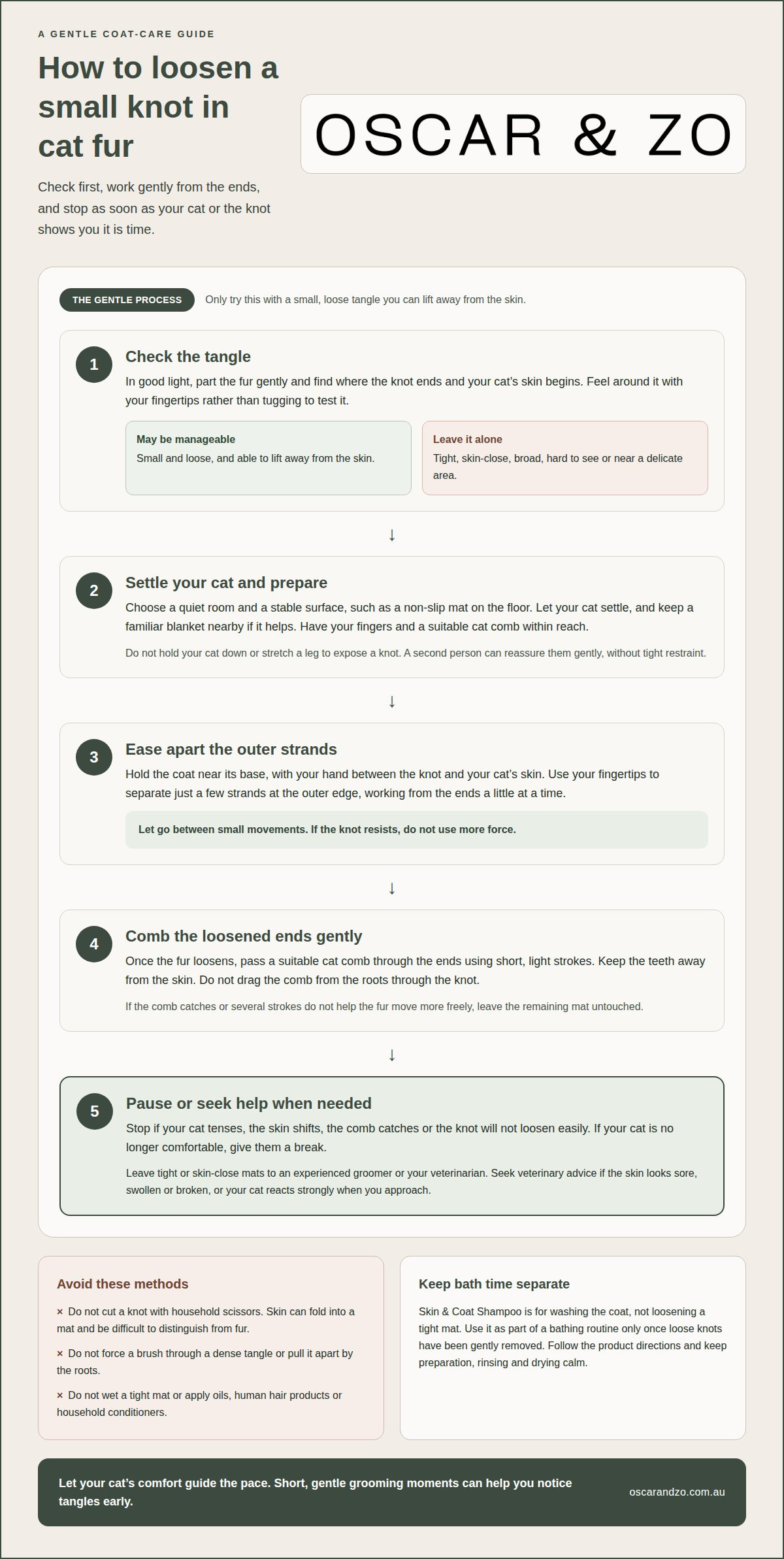
Start by checking whether the tangle is loose enough to separate without pulling. A small knot at the end of a long-haired cat’s coat may ease apart at home. A dense mat that sits flat against the skin needs a different approach. Check the coat in good light, then part the fur gently to see where the knot ends and your cat’s skin begins.
Check the knot before grooming
Use your fingertips to feel around the tangle rather than tugging it to test its strength. If you can lift the knot away from the skin, there may be room to work carefully. If the fur feels tight, the skin moves with it or you can’t see where the mat ends, stop. Pulling can hurt, and a cat may react suddenly if a sensitive area is touched.
Notice where the knot sits. Tangles under the collar, behind the ears, beneath the front legs and around the hindquarters can be difficult to see or reach. A knot close to the eye, ear, anus or another delicate area isn’t a good place to practise detangling. Leave it to an experienced groomer or ask your veterinarian for guidance.
Prepare a calm grooming space
Choose a quiet room with a stable surface, such as a non-slip mat on the floor. Let your cat settle before touching the knot, and keep a familiar blanket nearby if it helps them relax. Have your fingers and a suitable cat comb within reach. Avoid holding your cat down or stretching a leg to expose a tangle.
Work when your cat is calm, not while they’re eating, sleeping deeply or trying to leave. A second person can gently reassure your cat, but shouldn’t restrain them tightly. If your cat flattens their ears, turns to bite, growls or repeatedly pulls away, pause the session. These signs mean grooming is no longer comfortable.
Loosen a small, manageable knot
For a loose tangle, separate a few strands at the outer edge with your fingertips. Keep one hand between the knot and your cat’s skin, so each small movement puts less strain on the roots. Ease apart a little fur at a time, then release it before continuing. If the knot resists, don’t use more force.
- Settle your cat and locate the full edge of the knot.
- Hold the coat near its base, without pinching the skin.
- Use your fingertips to tease apart the outer strands.
- When the fur loosens, pass a cat comb through the ends gently.
- Stop if the comb catches, your cat tenses or the skin shifts.
Keep the comb’s teeth away from the skin and use short, light strokes. Don’t drag the comb from the roots through a knot. This can pull the tangle tighter and catch delicate skin. If several strokes don’t make the fur move more freely, leave the remaining mat untouched.
Know which tools and methods to avoid
Never cut a knot out with household scissors. Cat skin can fold into a mat, making it hard to distinguish fur from skin, even when the knot looks raised. A blade or mat-splitting tool can also catch skin if your cat moves. Don’t force a brush through a dense tangle or pull the knot apart by its roots.
Avoid wetting a tight mat before it’s loosened. Wet fur can be harder to separate, and bathing may make an uncomfortable knot more difficult to handle. Don’t apply oils, human hair products or household conditioners to make the fur slippery. Cats groom themselves, so they may lick products from their coat.
When to leave the knot alone
Arrange help from a groomer or veterinarian if a mat is tight to the skin, covers a broad area or sits near a sensitive body part. Seek veterinary advice if the skin beneath it looks sore, swollen or broken, or if your cat reacts strongly when you approach the area. A professional can assess how to remove it safely, without risking a cut or painful pull.
For recurring tangles, note where they form and check those areas during regular coat care. For example, a long-haired cat that mats behind the ears may need gentle, frequent checks there. Keep each session short and stop while your cat remains settled. Small, comfortable grooming moments are more useful than forcing one difficult session.
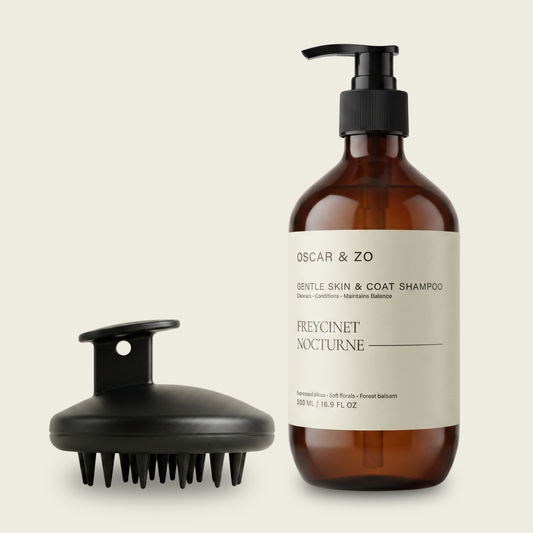
Oscar & Zo: Skin & Coat Shampoo
Oscar & Zo Skin & Coat Shampoo can be part of your cat’s bathing routine once loose knots have been gently removed. Shampoo is for washing the coat, not loosening a tight mat, so don’t bathe your cat while a dense tangle remains close to the skin. If your cat needs a bath, follow the product directions and keep the experience calm, from preparation through rinsing and drying.
For everyday coat care, gentle handling and a suitable grooming tool can help you spot tangles before they become difficult to manage. If a knot is tight, painful or near a sensitive area, leave it to a groomer or speak with your veterinarian rather than trying to deal with it during bath time.
Explore Oscar & Zo’s Skin & Coat Shampoo at oscarandzo.com.au, or contact Oscar & Zo with any questions.
Make coat care a calmer routine
Let your cat’s comfort guide the pace of future grooming. A quiet moment after play, a familiar resting spot or a gentle touch along the coat can help routine checks feel more settled. Notice which areas your cat is comfortable having handled, and keep each interaction calm and brief. This can help you spot changes in the coat and respond before a small tangle becomes harder to manage.
Learning how to remove knots from cat fur also means recognising when to stop. If a knot is close to the skin or your cat shows discomfort, pause and seek guidance from a groomer or veterinarian. For everyday care, choose products and tools that suit your cat’s routine, and follow their directions carefully.
For a gentle next step, contact Oscar & Zo about your cat-care routine. A thoughtful approach, shaped around your cat, can make coat care a more comfortable part of life together.