


How often to wash your dog: A guide for Australian owners

What if the best bathing routine for your dog isn’t a schedule at all? If you’re wondering how often should you wash your dog, conflicting advice can make it hard to know what’s normal or whether frequent baths might affect their skin and coat.
There isn’t one bathing interval that suits every dog. Coat type, time spent outdoors, swimming and rolling in dirt can all influence when a wash is useful. The aim is to keep your dog comfortable and clean without bathing them more often than they need.
This guide explains what to consider when choosing a routine, the everyday signs that a bath may be due and when a skin concern calls for advice from your veterinarian. With a little observation, bath time can become a calmer, more considered part of caring for your dog.
Key Takeaways
- There’s no single answer to how often should you wash your dog; let their individual needs guide the routine.
- Consider your dog’s coat and everyday lifestyle when deciding whether a wash may be useful.
- Notice changes in dirt, odour or coat condition, then choose a response that suits the likely cause.
- Washing out of habit may be unnecessary, so keep your dog’s comfort and coat condition in mind.
- Choose a dog shampoo suited to a considered bathing routine, and speak with your veterinarian about persistent skin or coat changes.
How often should you wash your dog? Start with their needs, not a schedule
There’s no single bathing interval that suits every dog. A wash may be useful when your dog is visibly dirty, their coat no longer feels fresh or their individual care needs call for bathing. A calendar is no substitute for noticing what’s happening with your dog.
A set routine can be convenient, but it may lead to unnecessary baths for a dog who stays clean, or leave a dog who loves muddy adventures waiting for the next date in the diary. Check the coat and consider what your dog has been doing. For a broad overview of dog grooming practices, remember that bathing is just one part of caring for a dog’s coat.
Bathing frequency varies because each dog’s coat, lifestyle, surroundings and skin needs are different. The simplest way to think about how often should you wash your dog is to respond to the individual, not a rule meant to fit all.
Why there is no universal bathing interval
Coat characteristics can affect how dirt collects and how much brushing or general grooming is needed. Activity and environment matter too. A dog who spends time outdoors, swims or explores muddy paths may need cleaning sooner than one whose coat usually stays clean indoors.
Skin needs can also affect the routine. General guidance can help you think through ordinary bathing, but it can’t account for every dog’s circumstances. If your dog has a skin concern, a veterinarian can advise whether bathing should be part of their individual care plan. Avoid treating any suggested interval as a recommendation for every dog.
Everyday signs that a bath may be due
Start with what you can see and feel. Mud, visible dirt or a coat that no longer feels fresh may be practical cues to consider a bath. A new or noticeable smell can be another prompt. Check the coat and think about what your dog has been doing before deciding to wash them.
A smell or change in appearance doesn’t always mean a bath is the answer. If it’s persistent, unusual or accompanied by ongoing changes to the skin or coat, speak with your veterinarian rather than trying to solve it with more frequent washing.
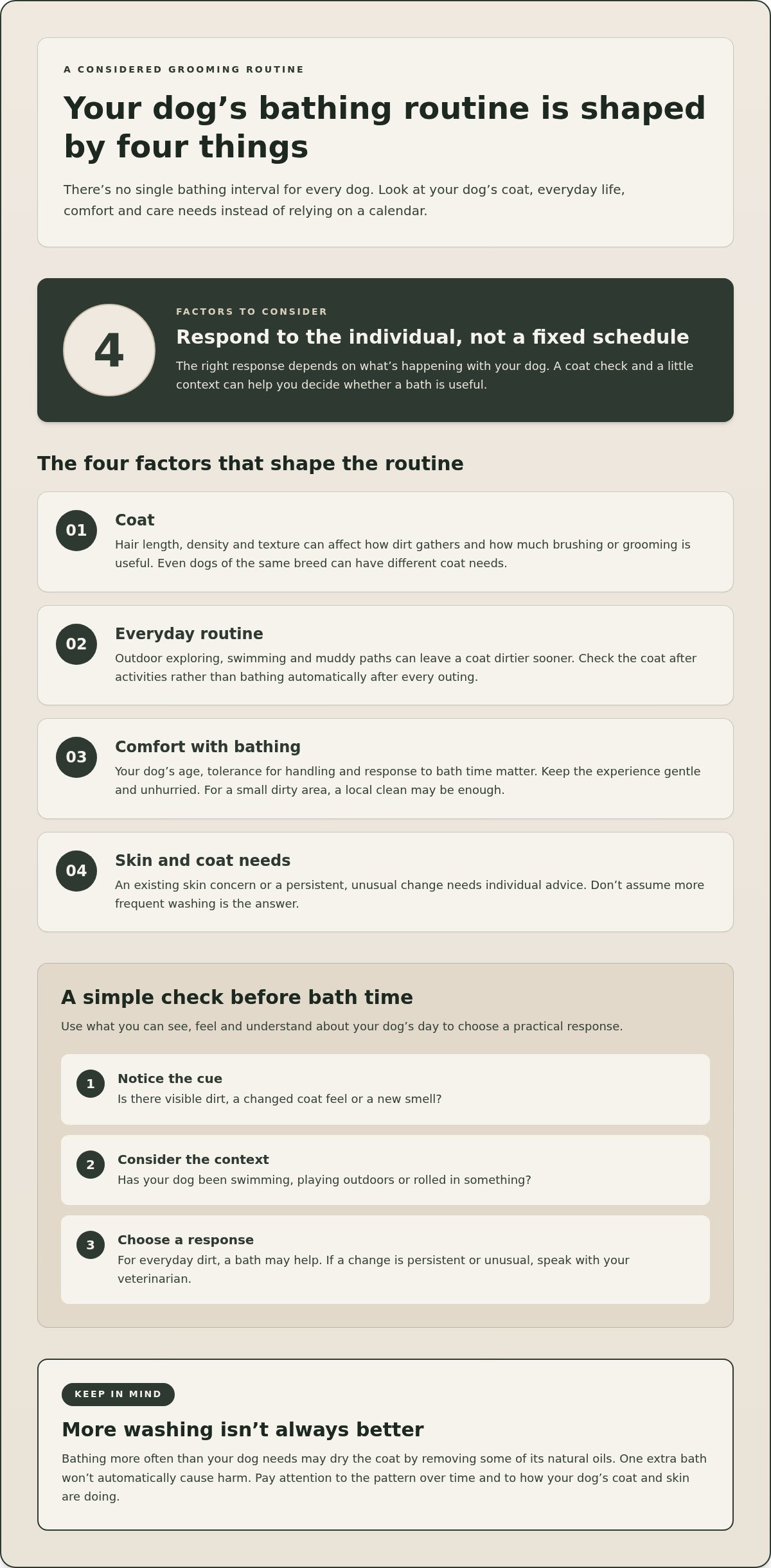
- Notice the cue: Is there visible dirt, a changed coat feel or a new smell?
- Consider the context: Has your dog been swimming, playing outdoors or rolled in something?
- Choose a response: If it seems like everyday dirt, a bath may be useful. For persistent or unusual changes, seek veterinary advice.
This quick check helps keep bathing practical: clean when there’s a reason, and look for guidance when a change seems out of the ordinary.
What changes how often you should wash your dog?
Once you’ve noticed your dog could use a clean, consider what affects their coat and comfort. Hair length, density and texture can influence how easily dirt gathers, while daily activity determines how much the coat is exposed to it. Age, tolerance for bathing and any existing skin concerns matter too.
These factors work together rather than creating a set rule for a particular type of dog. A dog’s bathing routine is shaped by their coat, daily life, comfort and individual care needs.
Coat type, grooming and everyday activity
Some coats feel oilier, while dense or water-repellent coats can hold onto debris differently. These are useful care considerations, not instructions to bathe every dog with a similar coat in the same way. Even dogs of the same breed can have different coats and routines.
Brushing between baths can help lift loose hair and surface dirt, while giving you a chance to notice tangles or debris caught in the coat. It’s one part of grooming, alongside bathing, as described in general dog grooming practices.
Think about your dog’s usual week. One who regularly explores wet grass or dusty tracks may collect dirt sooner than a dog who spends most of their time indoors. Rather than bathing automatically after every outing, check whether the coat is actually dirty and whether brushing or a local clean is enough. Their activity pattern is more useful than a breed label alone.
Puppies, adult dogs and dogs with skin concerns
A puppy’s size, coat and comfort with handling can shape how you approach bath time. Keep the experience gentle and unhurried, and consider whether a full bath is needed or whether you can clean just a small, dirty area. An adult dog’s established tolerance matters too.
If your dog already has a skin concern, don’t assume that more frequent washing is the answer. Ask your veterinarian for advice suited to your dog, including whether bathing should be part of their care. This keeps general grooming guidance separate from individual veterinary advice.
To weigh the factors together, consider:
- Coat: Does it collect dirt, loose hair or tangles easily?
- Routine: What does your dog do outdoors, and how clean does the coat stay between activities?
- Comfort: How does your dog respond to handling and bathing?
- Skin: Is there an existing concern that needs veterinary guidance?
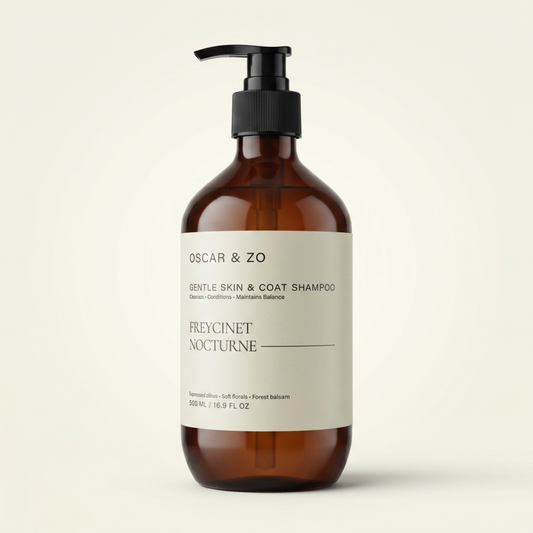
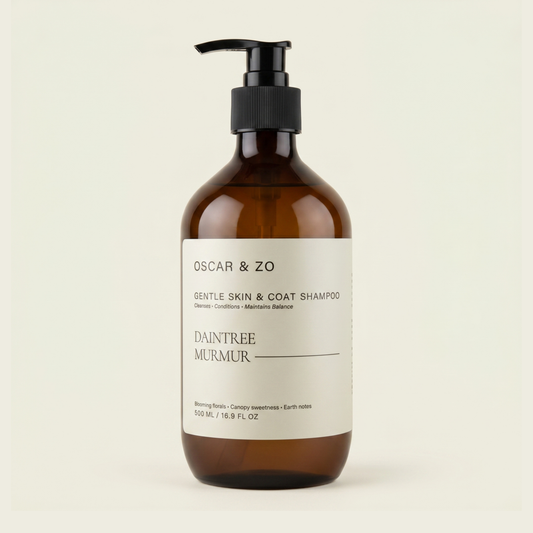
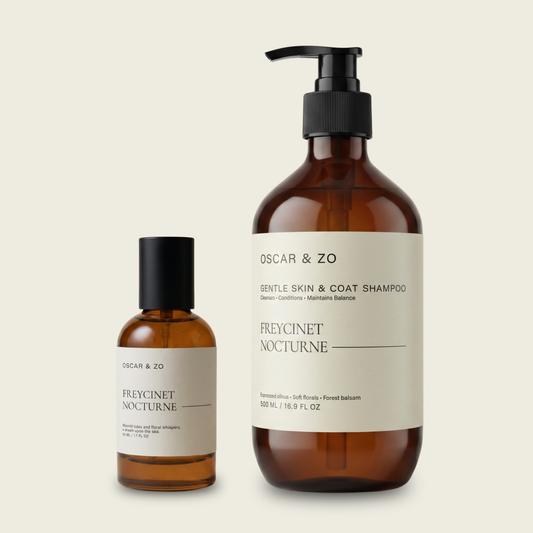
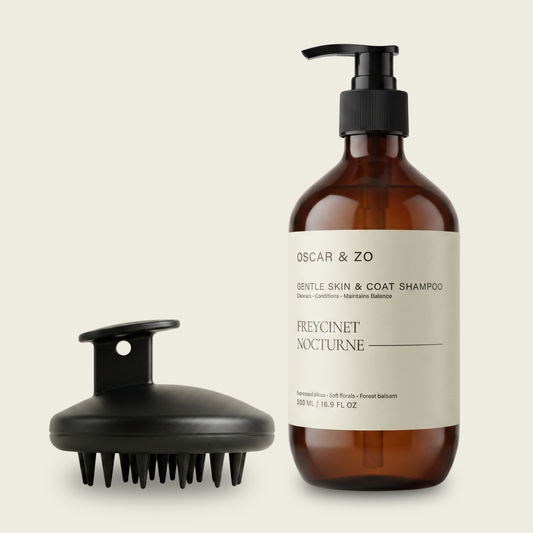
If a suitable shampoo is part of your routine, Oscar & Zo Skin & Coat Shampoo is thoughtfully crafted for sensitive skin and coats. It cleanses without stripping, leaving the coat soft and fresh. Consider it alongside your dog’s individual needs, not as a reason to bathe to a fixed timetable.
Does frequent washing harm a dog’s skin or coat?
Bathing can be useful when a dog is dirty, but washing on a fixed timetable isn’t necessary for every dog. The question “how often should you wash your dog” has no universal answer. Bathing more often than your dog needs may dry the coat by removing some of its natural oils. That’s a reason to make the routine responsive, not to worry about an occasional extra bath.
One wash outside your usual rhythm won’t automatically cause harm. What matters is the pattern over time and how your dog’s skin and coat respond. If their coat feels dry after repeated baths, or you notice irritation, pause routine washing and consider whether it’s needed. Persistent changes deserve a conversation with your veterinarian.
How to think about over-washing without alarm
Think of over-washing as a cue to review the routine, rather than a diagnosis. Ask whether each bath has a clear purpose, such as removing dirt, or has become a habit tied to a particular day. Your dog’s individual response is more useful than applying the same rule to every coat.
If changes such as dryness, flaking or irritation continue, seek veterinary advice. A veterinarian can help you decide whether bathing needs to change or whether another cause should be considered.
Why human shampoo is not a simple substitute
Human and dog grooming products are made for different uses, so a product intended for people isn’t an interchangeable stand-in. Choose a shampoo made for dogs and follow the directions on its label. Use it for a bath that has a clear purpose, not as a reason to wash more often.
During a bath, pay attention to how your dog’s coat feels and how they respond to the process. If they seem uncomfortable, keep the experience calm and gentle. Follow the shampoo directions, including any guidance about applying and rinsing the product. A thorough rinse helps remove residue from the coat.
Afterwards, notice whether the coat feels comfortable as it dries. If repeated washing seems to leave it feeling drier, reassess how often you’re bathing and whether each wash is needed. Brushing or cleaning a small dirty area may be enough between full baths, depending on the situation.
Keep any ongoing skin concern separate from everyday grooming decisions. Don’t respond to persistent changes by simply bathing more often or switching products repeatedly. Your veterinarian can advise you about your dog’s circumstances, including whether a particular bathing routine is appropriate. This keeps routine cleaning practical while giving skin and coat concerns the attention they need.
How to decide whether your dog needs a bath
A quick check can help you decide whether bath time is useful or whether a lighter touch will do. Notice what’s changed, consider what may have caused it, then choose a response that suits the cue and your dog’s comfort. A date on the calendar alone isn’t a reason to wash.
A simple check before bath time
First, look at the coat. Is your dog visibly dirty, or has a persistent odour developed? Think about recent activity too. After a muddy walk, a rinse or clean of the affected area may be enough. If loose hair or surface dust is the main issue, gentle brushing may be a better first step than a full bath.
Keep the response proportionate. If the coat is clean and there’s no noticeable change, there may be no need to bathe simply because a date has arrived.
- Notice the cue: Check for visible dirt, an ongoing odour or another change in the coat.
- Consider the cause: Think about recent outdoor activity, a spill or whether loose hair and surface dirt may be involved.
- Choose a response: Brush, clean a small area or give a bath if it’s genuinely needed, while keeping your dog settled and comfortable.
This approach leaves room for everyday judgement. Dirt on one paw after time outside may call for localised cleaning, while mud across the coat may make a bath more practical. If your dog is uneasy, pause and avoid turning a minor mess into a stressful experience.
When a veterinarian should guide the routine
Everyday dirt is different from a persistent skin or coat change. Speak with your veterinarian if irritation continues, you notice a marked change in the skin, or bathing seems to make your dog more uncomfortable. These signs don’t identify a cause on their own, so avoid trying to manage them by bathing more often or changing products repeatedly.
Your veterinarian can advise whether the bathing routine needs to change and whether further care is appropriate. That guidance is especially helpful if your dog already has a skin concern, or if you’re unsure whether a change is ordinary grooming or something that needs attention.
Routine grooming responds to dirt; persistent discomfort or skin changes call for veterinary guidance. Keep that distinction in mind to make the decision clearer without treating every smell or speck of dirt as a concern. It also helps answer how often should you wash your dog in a practical way: assess the cue, then choose the simplest suitable response.
If a bath is the right choice, you can explore Oscar & Zo Skin & Coat Shampoo as one option for your dog’s grooming routine. A suitable shampoo supports the bath when it’s useful, but it doesn’t set the schedule.
Choosing a gentle dog shampoo for a considered bathing routine
Shampoo belongs in the bathing routine only when a wash is useful. Choose a product intended for dogs, then follow its label directions. The product supports the bath itself; it doesn’t determine how often your dog needs one.
Your dog’s coat and usual grooming needs can help guide your choice. If your veterinarian has recommended a specific product for an individual concern, follow their advice rather than substituting a general shampoo.
What to look for in a dog shampoo
Start by checking that the shampoo is made for dogs and reading its directions before use. Consider your dog’s coat and the reason for the bath. A product intended for ordinary grooming may not be the right choice for a dog with a persistent skin concern, so seek veterinary advice if you’re unsure what to use.
Keep the choice considered and straightforward. Avoid assuming one product suits every dog, and don’t use shampoo to manage a continuing skin or coat change without guidance from your veterinarian.
Where Skin & Coat Shampoo may fit
Oscar & Zo Skin & Coat Shampoo is thoughtfully crafted for sensitive skin and coats. The brand’s approach is everyday care that cleanses without stripping, leaving the coat soft and fresh. This can help you understand the product’s place in a grooming routine, but it doesn’t mean every dog needs it or that it replaces individual veterinary advice.
Use the shampoo according to its directions and consider whether it suits the purpose of the wash. If your veterinarian has suggested a particular bathing plan, follow that guidance. A general grooming product shouldn’t take the place of a shampoo or routine recommended for your dog’s specific needs.
As you consider how often should you wash your dog, treat shampoo selection and bathing frequency as separate decisions. Choose a product for a bath that has a clear purpose, rather than bathing more often because you have a particular shampoo on hand. If you’re uncertain about your dog’s coat or an existing concern, your veterinarian can help you decide what is appropriate.
A considered choice fits your dog’s needs without making bath time automatic. Use a dog-specific shampoo when a wash is called for, follow the label, and keep your dog’s comfort at the centre of the experience.
Make your dog’s next bath a thoughtful one
Your dog’s grooming routine can change as their life does. A new season, a shift in daily activities or a different response to bath time may be a reason to pause and reconsider what feels comfortable for them. Keep your approach flexible, and let your dog’s needs guide the next step rather than maintaining a routine that no longer fits.
If you’re still asking how often should you wash your dog, use each bath as a chance to notice how their coat feels afterwards and whether the wash was useful. For ongoing skin concerns, your veterinarian is best placed to advise on a suitable routine.
OSCAR & ZO is an Australian-owned, vet-founded pet care brand, and its grooming products are vet-recommended. If dog shampoo would be a helpful part of your routine, explore OSCAR & ZO Skin & Coat Shampoo as a considered option, not a reason to bathe more often.
Small, observant choices can make everyday care feel calmer for both of you. Trust what you notice, and let your dog’s comfort set the pace.
Frequently asked questions
How often should you wash your dog?
There’s no single bathing interval that suits every dog. To decide how often should you wash your dog, consider their coat, how dirty it gets during everyday activities and whether your veterinarian has given you individual care advice. A dog who comes home with a muddy coat may need a wash sooner than one whose coat stays clean. Let your dog’s needs, not a calendar, guide the decision.
Can I wash my dog every week?
Weekly bathing isn’t a default routine for every dog, but your veterinarian may recommend a particular schedule for an individual care plan. If you’re considering weekly baths, think about why they seem necessary and whether a smaller clean or brushing would be enough. Follow shampoo directions and keep an eye on your dog’s skin and coat. If you notice ongoing irritation or discomfort, speak with your veterinarian before continuing the routine.
Is it OK to wash a dog only when they smell?
A smell can be a useful prompt to check your dog’s coat, but it’s not the only reason to clean them. Visible dirt or something caught in the coat may need attention before an odour develops. Consider what your dog has been doing and whether a local clean is enough. If an unusual smell persists after a bath or keeps returning, ask your veterinarian for advice rather than repeatedly washing to mask it.
Can you wash a puppy with dog shampoo?
You can wash a puppy with a product intended for dogs, provided its directions suit your puppy’s needs. Keep the experience calm and handle them gently, especially if bath time is new. A small, secure space and a non-slip surface can help your puppy feel steadier. If you’re unsure whether a product is appropriate for your puppy’s age, or they have a skin concern, ask your veterinarian before bathing.
What happens if you wash your dog too often?
Repeated washing beyond what your dog needs may remove natural oils from the coat, leaving it dry, flaky or irritated. An occasional extra bath doesn’t automatically mean harm has been done. If the coat seems different after washing, review how often you bathe and whether you’re following the shampoo directions. Persistent irritation or other changes are a reason to speak with your veterinarian, rather than trying more frequent baths or products.
Should I brush my dog between baths?
Yes, brushing between baths can help lift loose hair and surface dirt before it builds up in the coat. It also gives you a simple way to notice tangles or debris that may need attention. Choose a grooming tool suited to your dog’s coat and use gentle strokes. If your dog pulls away or seems uncomfortable, pause and try shorter, calmer sessions rather than forcing them through a long grooming routine.
When should I ask a vet about my dog’s bathing routine?
Ask your veterinarian if your dog has persistent irritation, a noticeable skin or coat change, or seems more uncomfortable after bathing. Veterinary advice is also sensible if an ongoing concern leaves you unsure how often to wash or what product to use. Keep track of when the change started and whether it seems to follow a bath. Those details can help your veterinarian give guidance suited to your dog.