


Dog leave-in conditioner in Australia: sprays and creams

A softer coat is only one part of thoughtful leave-in care. A leave-in conditioner for dogs in Australia may come as a spray for targeted detangling or a cream for more hands-on conditioning. The right choice depends on your dog’s coat and the product directions. Used gently, it can help manage tangles and support a comfortable coat-care routine.
It’s natural to reach for a detangler when knots make brushing uncomfortable or a coat feels dry between washes. The format matters, as does applying it carefully and combing without pulling at the skin.
This guide explains how sprays and creams differ, how to choose one for your dog’s coat, and how to apply it with care. You’ll also find practical tips for working through tangles and recognising when a knot needs professional grooming, so coat care can feel calmer and more comfortable for you both.
Key Takeaways
- Choose a spray for targeted detangling between washes or a cream when you want a more hands-on post-bath routine.
- Follow the product directions and work conditioner through the coat gently to help avoid pulling at the skin.
- Use a comb or brush suited to your dog’s coat, and leave stubborn or tight matting to a professional groomer.
- Introduce a new product with care, and speak with your veterinarian if skin irritation or itchy behaviour continues.
- Conditioner can support comfortable coat care, but it isn’t a substitute for veterinary advice about ongoing skin concerns.
How to apply conditioner and comb through
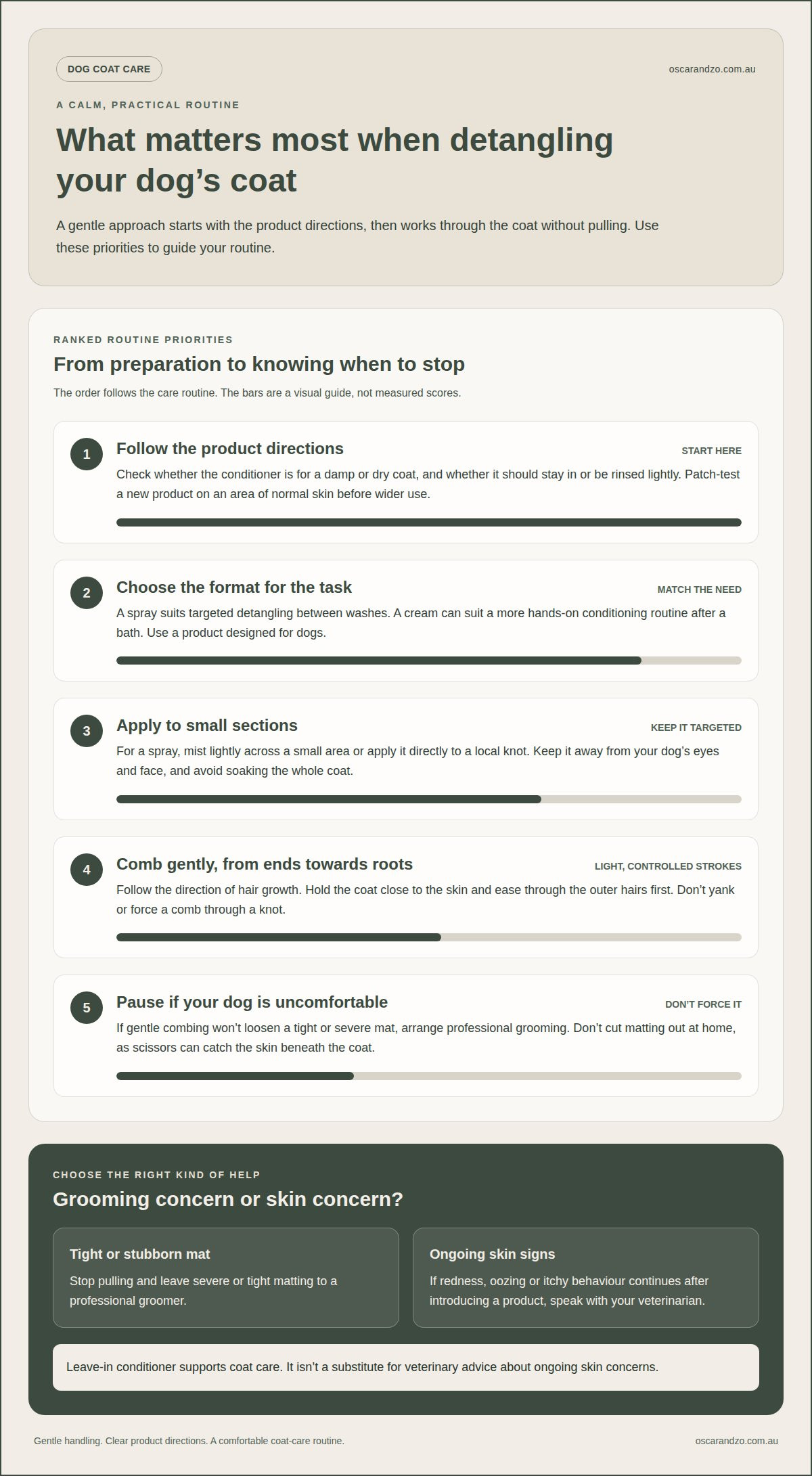
Start with the product directions, as sprays and creams may be used differently. Work through the coat in sections, keeping your touch light and steady.
Applying to damp or dry coats
For Australian pet parents choosing a leave-in conditioner for dogs, the label is the best place to start. After shampooing, apply conditioner to a wet or towel-dried coat if directed. Towel-dry first to remove excess water, so the coat is damp rather than dripping. That makes it easier to see where the product goes.
For a spray, shake the bottle before use, then mist the coat lightly. Work across small areas, such as the chest, sides and tail, rather than soaking the whole coat. Keep the spray away from your dog’s eyes and face, and follow the directions for external use.
A dry coat may suit a light touch-up when it feels dry or tangled, but only if the label allows dry application. For a local knot, apply spray to the tangle rather than wetting a broad area. Coat the hairs around the knot without saturating the skin.
Patch-test a new conditioner on an area of normal skin before wider use. Follow the directions on whether it should stay in or be rinsed lightly. If redness, oozing or itchy behaviour continues after introducing a product, speak with your veterinarian.
Combing conditioner through the coat
Once applied, brush or comb the product through thoroughly, following the direction of hair growth. Start at the ends of longer sections and gradually work towards the roots. This helps you ease out small tangles without pulling at the skin.
For a knot, hold the coat close to the skin with one hand. Use a comb on the outer hairs, working gently towards the centre. Add a little more spray directly to a stubborn tangle if needed. Don’t yank or force the comb through. Pause if your dog seems uncomfortable.
Use short, controlled strokes around delicate areas, including behind the ears and beneath the legs. Check each section with your fingers as well as a comb, since loose hairs can conceal smaller knots. A slicker brush can help distribute spray through the coat.
Follow the conditioner’s directions on whether it stays in or is rinsed lightly. If you dry the coat afterwards, use a hairdryer on a low setting and keep it moving rather than holding it in one spot.
Don’t cut severe matting out at home. Scissors can catch the skin beneath a tight knot. If gentle combing won’t loosen it, arrange professional grooming instead. Pausing is safer than repeatedly pulling through a stubborn mat.
Spray detanglers for knots between washes
A light dog conditioner spray can support coat maintenance between washes. It may help with small tangles that brushing alone doesn’t release easily, such as loose knots around the chest or behind the ears. Use a spray designed for dogs and follow its label rather than applying human hair products. The aim is to work through the coat gently, not simply mask a knot.
Choose a spray when you want to target one area rather than condition the whole coat. For example, check the feathering on your dog’s legs after a walk, or feel gently beneath the collar for caught hairs. If you find a small tangle, part the surrounding coat to see where the hairs meet. This helps keep brushing focused on the knot.
Make coat checks part of an existing routine, such as after brushing or returning from outdoors. Pay attention to areas where coat rubs together, including behind the ears, beneath the legs and around a collar or harness. These are practical places to inspect, not a reason to brush forcefully. A light spray can support maintenance as you work through loose tangles.
For a stubborn knot, apply the spray directly to the tangle, then work it loose with a comb and slicker brush. Begin at the outer edge instead of pulling from the root. Hold the hair near the skin to reduce movement, and use short, gentle strokes. Pause if your dog resists or seems uncomfortable, then consider whether the knot can be loosened safely.
Don’t cut a knot out at home. A dog’s skin can sit close beneath the coat, making scissors risky around a tight mat. If gentle combing doesn’t loosen it, arrange help from a professional groomer. Severe matting may need careful removal, and repeated pulling can make an uncomfortable grooming session harder for your dog.
Spray detanglers support coat maintenance, but they aren’t a solution for every mat. A knot that feels tight against the skin, covers a broad area or returns repeatedly needs a more considered approach. Note where it forms and whether brushing reaches the skin beneath the surrounding hair. That detail can guide your grooming routine and help you describe the issue to a professional.
Keep the routine calm and specific: inspect one area, address loose tangles, then move on. If your dog has a short, smooth coat, a quick hands-on check may be more useful than frequent detangling. For longer or feathered areas, focus on the sections that catch knots. For a considered grooming routine, explore thoughtful coat-care essentials.
Benefits for skin barrier and coat health
A leave-in conditioner mainly supports coat care. It can help coat fibres feel smoother, making routine brushing easier. Its role around skin is limited: it doesn’t diagnose or treat irritation, infection or other skin concerns. This distinction helps you choose a grooming product without expecting a medical result.
Conditioned hair may be easier to comb because the strands move more smoothly against each other. For a long-coated dog, this can make brushing the chest or leg feathering more manageable. Less resistance during grooming can mean less pulling on the coat. Apply as directed, then see whether the brush passes through more comfortably.
The skin barrier is part of the skin’s protective surface. A conditioner applied to the coat shouldn’t be treated as a way to repair it. Focus instead on the grooming routine: avoid over-brushing one spot, use a product made for dogs and keep application away from the eyes. If your dog’s skin already looks sore, grooming products aren’t a substitute for veterinary advice.
How the coat feels is a practical way to assess whether a conditioner suits your routine. After application, notice whether it feels less rough or catches less during gentle combing. A dry-feeling coat after a bath may benefit from conditioner used according to its directions. Don’t apply extra product just to make the coat feel silky; more isn’t automatically better.
Skin changes call for a different response from ordinary tangles. Before using a new conditioner, patch-test it on an area of normal skin. If redness, oozing or itchy behaviour continues after introducing the product, speak with your veterinarian. Avoid applying conditioner over visibly irritated skin unless your vet advises it. Keep coat maintenance separate from care for a skin problem.
Good grooming also depends on what happens between applications. Check the coat after outdoor walks, especially where harness straps or collars sit. Gently remove loose debris and brush through small tangles before they tighten. These steps reduce avoidable pulling during grooming, while conditioner remains one part of care rather than the whole routine.
Choose based on your dog’s coat needs and the label directions. A spray may suit a small area needing detangling, while a cream may suit post-bath conditioning if its directions allow. Neither format should be expected to improve the skin barrier by itself. For persistent itching, repeated redness or coat changes alongside skin symptoms, seek veterinary advice before changing products again.
Cream conditioners for post-bath moisturising
A cream conditioner can be part of a post-bath routine when its label directs that use. After shampooing, towel-dry your dog until the coat is damp, not dripping. Check whether the cream is designed to stay in or be rinsed lightly. Those instructions determine how to apply it and what to do next.
Let the coat’s condition guide your choice. For example, a dry-feeling patch along the back may call for targeted application, while longer sections may need conditioner distributed more widely. Read the label before bathing, so you know whether to apply the cream across the coat or only where directed.
Apply gradually rather than placing a large amount in one spot. Part the coat with your fingers, then spread the cream over a manageable section. This makes it easier to see where the product goes and avoid uneven build-up. Keep it away from your dog’s eyes, nose and mouth.
Follow the product directions on how long to leave the cream in, if a waiting period is given. Some directions allow conditioner to remain for deep conditioning; others call for a light rinse. Don’t assume every cream works the same way. If rinsing is instructed, use lukewarm water and rinse the coat thoroughly.
Consider coat length and density as you work. A thick coat may need careful sectioning so conditioner reaches the hair beneath the surface. On a short coat, use a smaller amount and spread it evenly. In either case, avoid rubbing vigorously, especially around the belly, armpits and other delicate areas.
After application, comb through the coat gently to distribute the conditioner and find any remaining tangles. Use your fingers to separate the hair before using a comb. If you notice a tight mat, don’t force the comb through or cut it out at home. Professional grooming is the safer next step if it won’t loosen.
Observe the coat once it has dried. If it feels heavy or looks coated, use less next time and follow the rinse directions closely. If it still feels dry, don’t keep adding cream without checking the label. Coat texture, the amount used and whether the product was rinsed can all affect the finish.
A cream conditioner is for coat care, not a treatment for irritated skin. Patch-test a new product on normal skin before wider use. If redness, oozing or itchy behaviour continues after introducing it, speak with your veterinarian. For ongoing skin concerns, veterinary advice is more appropriate than changing conditioner alone.
Are there Australian veterinary recommendations for dog coat conditioners?
There isn’t one coat conditioner that suits every dog. A useful choice depends on coat type, product directions and whether the concern is grooming or skin health. For example, a spray may help manage loose tangles, while a cream may suit post-bath coat care when its label directs that use.
For routine grooming, start with a product made for dogs and follow its directions. Apply it to the coat as instructed, and avoid the eyes, nose and mouth. A conditioner can support coat maintenance, but it shouldn’t be treated as a veterinary treatment for itching, redness or other skin changes.
Your dog’s individual needs matter. A short, smooth coat may need little detangling, while long or dense hair can catch knots around the legs or behind the ears. If your dog has a history of skin sensitivity, ask your veterinarian whether a grooming product is suitable before adding it to the routine. Share the product label and describe where you plan to apply it.
Use a simple check before applying a new conditioner:
- Read the label for directions, including whether the product stays in or is rinsed.
- Patch-test it on an area of normal skin before wider use.
- Watch for changes after introducing it, such as ongoing redness, oozing or itchy behaviour.
If redness, oozing or itchy behaviour continues after introducing a product, speak with your veterinarian. These signs call for advice about your dog’s skin, rather than another conditioner or more frequent grooming. A veterinarian can assess the concern and help decide what care is appropriate.
Matting also needs a practical distinction. A loose tangle may respond to gentle combing with a suitable spray. A tight mat close to the skin is different: don’t cut it out at home or keep pulling. Arrange professional grooming if it won’t loosen gently, and contact your vet if the skin beneath looks sore.
In Australia, choose conditioner for its grooming purpose, not a broad claim about skin health. Check whether the directions suit your dog’s coat and intended use. If the concern is persistent itching or irritation, veterinary guidance is more appropriate than trying several products in succession. For routine coat care, start with the label, your dog’s coat condition and any relevant advice from your vet.
For leave-in care, apply leave-in conditioner after washing or when a dog’s coat feels dry or tangled. Follow the product label for use. If it directs you to shake the spray before use, lightly spray it on the coat and brush it through thoroughly. After applying conditioner and combing through, dry the dog’s coat with a hairdryer on a low setting. These steps describe coat care and don’t replace veterinary advice about skin changes.
Do not cut a knot in a dog’s coat out at home. If it cannot be loosened gently, arrange professional grooming. For severe matting, a professional groomer can assess the coat and decide how best to manage it. If a knot does not loosen, avoid cutting it and arrange professional grooming instead.
Oscar & Zo
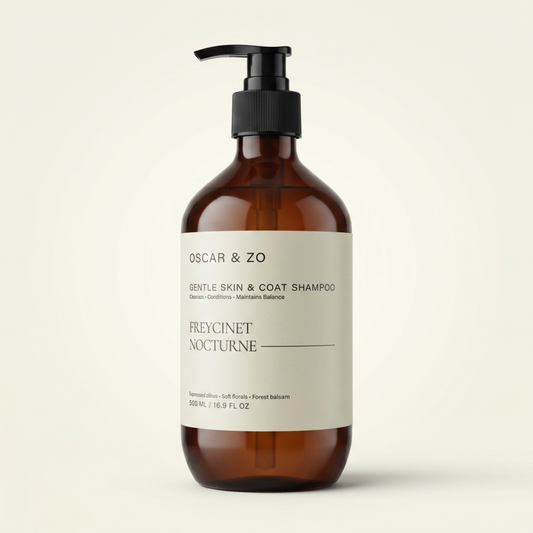
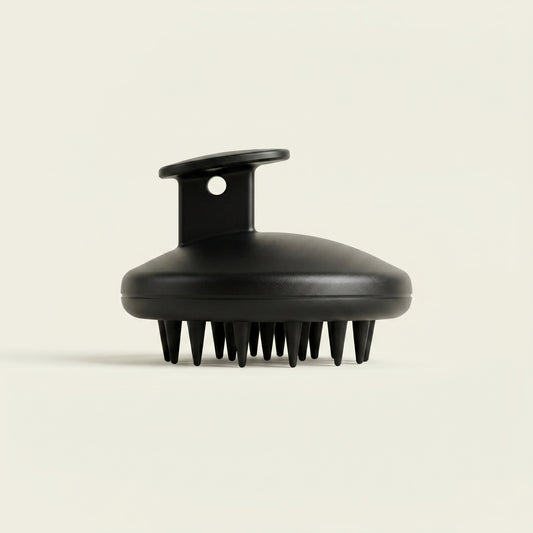
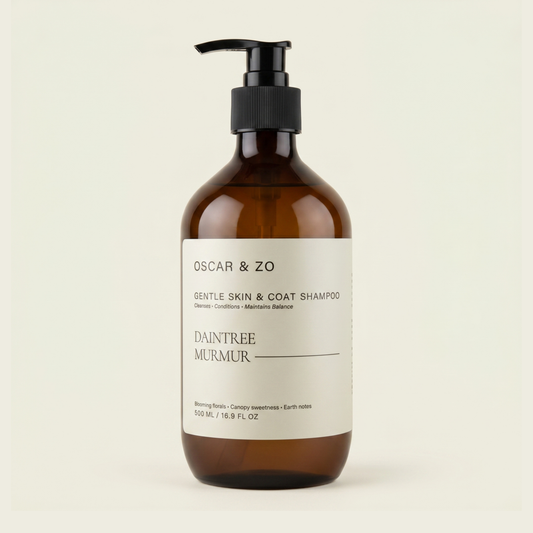
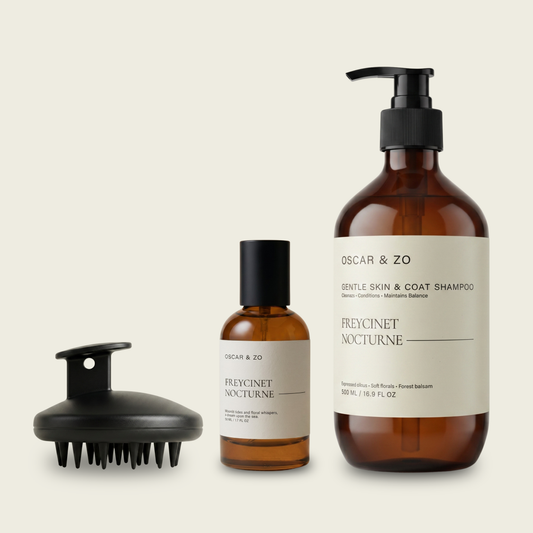
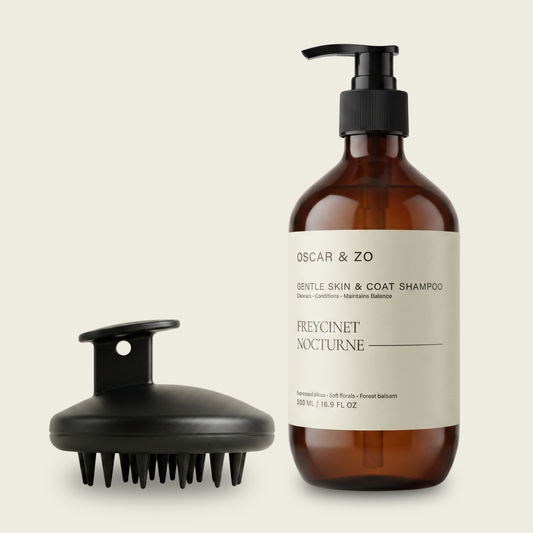
Oscar & Zo offers considered grooming essentials to support a steady coat-care routine. If you’re choosing a leave-in conditioner, start with your dog’s coat needs and the product directions. For bath time, Skin & Coat Shampoo can form part of the washing routine, while Grooming Tools support regular brushing and coat maintenance.
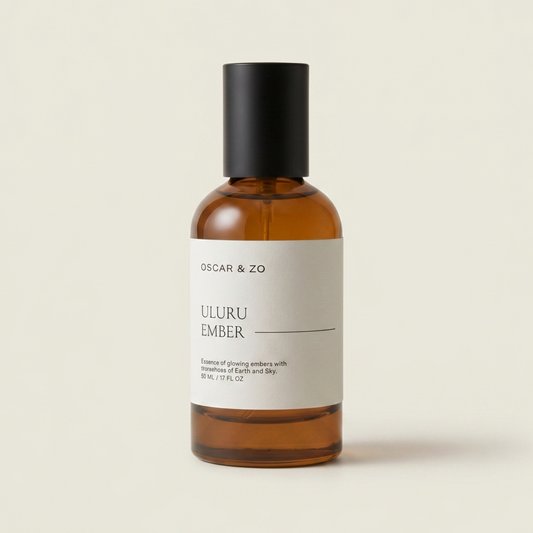
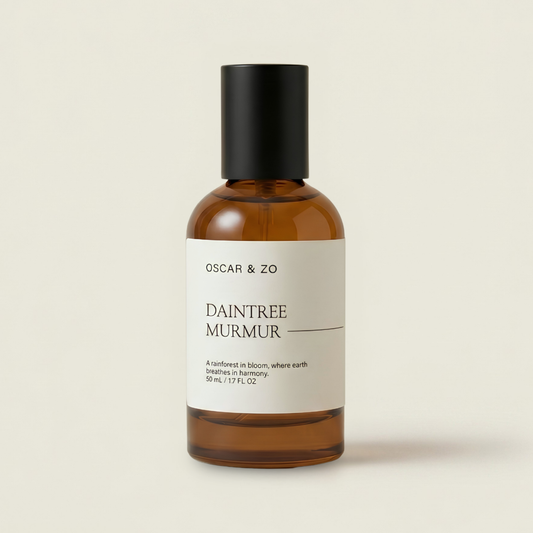
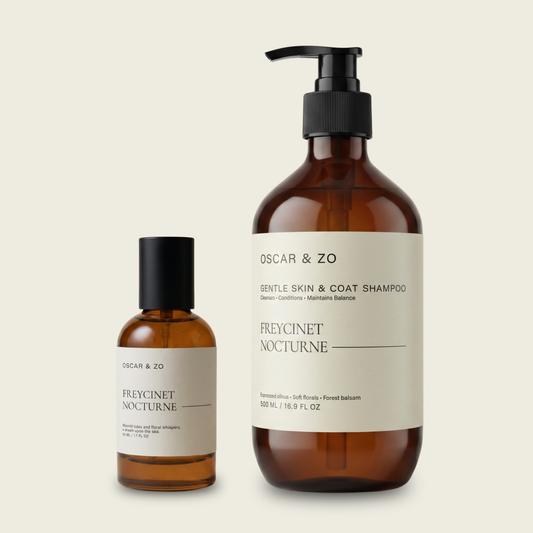
Ritual Sets bring selected care essentials together, and Pet Fragrance can add a finishing touch when it suits your routine. These products complement everyday grooming, while conditioner choice still depends on your dog’s coat and the label instructions. For persistent itching, redness or other skin concerns, speak with your veterinarian.
Explore Oscar & Zo’s grooming essentials to find thoughtful additions to your dog’s coat-care routine.
Make coat care a gentle routine
The most useful routine is one your dog tolerates and your chosen product’s directions support. Let coat texture guide whether a spray or cream fits, and keep brushing gentle. A leave-in conditioner for dogs in Australia can be part of grooming, but it isn’t a substitute for veterinary advice about ongoing skin concerns.
For a broader care routine, Oscar & Zo offers Skin & Coat Shampoo, Pet Fragrance and Ritual Sets. Choose products for the role they serve, and keep your dog’s comfort at the centre of each step. If you’d like to explore the range, contact Oscar & Zo for advice.
Small, considered grooming moments can help make coat care a calm part of everyday life.
Frequently asked questions
What does leave-in conditioner do for dogs, and which coat types benefit?
Leave-in conditioner can make coat hair feel smoother and easier to manage between baths. Dogs with long, curly or feathered coats may benefit when their hair catches around the legs, ears or tail. A short-coated dog may need less detangling, so consider whether brushing feels rough or knots form regularly. Conditioner supports grooming, but doesn’t treat skin problems or replace veterinary care.
What ingredients should I look for or avoid in leave-in conditioner for dogs?
Choose a product labelled for dogs, with clear directions and an ingredient list you can review. Avoid human hair conditioner, as it isn’t made for a dog’s coat-care routine. If your dog has previously reacted to an ingredient, avoid it and ask your veterinarian about suitable grooming products. Don’t rely on claims such as “natural” alone to decide whether a formula suits your dog.
How do you apply leave-in conditioner to a dog safely and correctly?
Follow the product label and start with a small coat section so you can see how the product spreads. Keep grooming calm by working in a familiar spot, such as a non-slip bathroom floor, and pause if your dog becomes unsettled. Use a comb suited to the coat without forcing it. If the product is new, patch-test first and observe your dog afterwards for any reaction.
How do popular dog leave-in conditioners in Australia compare by ingredients, coat type, and reviews?
Sprays suit targeted detangling and daily coat maintenance, while creams can suit hands-on post-bath conditioning. Choose based on your dog’s coat and the product directions.