


How to Clean a Muddy Dog Without a Bath Using Simple Methods

A muddy dog doesn’t always need a bath. If the dirt is limited to the paws or a small patch of coat, clean it with a damp towel or sponge, then brush away loosened dirt once the coat is dry. Knowing how to clean a muddy dog without a bath can make a messy return from a walk feel simpler and calmer.
It’s understandable to reach for the bath when muddy paws meet a clean floor, but a full wash isn’t the only option. The best method depends on where the mud is, how much of the coat is affected and whether it has dried.
This guide explains how to decide whether your dog needs a bath and how to tidy muddy paws and coat using a towel, pet wipes, a lightly dampened sponge, dry shampoo or a brush. You’ll also find gentle, practical pointers for keeping the clean-up comfortable for both of you.
Key Takeaways
- Choose your cleaning method based on where the mud is and whether it’s wet or dried into the coat.
- Use a lightly dampened sponge to spot-clean one area without soaking your dog’s whole coat.
- Pay attention to muddy paws, gently wiping between the toes to remove trapped dirt or debris.
- Use dry shampoo as a water-free freshening option, rather than relying on it to lift heavy, stuck-on mud.
- Brush through the coat after cleaning to loosen dirt and remove dust and dead hair.
Dry Shampoo vs Wipes vs Towel: Which No-Bath Method Works Best?
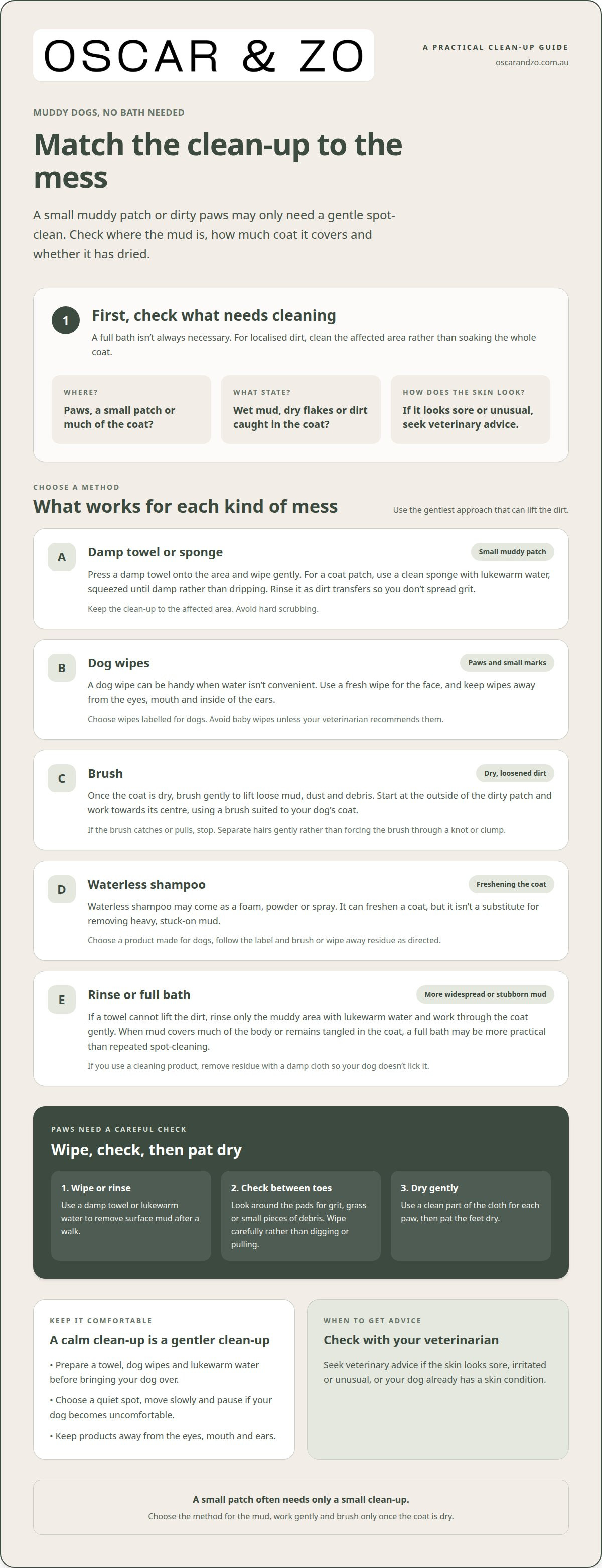
For a small muddy patch, use a damp towel or sponge; for paws, dog wipes can help. A full bath is more practical for widespread or stubborn mud, while sore skin or an existing skin condition calls for veterinary advice.
In Australia, choose wipes and waterless shampoos labelled specifically for dogs. No single type suits every coat, so match the method to the mud and keep products away from your dog’s eyes, mouth and ears.
-
Choose a no-bath cleaning method
Start by checking whether the mud is wet, dry or caught in the coat. Press a damp towel against a small patch, then wipe gently; lukewarm water can loosen mud on a dirty area without soaking the whole dog. Dog wipes are handy for paws and small marks. Waterless shampoo, sold as foam, powder or spray, can freshen a coat, but isn’t a substitute for removing heavy, stuck-on dirt.
-
Use wipes and shampoo safely
Choose wipes and waterless shampoo made for dogs, and follow the label directions. Baby wipes aren’t a reliable substitute: their ingredients may not suit your dog’s skin, so avoid using them unless your veterinarian recommends them. Use a fresh wipe for the face, keeping it clear of the eyes, mouth and ears. Apply waterless shampoo away from those areas, and brush or wipe away residue as directed.
- Rinse only the muddy area when a towel cannot lift the dirt. Use lukewarm water and gently work through the coat with your hand, a glove or a sponge. Avoid scrubbing hard, especially where mud has dried close to the skin. If you use a cleaning product, remove residue with a damp cloth so your dog doesn’t lick it. A towel can then absorb excess water before your dog shakes.
- Keep the clean-up calm by preparing a towel, wipes and lukewarm water before bringing your dog over. Choose a quiet spot, move slowly and pause if your dog becomes uncomfortable. For a dog uneasy around water or touch, practise brief, low-pressure handling when muddy cleaning isn’t needed. Let your dog approach an empty tub or a damp cloth, then gradually introduce water and gentle rubbing.
- Finish by checking the coat and skin as you clean. If mud covers much of the body or remains tangled in the coat, a full bath may be more practical than repeated spot-cleaning. Contact your veterinarian if the skin looks sore, irritated or unusual, or if your dog already has a skin condition. A gentle, patient routine can make cleaning more comfortable over time.
Cleaning a dog’s coat with a lightly moistened sponge
Learning how to clean a muddy dog without a bath can start with a lightly damp sponge and a little patience. Clean only the affected patch, then choose a brush suited to your dog’s coat to lift loosened dirt.
-
Decide whether to let mud dry
Let a muddy patch dry before brushing if it’s safe and comfortable for your dog. Wet mud can spread across clean fur when rubbed, while dry flakes are easier to lift with a brush. Don’t leave mud in place if it’s irritating the skin or tangled close to it. In those cases, loosen it gently with a damp sponge instead.
-
Moisten and clean affected coat areas
Wet a clean sponge with lukewarm water, then squeeze it until it’s damp, not dripping. Wipe only the muddy area, following the direction of hair growth with light strokes. Rinse the sponge as dirt transfers onto it, so you don’t spread grit across the coat. Avoid soaking your dog’s whole body when a small patch needs attention.
-
Brush away mud and debris
Once the coat is dry, use a suitable brush to lift loose mud, dust and debris. Start at the outside of the dirty patch and brush towards its centre, checking the bristles as you go. If the brush catches or pulls, stop and separate the hairs gently with your fingers. Don’t force it through a knot or dried clump.
- Match your brushing approach to your dog’s coat. Short, smooth fur may need only a gentle pass with a soft brush. For a longer or thicker coat, work in small sections and brush the outer hairs before reaching closer to the skin. Curly or easily tangled fur needs especially patient handling. If a patch resists brushing, dampen it lightly rather than tugging.
- For a simple no-bath clean-up, finish with a gentle brush-through once the mud is removed and the coat is dry. Regular brushing can help distribute natural oils through the fur while lifting loose hair and remaining dust. Keep strokes comfortable and pause if your dog moves away. A brush suited to your dog’s coat can make clean-up easier, so explore grooming tools for coat care.
Cleaning muddy paws and other body areas
Clean paws and small muddy patches after a walk with a damp cloth, dog wipes or lukewarm water. Work gently around sensitive areas, and keep cleaning products away from your dog’s eyes, mouth and ear canals.
-
Wipe or rinse paws after walks
Wipe each paw with a damp towel or rinse it with lukewarm water after a walk. This helps remove surface mud before it dries indoors. Use a clean part of the cloth for each paw, then pat the feet dry. Keep the clean-up steady and gentle, especially if your dog pulls away when you handle their feet.
-
Clean muddy paws
For packed mud, use a paw-cleaning cup or a shallow tub of lukewarm water, then dry each foot with a towel. Check between the toes and around the pads for grit, grass or small pieces of debris. Wipe those areas carefully rather than digging with your nails or pulling at anything lodged in the skin.
-
Clean the face, ears and eyes safely
Use a warm, damp cotton pad to wipe mud from the face, moving away from the eyes. For eye areas, use a fresh pad or a vet-approved eye wipe, and avoid scented products. Wipe only the visible part of each ear. Never push a cotton bud, cloth or finger into the ear canal.
- Use a fresh dog wipe for a muddy muzzle or belly when water isn’t convenient. Wipes can also help with sensitive areas, but keep them away from the eyes, mouth and inside of the ears. Read the product label and stop if your dog reacts uncomfortably. Don’t assume baby wipes are suitable for dogs.
- Remove cleaning residue with a clean, damp cloth if you’ve used a product on the coat. Dogs may lick areas they can reach, so avoid leaving residue behind. For paws, a water rinse or dog-safe wipe is usually a more direct choice than sprinkling baking soda, which your dog could lick.
- Keep a towel and a clean cloth near the door for muddy returns. After wiping, look over the paws, muzzle and belly for remaining dirt or visible irritation. If a paw is sore or an area looks inflamed, stop cleaning it and speak with your veterinarian rather than rubbing repeatedly.
Dog dry shampoo
Dog dry shampoo can freshen a coat between washes, but it won’t replace rinsing mud stuck to the fur. Choose a dog-specific formula and use it sparingly, especially if your dog has sensitive skin.
-
Prepare homemade dry shampoo
Consider the ingredients carefully before making a dry powder for your dog. One recipe combines 1 cup of cornstarch, ½ cup of baking soda and ½ cup of non-iodised salt. Cornstarch can absorb oil, but baking soda may not suit every dog. Speak with your veterinarian before using it, particularly if your dog has a skin condition or might lick the mixture.
-
Choose commercial dry shampoo
Select a shampoo made specifically for dogs, not a human dry shampoo. Dog dry shampoos come as foam, powder or spray, so choose a format your dog tolerates and follow its label directions. Look for a dog-safe, pH-balanced product. If a formula contains essential oils, check with your veterinarian before use, particularly if your dog may lick it.
- Apply dry shampoo only to a dry coat, and start with a small, muddy-free area to see how your dog responds. Keep powder or spray away from the eyes, nose, mouth and ears. Avoid applying it to broken or irritated skin. If your dog becomes unsettled, pause and continue another time rather than holding them still.
- Use a small amount and work it gently through the coat with your fingertips, following the product directions. Some homemade powders are left on for about five minutes to absorb oil and dirt, then brushed out thoroughly. Don’t leave loose powder where your dog can lick it. Brush in a calm, controlled way, and wipe away any residue you can see.
- Treat dry shampoo as a freshening step, not a way to remove heavy mud. Baking soda is best avoided unless your veterinarian advises using it. Follow the product label for commercial formulas, since directions vary by product and your dog’s skin.
- Check your dog’s coat and skin after brushing. If powder remains near the skin, remove it gently with a brush or damp cloth. Stop if you notice discomfort or irritation, and consult your veterinarian before trying another formula. For wet, caked-on mud, use water to loosen and remove the dirt rather than layering dry shampoo over it.
Removing dirt, dust and dead hair with a natural-bristle brush
A natural-bristle brush can lift loose dirt, dust and dead hair from a dry coat. Use it after spot-cleaning or dry shampoo, with strokes suited to your dog’s coat.
- Wait until the coat is dry before brushing away mud. Damp fur can cling together, making dirt harder to lift and brushing less comfortable. If you’ve used dry shampoo, follow its directions first, then brush the coat thoroughly to remove powder and loosened debris. Work somewhere your dog can stand comfortably, such as on a non-slip mat.
- Choose a natural-bristle brush for loose surface dirt, dust and dead hair. Begin at the shoulders or back, where your dog may be more comfortable with handling, and use gentle strokes in the direction of hair growth. Brush a small section at a time. Check the bristles regularly and remove collected dirt before moving to another area.
- Adjust your brushing technique to the coat. On short fur, use light, even strokes over the body, then check the legs and belly for remaining dust. For longer hair, separate the coat into small sections and brush the ends before working towards the skin. Move slowly around tangles, and don’t pull a brush through a knot or dried clump.
- Brush out dry shampoo carefully if you’ve used it to absorb oil or freshen the coat. Start where the product was applied and make repeated, gentle passes until visible powder is gone. Brushing can also help remove stiffness left by dry shampoo. Keep the brush away from your dog’s eyes, nose and mouth, particularly when treating the head.
- Make brushing a brief, regular part of your dog’s coat care. Brush every two or three days for a few minutes at a time, adjusting to your dog’s coat and comfort. Short sessions can lift everyday dust and loose hair before they build up. Pause if your dog becomes unsettled, then resume when they’re relaxed.
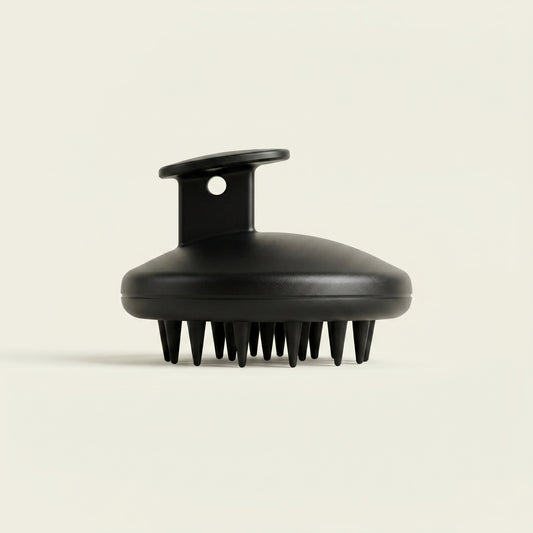
- Finish by checking the brushed areas with your fingers. Look for remaining grit, knots or dried mud, especially beneath the belly and around the legs. Brush only what releases easily; use a damp cloth for dirt that remains stuck. For a brush suited to everyday coat care, explore grooming tools.
Oscar & Zo
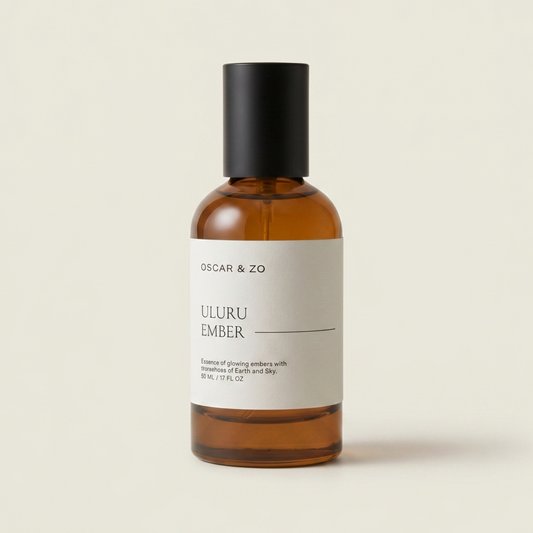
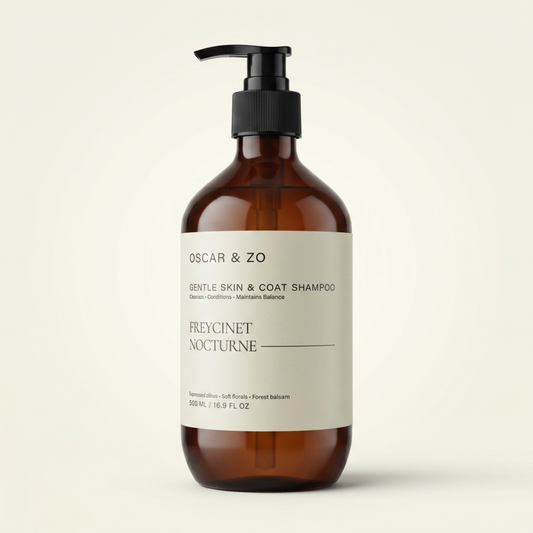
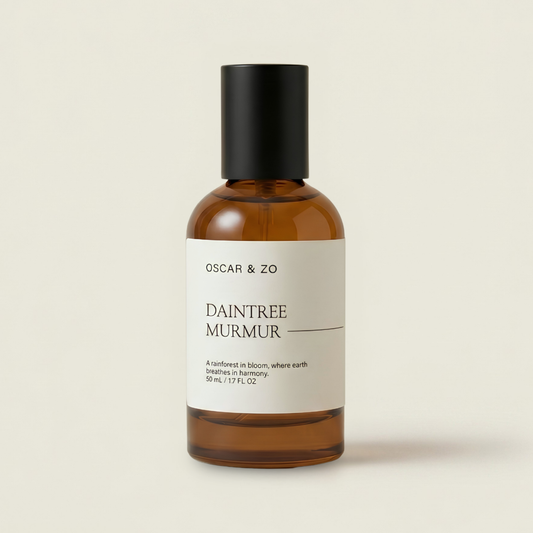
Oscar & Zo offers thoughtful essentials for everyday coat care, from grooming tools and Skin & Coat Shampoo to Pet Fragrance and Ritual Sets. They can help you build a simple routine for brushing, refreshing and washing your dog when a no-bath clean-up isn’t enough. For a muddy patch, a damp cloth or brush may be all you need; for a broader clean, a dog shampoo can be part of a full wash. Choose the approach that suits your dog’s coat and the amount of dirt, keeping their comfort in mind. If you’d like help finding a suitable place for Oscar & Zo products in your routine, contact Oscar & Zo.
Make muddy returns feel more manageable
A little preparation can turn the next muddy walk into a calmer homecoming. Keep a towel and cleaning cloth near the entry, and notice which approach your dog accepts most easily. Over time, a familiar routine can make cleaning feel like a gentle part of coming home, rather than a sudden interruption.
Learning how to clean a muddy dog without a bath is also about knowing when a quick tidy-up is enough and when your dog needs more care. Let your dog’s comfort guide the pace, and keep the routine simple enough to repeat after everyday adventures.
If you’d like guidance on choosing suitable care for your dog, contact Oscar & Zo for dog care advice. A thoughtful routine starts with small, comfortable steps.
Frequently asked questions
Do you have to bathe your dog?
No, a dog doesn’t need a full bath every time they get muddy. If only the paws, belly or one small patch is dirty, a local clean-up may be enough. Consider a bath when dirt covers much of the coat or remains caught after gentle cleaning. If your dog has a skin condition, or the skin looks sore, ask your veterinarian what care is suitable.
How and what can you use to wash your dog without shampoo?
Use lukewarm water and a clean cloth or sponge to loosen mud from the affected area. Work in the direction of the coat, rinsing the cloth as it picks up dirt. Avoid household detergents, baby soap and human shampoo, which may irritate a dog’s skin. If water alone can’t remove the dirt, choose a product made for dogs and follow its directions.
How can you clean your dog without washing them?
For a light mess, wipe the coat with a dry or slightly damp towel, then brush away loose dirt once the fur is dry. Dog-specific wipes can help with small areas, such as the paws or belly. Keep wipes and grooming products away from the eyes, mouth and ear canals. This approach freshens a small area, but won’t remove mud that’s firmly stuck to the coat.
How do you remove wet mud from a dog without bathing them?
Blot the muddy patch first with a towel, rather than rubbing it across clean fur. Then use lukewarm water on a cloth or sponge to loosen the remaining dirt. Rinse the cloth often, and dry the area with a clean towel. If the mud covers a large part of the coat or is tangled through it, a more thorough wash may be easier than repeated spot-cleaning.
How do you clean muddy paws, belly and coat separately?
For paws, wipe around the pads and between the toes, checking for trapped grit. For a muddy belly, use a damp cloth and keep your dog standing comfortably. On the coat, work in small patches so you don’t spread dirt further. Use a fresh part of the cloth as it becomes muddy, then dry each area. Take extra care around sensitive skin and avoid vigorous rubbing.
Can you use a towel, brush or pet-safe grooming spray to clean a muddy dog?
Yes, each can help with a different part of the tidy-up. A damp towel lifts loose surface mud, while a brush removes dry dirt and debris from the coat. A dog-specific grooming spray may freshen the coat, but it shouldn’t be treated as a mud remover. Follow the label and avoid the eyes, ears, mouth and any broken skin.
How do you remove dried mud from a dog’s fur without irritating the skin?
Let loose mud flakes come away with gentle brushing, and don’t scrape or pull at clumps close to the skin. If a patch remains stuck, soften it with a lukewarm damp cloth before trying again. Work slowly and stop if your dog shows discomfort. For a painful, irritated or tightly matted area, contact your veterinarian instead of tugging at the fur.
Are baby wipes or human dry shampoo safe for dogs?
Baby wipes and human dry shampoo aren’t designed for a dog’s coat, so use products labelled specifically for dogs instead. A dog’s skin may react differently to ingredients intended for people, and residue can be licked from the fur. Follow the product label, keep it away from the face, and discontinue use if irritation occurs. Ask your veterinarian before trying a new method on a dog with a skin condition.