


Dog dandruff: what causes flakes and how to care for your dog''s skin

Could a dusting of flakes be a clue, rather than a reason to reach straight for shampoo? Spotting them on your dog’s coat can leave you wondering whether it’s simple dryness or something that needs attention. Dog dandruff may look like small white or yellowish flakes, but flakes alone don’t reveal what’s causing them. Similar-looking changes can have different explanations, so it’s best not to diagnose by appearance alone.
It’s natural to wonder whether a bath will help or make your dog’s skin feel more uncomfortable. The answer depends on what’s behind the flakes. Other changes, such as ongoing scratching or redness, are a good reason to speak with your veterinarian.
This guide explains what dog dandruff can look like, which signs deserve veterinary advice and how to keep everyday coat care gentle. You’ll also find practical ways to observe changes and approach bathing without rushing to treat the flakes yourself.
Key Takeaways
- Dog dandruff describes visible skin flakes, but their appearance alone can’t identify the cause.
- Dry surroundings and changes to the skin or coat may contribute, but they aren’t diagnoses you can confirm at home.
- Flakes can resemble flea eggs or other specks, so compare cautiously rather than relying on colour or location.
- Note when flakes appear and any changes in your dog’s comfort or coat to share with your veterinarian.
- A gentle shampoo can be part of everyday grooming, but it isn’t a treatment for the cause of dandruff.
Dog dandruff: what flakes can tell you about your dog’s skin
Finding pale specks on your dog’s coat or favourite blanket can be unsettling, but flakes are something to observe, not a diagnosis. Dog dandruff is the visible shedding of small flakes of skin into a dog’s coat or surroundings. It describes what you can see, not why it’s happening.
You may notice flakes on bedding or a dog bed, during brushing, or while giving your dog a gentle pat. Their presence is useful information, but appearance alone can’t confirm the cause or tell you whether a particular care product is appropriate.
Dandruff is also known as a form of seborrhoea. For general background on the term and its different forms, see Seborrhoea in dogs. This information can explain the terminology, but it can’t identify what’s behind flakes on an individual dog. If you’re concerned, a veterinarian can assess the skin in context.
What does dog dandruff look like?
Dog dandruff may appear as loose white or pale flakes scattered through the coat, caught near the roots of the hair or left behind where your dog has been resting. Some pet parents notice flakes more along the back, where they can be easier to see against the coat.
There isn’t one appearance that proves flakes are dandruff. Their amount, colour and location can vary, and other small particles may look similar. Rather than relying on one detail, notice where you’re seeing them and whether the coat or skin looks different from usual.
When flakes appear with other changes
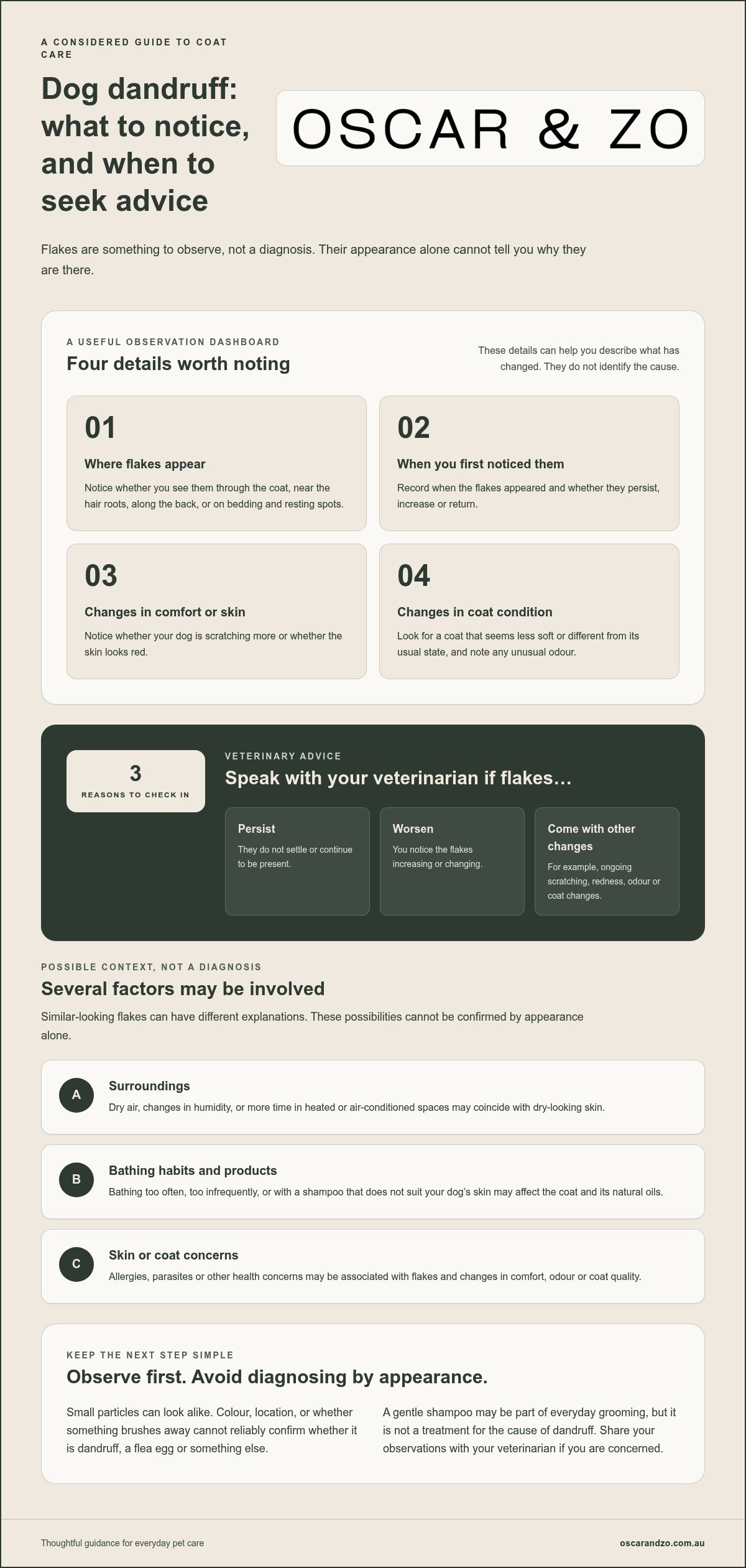
Notice whether your dog is scratching more, or whether you can see redness, an unusual odour or changes in the coat’s condition. For example, the coat may seem less soft or look different from its usual state. These details add useful context, but they don’t establish a cause on their own.
A calm observation can be more helpful than trying several products at once. Note where the flakes appear and whether anything else has changed in your dog’s comfort or coat. This gives you a clearer account to share if you seek veterinary advice.
Speak with your veterinarian if the flakes persist, worsen or come with other changes that concern you. You don’t need to work out what they mean at home. Simply noticing what’s different is a thoughtful first step.
Why dogs get dandruff: possible causes and contributing factors
Flakes can have several possible explanations, from dry surroundings to changes in the skin or coat. Dog dandruff is a visible clue, not a reliable way to identify which factor is involved. Similar-looking flakes can appear in different circumstances, so avoid treating a suspected cause based on appearance alone.
Dandruff can have more than one cause, and similar flakes may appear for different reasons. Observation alone can’t reveal what’s happening beneath the coat.
For some dogs, dry air or a change in their surroundings may contribute to dry-looking skin. Bathing habits and products can also play a part. Bathing too often, too infrequently or with a shampoo that doesn’t suit a dog’s skin may affect the coat and its natural oils. These are possibilities, not conclusions to draw from flakes alone.
Skin changes may also be associated with allergies, parasites or other health concerns. Some conditions can bring changes in comfort, odour or coat quality alongside flakes. A veterinarian can consider those details together and decide whether an examination or further checks are appropriate.
Can dry air or seasonal conditions contribute?
Environmental conditions may be one factor in dry-looking skin. Changes in humidity or spending more time in heated or air-conditioned indoor spaces may coincide with flakes for some dogs. Australian weather and home environments vary, so a seasonal change can offer context, but it can’t confirm a cause.
If flakes continue, increase or return, don’t assume the season explains them. Note when you first noticed the change and whether your dog’s comfort or coat has changed too. These details can help your veterinarian assess the bigger picture.
Could flakes be related to parasites or another skin concern?
Some parasites can create specks that resemble ordinary flakes. Cheyletiella mites, sometimes called “walking dandruff”, are one possibility. The name describes an appearance sometimes associated with these mites, but it isn’t a reliable home test. Not seeing movement doesn’t rule out a parasite, and visual inspection can’t reliably identify every cause.
Other skin concerns may also look similar at first. If you’re worried about parasites, or notice ongoing changes in your dog’s skin or coat, seek veterinary advice rather than trying to identify or manage the issue by appearance alone. VCA Animal Hospitals’ overview of seborrhoea in dogs offers further background, while your veterinarian can advise on your dog’s individual signs.
In the meantime, keep observations simple: note when flakes appear, whether they change, and any changes in scratching, redness, odour or coat condition. This gives you useful information to share without needing to label the cause. For everyday grooming, you can also explore gentle coat-care essentials, while remembering that grooming products don’t identify or resolve an underlying skin concern.
Dog dandruff or something else? Compare the signs before deciding
Loose flakes can look much like other small particles caught in a coat. A side-by-side comparison can help you describe what you’re seeing, but it can’t confirm whether a speck is skin, a flea egg or something else. Dog dandruff is one possibility, not a conclusion to reach from colour or location alone.
Notice whether the particles brush away, seem attached to hairs or appear to move. These observations can guide what you share with your veterinarian, but they aren’t a home diagnostic test.
Dandruff versus flea eggs and other specks
Pet parents may confuse skin flakes with flea eggs or ordinary debris. The clues below are broad descriptions only. Specks can be difficult to distinguish on a moving, furry dog, and a close look may still leave you uncertain.
| What you notice | What it may look like | What to keep in mind |
|---|---|---|
| Loose skin flakes | Small, pale pieces that may sit on the coat or fall onto bedding. | Loose flakes can be consistent with dandruff, but don’t prove it. |
| Possible flea eggs | Tiny, pale, oval-looking specks that may be mistaken for flakes. | Appearance alone can’t confirm or rule out fleas. |
| Debris or other particles | Specks may vary in size, shape and colour, depending on what has caught in the coat. | Colour and location aren’t enough to identify the material. |
| Specks that seem to move | Movement may be noticed among flakes or along the coat. | Moving specks warrant veterinary advice, as some mites can resemble dandruff. |
Avoid scraping, picking at or applying a product to a spot simply to see what it is. If you’re still unsure what you’re seeing, have your veterinarian assess it. They can examine your dog and decide whether further checks are needed.
Which accompanying signs change the next step?
Look beyond the specks. Persistent itching, redness, an unusual odour or visible discomfort adds important context. Note whether your dog is scratching more than usual, seems unsettled, or has a change in coat condition. These signs don’t identify a cause, but they help explain what has changed.
If signs are significant, worsening or continuing, seek veterinary guidance promptly. The same applies if you suspect parasites or notice specks that appear to move. Don’t wait for a comparison table or a change in flake colour to provide certainty.
If you’re unsure what you’re seeing, that uncertainty is reason enough to ask your veterinarian. A clear description of where the specks appear, what they look like and any changes in your dog’s comfort can make the conversation more useful.
What to do about dog dandruff: a gentle, practical care plan
A few flakes don’t always call for an immediate change to your dog’s grooming routine. Start with calm observation, keep care comfortable and seek veterinary guidance if the skin changes persist or cause concern. This helps you avoid reacting to the flakes alone while keeping useful information for a vet visit.
- Observe the pattern. Notice where flakes appear, whether you see them on the coat or bedding, and when you first spotted them. A brief note on your phone can help you compare what you see over time.
- Record accompanying changes. Note any increase in scratching, redness, odour, visible discomfort or changes in coat condition. Include whether these appeared at the same time as the flakes or later.
- Keep routine care gentle. Brush softly if your dog is comfortable with it, and avoid scrubbing or bathing repeatedly to remove visible specks. Frequent or harsh washing may irritate the skin rather than offer a helpful first response.
- Seek advice when needed. Contact your veterinarian if flakes persist, worsen or come with signs that concern you. Share your notes and any changes in your dog’s comfort or coat.
Supportive grooming can keep a coat clean and comfortable, but it doesn’t diagnose or treat the cause of dandruff. If your dog seems uncomfortable during brushing or washing, pause rather than pushing through.
A calm routine while you monitor the coat
Bathing should be guided by your dog’s usual needs, not repeated in an attempt to make flakes disappear. Choose a pet shampoo intended for dogs and follow its directions. If washing appears to cause discomfort or irritation, stop and speak with your veterinarian before trying another product. For a gentler approach to bath time, follow a guide to washing dogs with sensitive skin.
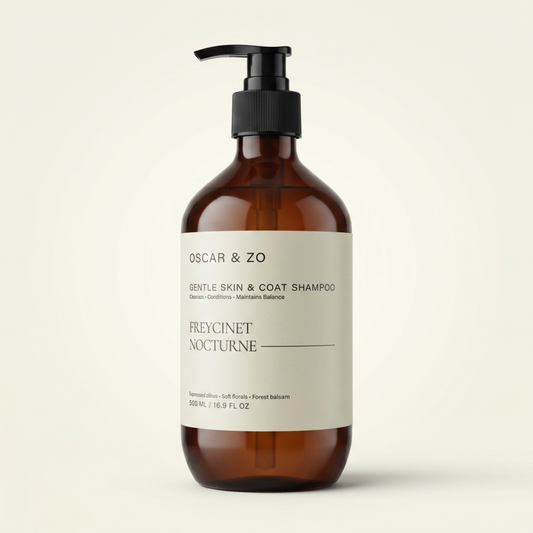
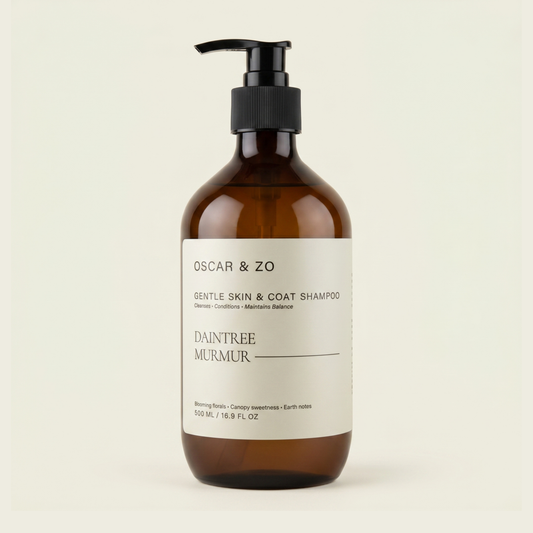
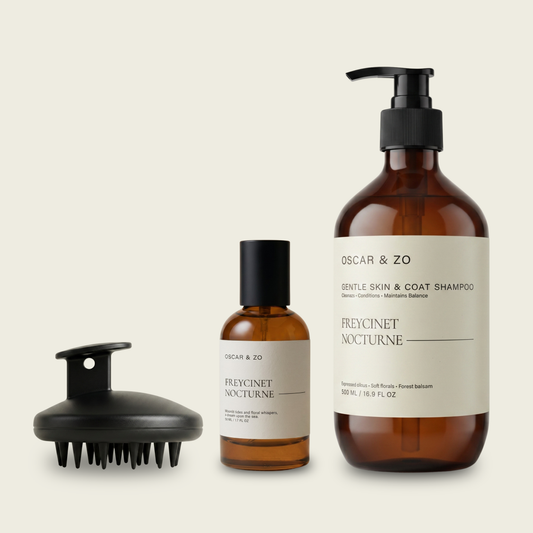
OSCAR & ZO Skin & Coat Shampoo is an option for everyday grooming. It’s thoughtfully crafted for sensitive skin and coats, cleansing without stripping and leaving the coat soft and fresh. Use it as part of routine coat care, not as a dandruff cure or a substitute for veterinary advice.
When to speak with your veterinarian
Arrange veterinary advice if flakes continue, become more noticeable or appear alongside persistent itching, redness, an unusual odour or visible discomfort. If the changes are significant or worsening, seek guidance promptly rather than waiting for your next routine grooming session.
A clear record can make the conversation more useful. Share when the flakes began, where you’ve noticed them, whether they come and go, and any related changes in comfort or coat. You don’t need to identify the cause first. If you’re choosing a gentle option for everyday bathing, explore OSCAR & ZO Skin & Coat Shampoo as part of a considered grooming routine.
Gentle dog dandruff care with a considered shampoo routine
A bathing routine works best when it suits your dog, rather than being adjusted in response to every visible flake. Keep the experience calm and practical: choose a suitable moment, follow the shampoo directions and let your dog’s comfort guide you. If flakes persist or appear alongside other changes, ask your veterinarian before trying to manage them through grooming alone.
Where shampoo fits in everyday coat care
Bathing is one part of looking after a coat, alongside gentle brushing and regular observation. More washing isn’t necessarily more helpful, and shampoo shouldn’t be used to diagnose or treat the reason flakes have appeared. Avoid vigorous scrubbing or repeated baths to remove them. If washing seems to make your dog uncomfortable or the skin looks irritated, stop and seek veterinary advice.
If you’re considering a shampoo for ordinary grooming, choose one intended for pets and use it according to its directions. Your veterinarian can offer guidance on what may suit your dog, particularly if skin changes are ongoing. This keeps routine coat care in its proper place while you seek advice about concerns that need more than grooming.
A gentle next step for Australian pet parents
A familiar, unhurried bath can be a small part of a thoughtful care routine. Make changes gradually, notice how your dog responds and avoid treating shampoo as a solution to unexplained flakes. If you’re concerned, let veterinary guidance shape the next step.
For dog dandruff that continues or comes with discomfort, leave the cause to your veterinarian to assess. If you’re simply choosing a shampoo for regular coat care, you’re welcome to explore the Skin & Coat Shampoo as one option for your routine.
Choose a gentle next step for your dog
Your dog’s skin care doesn’t need to become a complicated project. A steady, comfortable routine gives you space to notice what suits your dog and when a change might need professional guidance. Let comfort lead: keep grooming familiar, avoid rushing into repeated baths, and make room for your veterinarian’s advice if changes persist or cause concern.
Dog dandruff can be a reason to pay closer attention, but it doesn’t mean you need to solve everything at home. Small, thoughtful choices can make everyday care feel calmer for both of you. If you’re considering a shampoo as part of your dog’s regular grooming, explore OSCAR & ZO Skin & Coat Shampoo.
Take your time, follow your dog’s cues and seek advice whenever you’re unsure. Gentle, observant care is a reassuring place to begin.
Frequently Asked Questions
Can dog dandruff be contagious?
The flakes themselves don’t show whether the underlying cause could affect another animal. Dog dandruff may look similar to signs associated with parasites, and some parasite-related concerns may involve other pets. If another animal in your household develops skin or coat changes, or you suspect a parasite, speak with your veterinarian. They can assess the animals and advise on what to do next.
Can puppies get dandruff?
Flakes can be noticed on dogs of different ages, including puppies, but age alone doesn’t explain why they’re present. Notice whether your puppy is scratching, has redness or seems uncomfortable, and whether the coat looks different from usual. If these changes persist or you’re concerned, discuss them with your veterinarian. A clear note of what you’ve observed can help guide that conversation.
Can a dog’s diet cause dandruff?
Don’t assume your dog’s diet is the cause simply because you’ve noticed flakes. Skin and coat changes can have several possible explanations, and a veterinarian can consider your dog’s health history alongside any other signs. If you’re concerned about food or nutrition, raise it with your veterinary professional before changing meals or adding supplements. They can help you decide whether diet is relevant to your dog’s situation.
Can I use human dandruff shampoo on my dog?
Don’t assume a shampoo made for people is suitable for your dog. Dogs have different skin-care needs, so ask your veterinarian for guidance if flakes persist or appear alongside other changes. Keep routine grooming separate from treatment: a pet shampoo may be used for ordinary coat care according to its directions, but it can’t identify or address an underlying cause.
Can bathing make dog dandruff worse?
Repeated or harsh washing may not be a helpful response to unexplained flakes. Keep baths gentle, follow the pet shampoo’s directions and avoid bathing simply to try to remove every visible speck. There’s no single bathing frequency that suits every dog. If flakes persist, worsen or come with discomfort, ask your veterinarian for advice before making a significant change to your dog’s grooming routine.
Should I brush my dog when they have dandruff?
Gentle brushing may help you see how your dog’s coat looks, but don’t scrape at the skin or force flakes away. Use a light touch and pause if your dog seems uncomfortable or the skin looks irritated. Brushing isn’t a treatment for the cause of flakes. Ask your veterinarian for guidance if they persist, your dog is markedly itchy or you notice other concerning changes.