


Deodorising Dog Shampoo for Australian Dogs and Their Coat Needs

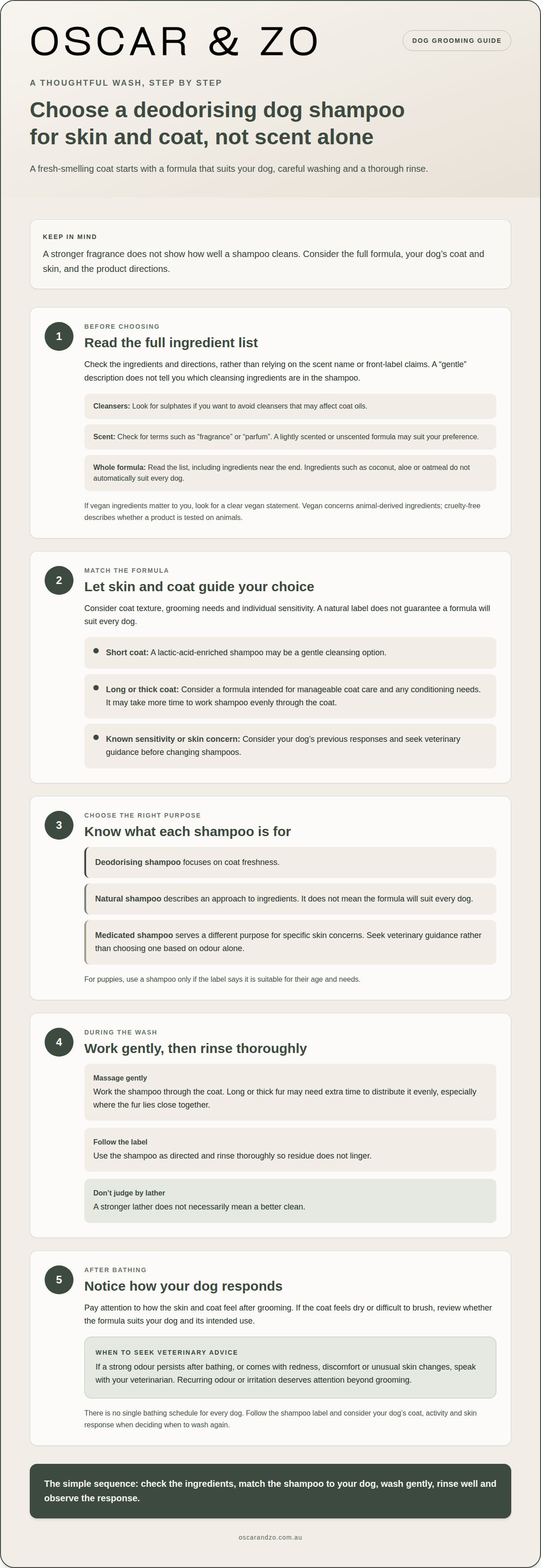
What if a fresh-smelling coat began with a thoughtful wash, not a stronger fragrance? Choosing deodorising dog shampoo in Australia means looking beyond scent: match the formula to your dog’s skin and coat, consider its ingredients, and rinse thoroughly to leave the coat clean and comfortable.
It’s natural to want a shampoo that leaves your dog smelling fresh while keeping bath time gentle. The right choice depends on your dog’s individual needs: a formula that suits one coat may not suit another.
This guide explains what to look for in shampoo ingredients, how to choose for different skin and coat needs, and why a thorough rinse matters. You’ll also learn how natural deodorisers may support freshness, and when persistent odour or skin irritation is a reason to speak with your veterinarian.
Key Takeaways
- Read the ingredient list and consider whether the formula suits your preferences, including your approach to vegan ingredients.
- Match shampoo to your dog’s skin and coat needs, rather than choosing by scent alone.
- Notice how fragrance and cleansing ingredients may affect the feel of your dog’s coat.
- Work shampoo through the coat gently, then rinse thoroughly so residue doesn’t linger.
- Explore how natural deodorisers may support a fresh-feeling coat, and consider Oscar & Zo Skin & Coat Shampoo as part of your grooming routine.
Checking dog shampoo ingredients
Start with the full ingredient list, not the scent name or front-label claims. The ingredients show what the shampoo contains, while the directions explain how to use it. Read the packaging before bathing, especially if your dog has reacted to a grooming product before.
Look at the cleansing ingredients and consider what you’d prefer to avoid. Some people choose to avoid sulfates because they may affect the coat’s natural oils. A “gentle” description alone doesn’t tell you which cleansing ingredients the shampoo contains.
- Scan for sulfates if you want to avoid cleansers that may affect coat oils.
- Check fragrance terms if you prefer a lightly scented or unscented formula.
- Read the whole list, including ingredients near the end, rather than relying on one highlighted extract.
Ingredient names can look unfamiliar, so consider the full formula. Coconut, aloe and oatmeal are found in some dog shampoos, but their presence doesn’t automatically make a product right for every dog. Coat type, skin response and the directions still matter.
If vegan ingredients matter to you, look for a clear vegan statement and review the ingredient list. Beeswax, honey, lanolin and milk-derived ingredients are examples of animal-derived components. Vegan and cruelty-free aren’t interchangeable: cruelty-free describes a product that isn’t tested on animals, while vegan concerns whether animal-derived ingredients are used.
Packaging can be part of your decision, too. Natural dog shampoos often use recyclable bottles or biodegradable containers. Check the packaging itself for disposal guidance, since the bottle material and local recycling options affect what can be recycled.
There isn’t one bathing schedule that suits every dog. Follow the shampoo label and consider your dog’s coat, activity and skin response when deciding when to wash again.
If a strong odour persists after bathing, or comes with redness, discomfort or unusual skin changes, seek veterinary advice. Shampoo can freshen a coat, but recurring odour or irritation deserves attention beyond grooming.
Flora & Fauna advises choosing natural dog shampoo with ingredients such as coconut, aloe, oatmeal and almond. Treat this as one consideration when comparing ingredient lists, alongside your preferences and your dog’s response to the formula.
Choosing shampoo for a dog's skin and coat needs
Choose shampoo for your dog’s skin and coat, not scent alone. The right fit depends on coat texture, grooming needs and individual sensitivity.
Natural shampoo for skin and coat care
A natural label describes an approach to ingredients, but it doesn’t guarantee a formula will suit every dog. Consider the full product and its intended use. A shampoo’s suitability depends on the individual formula and your dog’s response. Check the label and observe how your dog responds after grooming.
For Australian pet parents choosing deodorising dog shampoo, skin comfort matters as much as coat freshness. Consider how your dog responds to grooming products and whether they have a known sensitivity. If your dog has an existing skin concern, seek veterinary guidance before changing shampoos.
Coat cleansing and skin conditioning
Consider what the formula is intended to do during and after washing. A short-haired dog may suit a lactic-acid-enriched shampoo as a gentle cleansing option. For longer coats, choose a formula intended for manageable coat care, and follow its directions rather than assuming a stronger lather means a better clean.
Coat texture affects brushing and drying, so consider conditioning needs, too. A thick or long coat may take more time to work shampoo through evenly. Choose a formula suited to the coat, massage gently, and pay extra attention where fur lies close together. Rinse thoroughly according to the label.
Let your dog’s coat guide the routine. If it feels dry or difficult to brush after washing, review the product’s intended use and whether it suits your dog’s coat. Avoid adding products without considering how they work together.
Comparing shampoo types
Deodorising shampoo focuses on coat freshness; natural shampoo describes an ingredient approach, and medicated shampoo serves a different purpose. Medicated formulas address specific skin concerns, so seek veterinary guidance rather than choosing one based on odour alone. For routine grooming, match the shampoo to your dog’s coat and the label’s directions.
Are deodorising shampoos safe for puppies and dogs with sensitive skin? Use a shampoo only if its label says it is suitable for your dog’s age and needs. For irritation or a diagnosed skin concern, consult your veterinarian before bathing.
Natural ingredients don’t automatically make a shampoo suitable for a puppy or sensitive dog. Check the intended age range and directions, and consider your dog’s previous responses to grooming products. If you’re unsure whether a routine shampoo suits a particular skin concern, veterinary advice can help you choose the next step.
Avoiding synthetic fragrances and harsh chemicals
A strong scent can make a shampoo seem effective, but fragrance alone doesn’t show how well it cleans. Start with the ingredient list and directions. If the label uses terms such as “fragrance” or “parfum”, look more closely at the product’s scent and your dog’s individual needs.
Some formulas use botanical aromas, including chamomile or lavender. “Natural” doesn’t automatically mean suitable for every dog, and a strong botanical scent may not suit a pet sensitive to fragrance. Choose a lightly scented or unscented option if you prefer less added scent, and observe your dog’s skin and coat after bathing.
Sulfates are one cleansing ingredient worth recognising. Their effects can vary depending on the formula and how it is used. Check the ingredient list rather than relying on front-label descriptions such as “gentle” or “deodorising”. A clear list makes it easier to see what the shampoo contains.
- Look for “fragrance” or “parfum” if you want to assess added scent.
- Consider whether botanical aromas, such as chamomile, suit your dog.
- Check for sulfates if you’re concerned about the cleansing ingredients in a shampoo.
Keep your dog’s past reactions in mind. If a shampoo left the coat feeling dry or your dog developed irritation after using a particular product, avoid repeating that choice. Introduce a different formula carefully, follow its directions, and discontinue use if irritation occurs.
Don’t try to cover a persistent smell with stronger fragrance. A clean coat should feel comfortable, not heavily scented. If you use a separate pet fragrance, follow its label and apply it as directed. Fragrance is an optional finishing touch, not a substitute for washing or understanding why an odour keeps returning.
For a considered choice, compare the ingredient list, scent description and intended use. A shampoo with a mild aroma and a clearly described formula may suit your preferences better than one chosen for a strong smell alone. If odour persists after washing or appears alongside skin changes, seek veterinary advice rather than layering on more scented products.
Lather and rinsing
A calm wash starts before shampoo touches the coat. Brush out loose hair and tangles first, especially on a long-haired dog, so water and lather can reach the coat evenly. Use lukewarm water, wet the coat thoroughly, and follow the shampoo label for how much to apply. The right amount depends on the product and your dog’s coat.
Work in a steady order, such as from the shoulders towards the tail, then the legs and belly. Massage shampoo through the coat with your fingertips rather than scrubbing with your nails. Take care around the eyes, ears and mouth. If your dog becomes unsettled, pause and help them feel secure before continuing.
- Wet the coat fully, moving the fur aside so water reaches the skin.
- Apply shampoo as directed on the label, avoiding the face.
- Massage gently through the neck, body, legs and paws.
- Rinse from the shoulders down, lifting the coat to reach underneath.
- Check dense areas, such as the chest, belly and behind the ears.
A thick coat can hold shampoo beneath the outer layer, even when the surface looks rinsed. Part the fur with your fingers and let clean water reach the roots. Continue until the water runs clear and the coat no longer feels slippery. Pay particular attention to feathering, folds and the spaces between toes.
Residue left behind may make the coat feel coated or uncomfortable. A thorough rinse is more useful than adding extra shampoo or repeating a wash without need. Follow any specific rinsing directions on the label, and keep water and lather away from your dog’s eyes and ear canals throughout the bath.
After rinsing, gently squeeze excess water from the coat and towel dry. Avoid vigorous rubbing, which can tangle longer hair. If your dog dislikes bathing, prepare the towel and bathing area beforehand, then use a calm voice and short pauses. A patient, consistent routine makes each step easier to manage.
Before finishing, run your hands over the coat to check for leftover lather, particularly beneath the belly and around the legs. If you find any, rinse that area again. Careful application and complete rinsing help leave the coat clean without relying on extra product.
Natural deodorisers for itchy skin and freshness
Natural deodorisers aim to leave a coat smelling fresh without relying on fragrance alone. Oatmeal is another ingredient used in dog shampoos for itchy-feeling skin. Some formulas combine oatmeal with natural deodorisers, bringing together coat freshness and a gentle-feeling bathing routine. The ingredients and their intended use still matter more than the word “natural” on the label.
Think of freshness as a clean coat, not a strong scent covering an odour. A suitable shampoo should cleanse everyday grime and leave a comfortable, fresh-smelling finish. Natural deodorisers can contribute to that finish, while botanical aromas such as chamomile, sweet orange or rosewood add scent. A dog sensitive to fragrance may suit a less-scented formula.
Oatmeal may appeal if your dog’s skin feels itchy, but shampoo isn’t a substitute for veterinary care. Check the complete formula and follow its directions. If your dog has irritated skin, ask your veterinarian before trying a new scented product. Discontinue use if irritation occurs.
Use this simple selection check:
- Choose a formula intended for dogs, with ingredients suited to your pet.
- Look for oatmeal if you want an ingredient associated with soothing itchy-feeling skin.
- Consider how much scent the formula leaves, especially if your dog reacts to fragrance.
After bathing, assess the coat once it’s dry. It should feel comfortable to touch, not coated with residue or overwhelmed by scent. If odour returns quickly, adding fragrance may only mask it. Consider whether the coat needs another gentle wash, or whether the odour persists despite cleaning.
Natural ingredients can still affect individual dogs differently. For example, a botanical aroma that seems subtle to you may be strong for a scent-sensitive pet. Introduce a new shampoo thoughtfully, use it as directed, and notice changes in your dog’s comfort or coat. Avoid layering scented products over a shampoo if the combined fragrance seems too strong.
The key takeaway is to choose for both needs: freshness and skin comfort. Oatmeal and natural deodorisers may suit a gentle grooming routine, but the full formula, scent level and your dog’s response guide the decision. For a considered approach to everyday coat freshness, explore gentle coat-care options.
Oscar & Zo: Skin & Coat Shampoo
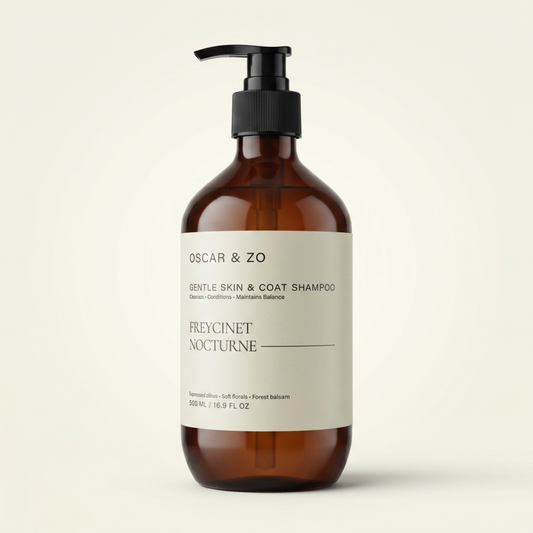
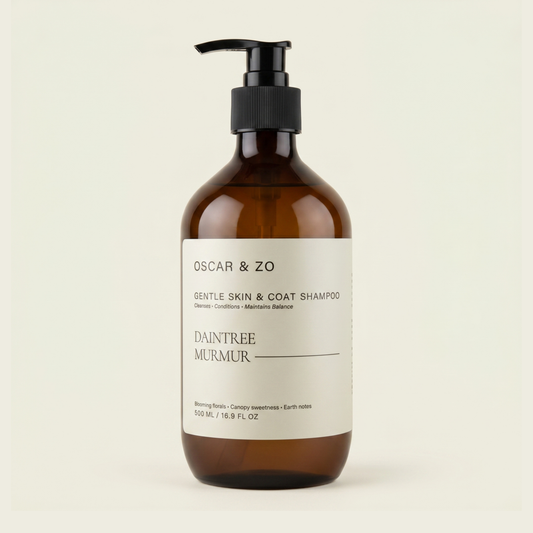
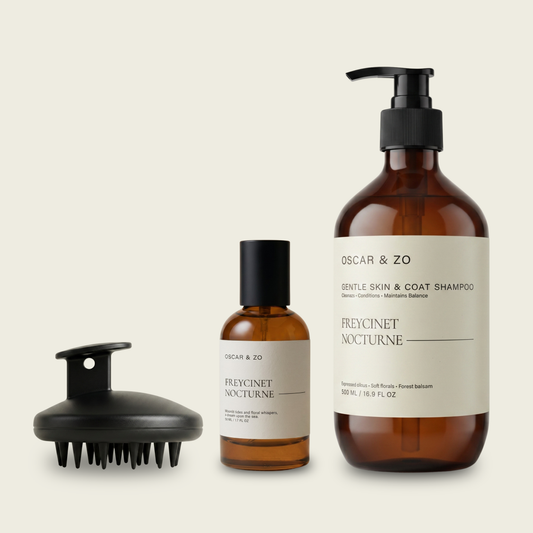
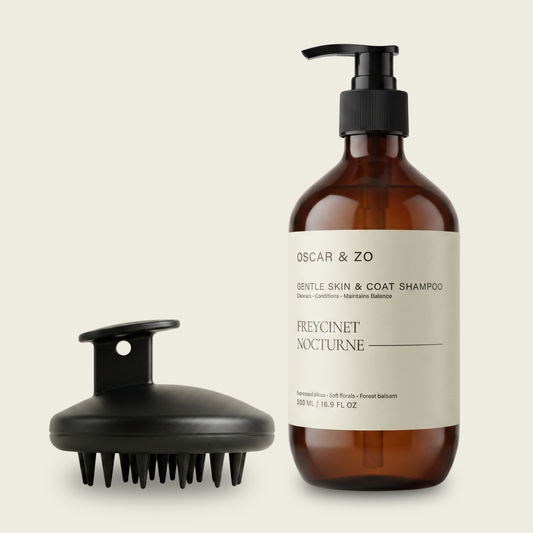
Oscar & Zo Skin & Coat Shampoo is a thoughtful option for regular dog washing and coat care. If your veterinarian recommends it, you can use it to cleanse your dog’s coat as part of a calm, considered grooming routine.
A shampoo can help with everyday coat freshness, but the right choice still depends on your dog. Consider coat length, texture and how your dog responds to grooming products. If your dog has a known sensitivity, read the label carefully and follow its directions. For persistent irritation or odour, seek veterinary advice rather than relying on grooming products alone.
Make each wash simple and consistent. Wet the coat thoroughly, apply the shampoo as directed, and work it gently through the coat. Avoid the eyes and ears, and rinse until no lather remains. A careful rinse helps remove shampoo residue, while a towel and gentle drying make the routine more comfortable afterwards. Use the product according to its label rather than increasing the amount or frequency on your own.
Notice how your dog’s coat feels once dry. Check whether it feels clean and soft, and whether your dog seems comfortable after bathing. These observations can help you decide whether the shampoo fits your routine. If you notice a change in your dog’s skin or comfort, pause use and seek veterinary advice where appropriate.
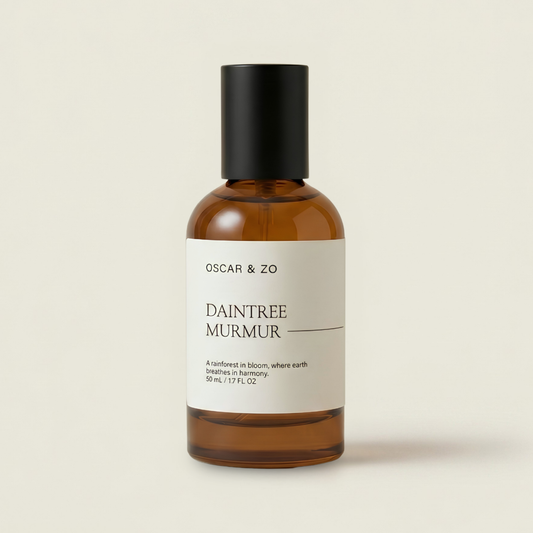
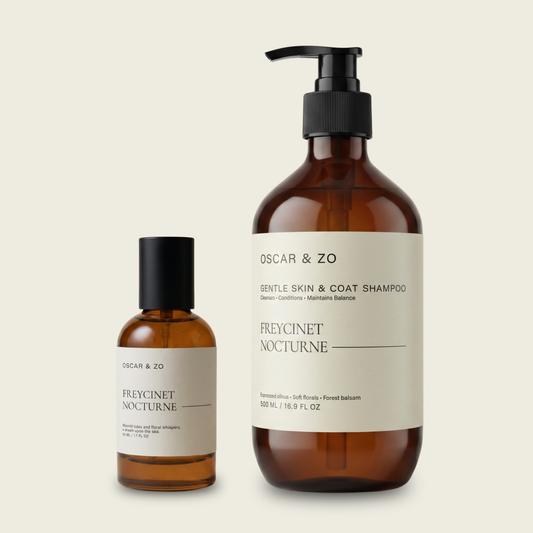
Freshness is one part of grooming. Shampoo is for washing, while a separate pet fragrance is an optional way to refresh the coat between washes. Keep the distinction clear, and use each grooming product only as intended. Oscar & Zo also offers Grooming Tools and Ritual Sets to help organise regular coat care. Choose only what suits your dog and your routine.
Skin & Coat Shampoo may suit pet parents whose veterinarian has recommended it as part of an everyday grooming ritual. It isn’t a substitute for veterinary care when odour or skin concerns persist. Keeping the wash gentle, following the label and rinsing thoroughly are practical ways to make shampoo part of thoughtful coat care.
If you’d like to know more about Oscar & Zo Skin & Coat Shampoo, you’re welcome to contact Oscar & Zo.
Make freshness part of a gentle routine
Choosing deodorising dog shampoo in Australia is a chance to shape a grooming routine around your dog, not just the scent you want after bath time. Keep the experience calm and consistent, and notice how your dog responds to each wash. Their comfort, coat feel and willingness to settle can help guide your grooming choices.
A fresh-smelling coat is one part of everyday care. If odour keeps returning or comes with skin changes, seek veterinary advice rather than relying on fragrance to cover it. For ordinary bathing, follow the shampoo directions and give your dog time to settle into the routine. Small, steady steps can make coat care easier for both of you.
If you’re considering what may suit your dog’s grooming routine, contact Oscar & Zo with your questions. A thoughtful choice can help make bath time a gentler part of caring for your dog.
Oscar & Zo for your dog’s grooming routine
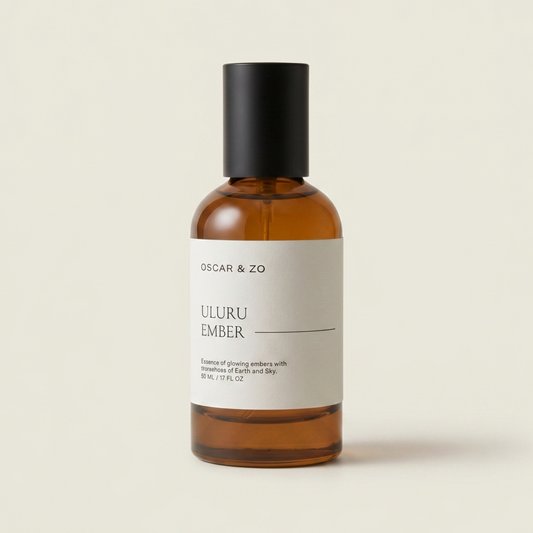
Oscar & Zo offers Skin & Coat Shampoo, Pet Fragrance, Ritual Sets, Grooming Tools and a Discovery Set. If you’re considering deodorising dog shampoo in Australia, explore these options as part of your dog’s grooming routine.
Turn to Oscar & Zo when you’re ready to choose a shampoo or look at complementary grooming products.
Frequently Asked Questions
What ingredients should I look for in a deodorising dog shampoo?
Look for a dog-specific shampoo with ingredients that suit your dog’s coat and grooming needs. Coconut, aloe and oatmeal are found in some formulas. Check the full ingredient list rather than choosing based on a highlighted extract alone. If your dog has reacted to an ingredient before, use that information when comparing labels. A fresh scent is a preference, not a measure of suitability.
What risks or ingredients should I avoid when choosing dog shampoo?
Avoid shampoos with ingredients your dog has reacted to before, and be cautious with strong fragrances if scent seems to bother them. Sulfates can strip natural oils from the coat. Choose a shampoo made for dogs, not human hair products or household cleaners. If you’re considering a medicated shampoo or your dog has an ongoing skin concern, ask your veterinarian which product is appropriate.
What are the best deodorising dog shampoos available in Australia?
Choose a deodorising shampoo based on your dog’s coat and skin needs, rather than scent alone. The Essential Dog Chamomile, Sweet Orange & Rosewood Dog Shampoo is described as containing natural deodorisers and oatmeal. Check the ingredient list to see whether it suits your dog.
Which Australian dog shampoos are best for removing strong or persistent odours?
A shampoo may freshen the coat, but don’t mask a persistent odour with stronger fragrance. If the smell remains after bathing or comes with redness, discomfort or unusual skin changes, seek veterinary advice.