


Brush for Golden Retriever Shedding: Which Type Should You Choose

For a Golden Retriever’s double coat, the best brush for Golden Retriever shedding is usually an undercoat rake to lift loose undercoat, paired with a slicker or pin brush for surface hair and tangles. A rubber curry comb can help lift loose hair from the surface, but it won’t replace a tool designed to reach the undercoat.
It’s easy to assume one brush will do everything, especially when shedding hair gathers around the home. A gentle, regular routine is more useful: brush about once a week as a baseline, then increase brushing during heavier seasonal shedding if your dog’s coat needs it.
This guide compares brush types for a Golden Retriever’s coat, explains how often to use them and what to consider when comparing options in Australia. You’ll also find a simple guide to matching a tool to your dog’s coat, comfort and grooming routine.
Key Takeaways
- Choose tools by what your Golden Retriever’s coat needs: undercoat removal, surface grooming or gentle detangling.
- Use an undercoat rake carefully, as incorrect technique can damage the coat.
- Adjust brushing frequency to your dog’s shedding and coat condition, with extra attention during seasonal coat changes.
- Look for slicker brush pins long enough to reach through a thick coat, and clean the brush as fur collects.
Golden Retriever double coat and undercoat
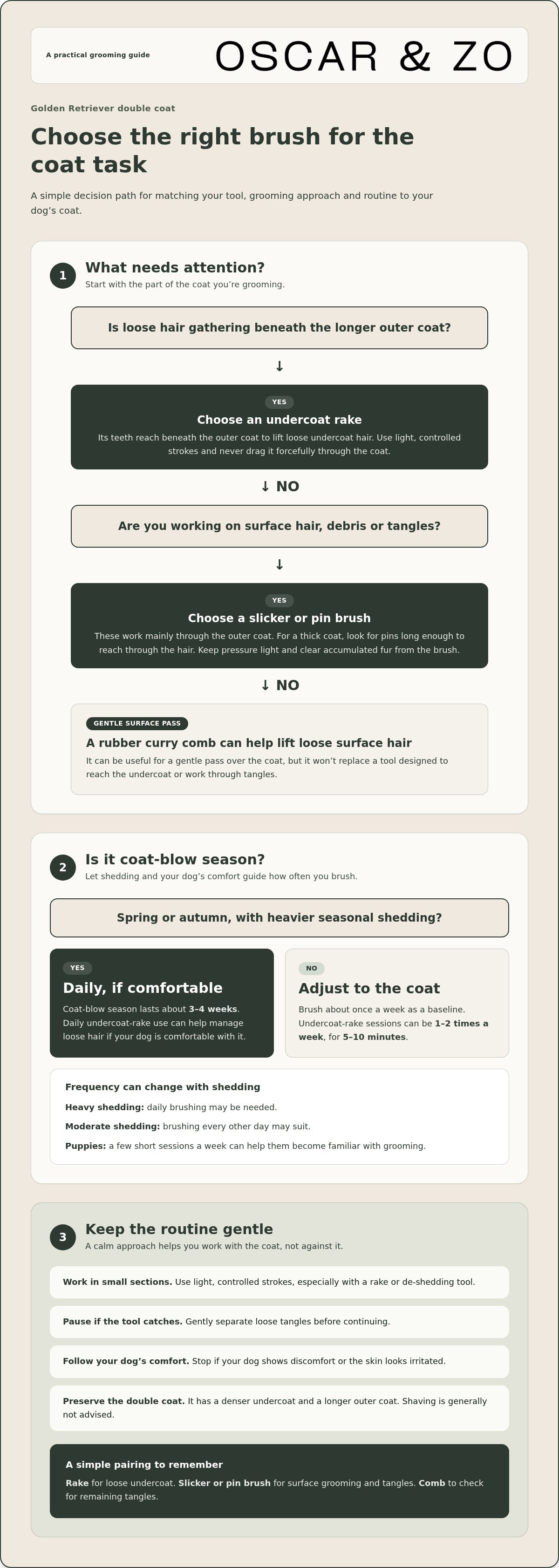
For a Golden Retriever’s double coat, use an undercoat rake or de-shedding tool to lift loose undercoat hair, with a slicker or pin brush for surface grooming. Choose a tool that suits the coat and use it gently, as incorrect rake use can damage the undercoat.
Undercoat Rakes
An undercoat rake is designed to reach loose hair beneath the longer outer coat. A double-row rake can help remove undercoat hair, while a slicker or pin brush is better suited to surface grooming and tangles. The rake’s deeper reach is useful during seasonal shedding, but careful handling matters.
Golden Retrievers usually shed twice a year as they renew their coats. During spring and fall coat-blow season, which lasts about 3-4 weeks, use the undercoat rake daily if your dog is comfortable with it. Outside these heavier periods, undercoat-rake sessions of 1-2 times per week, lasting 5-10 minutes, can help manage loose hair.
De-shedding Tools
De-shedding tools are designed to gather loose hair from a double coat, including the undercoat. A shedding blade is another option for removing loose hair, while an undercoat rake has teeth made to reach beneath the outer coat. Neither tool should be dragged forcefully through the coat.
Work in small sections with light, controlled strokes. Pause if the tool catches or your dog shows discomfort, then gently separate loose tangles before continuing. This careful approach keeps grooming calmer and limits unnecessary pressure on the coat and skin.
A Golden Retriever’s double coat has two layers: a denser undercoat and a longer outer coat. The coat provides insulation and helps protect the skin from sun and environmental damage. Shaving is generally not advised, so focus on removing loose hair while preserving both layers.
| Tool | Best suited to | How it differs | Use with care |
|---|---|---|---|
| Undercoat rake | Loose undercoat hair | Reaches beneath the outer coat | Incorrect use can damage the undercoat |
| Shedding blade | Loose hair removal | Another de-shedding option | Use controlled strokes |
| Slicker or pin brush | Surface grooming and tangles | Works mainly through the outer coat | Brush gently |
For a positive grooming routine, begin with a gentle brush-through, then use the rake only where loose undercoat gathers. Choose the undercoat rake for deeper seasonal shedding and a slicker or pin brush for routine surface care.
Double-coated dogs may shed seasonally or all year round, depending on the breed. Undercoat rakes and de-shedding tools can help manage a Golden Retriever’s undercoat while preserving its natural protection.
What About Rubber Brushes and Curry Combs?
A slicker brush can lift loose hair, debris and small mats from a Golden Retriever’s coat. Its flexible pins call for a lighter touch than an ordinary brush, especially around delicate areas.
Are slicker brushes, undercoat rakes, or de-shedding tools safest for Golden Retrievers? No single tool is safest for every dog and coat. Use a slicker with light pressure for surface hair and tangles, and reserve an undercoat rake for loose undercoat, using it carefully.
Can de-shedding tools damage a Golden Retriever’s coat or irritate the skin? Incorrect undercoat-rake use can damage the undercoat. Work gently, avoid forceful pulling, and stop if your dog shows discomfort or the skin looks irritated.
Compare slicker brushes by design rather than relying on a product name alone:
- Flexible, bendable pins: These can help lift shedding hair, debris and mats from the coat.
- Pins of different lengths: Varied pin lengths can help reach through thicker coat areas.
- Long pins: A thick-coated Golden Retriever may need longer pins to work through the coat.
- Long bristles: A long-bristle slicker is a useful option for surface grooming.
- Slicker paired with a steel comb: The brush works through the coat, while a comb can help check for remaining tangles.
These are design differences, not a ranking of five named models. Flexible pins can gather loose hair and debris, but pressing too firmly may pull at the coat. Begin with short, gentle strokes and introduce the brush gradually if your dog is unfamiliar with it. Clear accumulated fur from the pins as you groom.
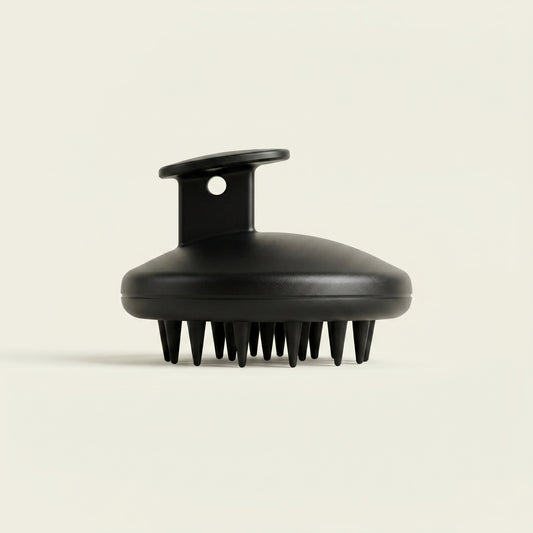
Rubber brushes and curry combs feel different from pin-based slickers. They can suit a gentle pass over the coat’s surface, but don’t replace a brush designed to work through tangles. Choose a slicker to lift surface debris or loose hair, then use a comb to check areas where the coat catches.
Focus on pin length, flexibility and how comfortably you can hold the brush. A thick coat may need longer pins to reach through the hair, while flexible pins can help gather shedding hair and debris. Clear fur from the brush as it collects, and keep strokes light to avoid unnecessary pulling.
For a calm comparison, match each tool to its purpose. Use a slicker for surface grooming, a rake for loose undercoat and a comb to check for tangles. Introduce unfamiliar brushes gradually, and let your dog’s comfort guide each session.
Recommended brushing frequency and session length
For a Golden Retriever, brush at least once a week to help manage loose hair and prevent tangles. Adjust the routine to your dog’s coat and shedding: heavy shedders may need daily brushing, while moderate shedders can be brushed every other day. During spring and autumn coat-blow season, daily brushing can help keep loose undercoat manageable.
Coat type is a useful guide, but your dog’s current coat condition matters too. Long-haired dogs can collect dirt and develop knots, so daily brushing is recommended for long coats. A Golden Retriever puppy can be brushed a few times a week to become familiar with grooming before its adult coat develops.
- Regular maintenance: Brush a Golden Retriever once a week, then increase frequency if tangles or loose hair build up.
- Moderate shedding: Brush every other day to keep the coat tidy between heavier shedding periods.
- Heavy shedding: Brush daily, using gentle strokes and pausing when your dog needs a break.
- Undercoat care: Use an undercoat rake for 1-2 sessions per week, lasting 5-10 minutes per dog.
- Seasonal coat blow: During spring and fall, daily undercoat-rake use is recommended for the 3-4-week shedding period.
Keep sessions short and purposeful. A daily pin-brush pass can take about 30 seconds, while an undercoat-rake session needs more time. Work in small sections, such as the chest, sides and hindquarters, and follow the direction of hair growth. If a brush catches, pause and gently loosen the tangle rather than pulling.
Make grooming a predictable part of the routine. Choose a calm spot, let your dog settle, and begin with an easy area such as the shoulders. A rubber brush can be used for a gentle surface pass, but it doesn’t replace a brush suited to longer hair or undercoat. Finish each session by checking for remaining tangles and removing gathered hair from the brush.
Bathing also has a place in coat care. Golden Retrievers are generally bathed monthly, or as needed when particularly dirty. Weekly washing can be excessive and may dry the skin and coat. During a bath, use shampoo intended for dogs and rinse thoroughly; avoid turning routine brushing into frequent washing.
Let the coat guide your next session: visible loose hair, tangles and dirt are useful cues. Increase brushing during heavier shedding, then return to weekly maintenance as the coat settles. If your dog resists a particular tool, switch to a gentler brush and build the routine gradually.
Brush design, grip, and self-cleaning features
A Golden Retriever’s thick coat calls for brush pins long enough to reach through the hair. A slicker that only skims the surface may leave loose fur beneath the outer coat. Check the pin length against your dog’s coat, then choose a brush that feels steady in your hand. A secure grip helps you guide each stroke gently and keep pressure even.
Brush shape also affects control. A broad head can cover larger areas, while a smaller head may be easier to guide around the legs and chest. Move in the direction of hair growth with short strokes rather than pressing hard. If the pins catch, stop and ease the brush free instead of pulling through a tangle.
Fur gathers between slicker pins as you groom, so pause to clean the brush when it fills. Remove the collected hair before continuing. Clear pins can move through the coat more smoothly than a brush packed with fur, and regular cleaning makes it easier to notice when the tool catches a tangle.
Some brushes include a fur-ejector button. If your Furminator model has this feature, use it over a bin to release collected fur, then check the pins for remaining strands. The button can make clearing the brush more convenient, but it doesn’t replace checking the teeth or cleaning the tool after grooming. Follow the care directions supplied with the brush.
- Pin length: Choose longer slicker pins for a thick coat, so they can reach further into the hair.
- Grip: Hold the brush comfortably and guide it without pressing firmly against the skin.
- Cleaning: Remove fur when it builds between the pins, then inspect the brush before the next stroke.
- Fur ejector: Use a button-equipped design to release gathered hair, then check for strands left behind.
For a long-haired dog, inspect the brush head as you work across the coat. Hair can collect quickly around the pins, especially during shedding. Clearing it before moving to another area helps you keep strokes consistent and notice knots sooner. Keep the brush dry and store it where the pins won’t press against other grooming tools.
A self-cleaning feature can save a step, while pin length and a comfortable grip affect each stroke. Choose a brush that reaches into the coat, feels manageable in your hand and is easy to clear. Regular cleaning helps keep the tool ready for the next grooming session.
Recommended brush products and prices
The best brush for Golden Retriever shedding depends on the grooming task, not the product name alone. An undercoat rake reaches loose hair beneath the outer coat. A slicker works through surface hair, debris and small tangles, while a pin brush offers a gentler surface pass. Compare tools by purpose before choosing one for your dog.
For a practical comparison, look beyond the price tag to features that affect everyday use. Consider pin length, flexibility, handle comfort and how easily you can clear collected fur. These details help you assess whether a brush suits your Golden Retriever’s coat and your grooming routine.
- Undercoat rake: Choose this design when loose hair gathers beneath the outer coat. Move it carefully through small sections without forcing it through knots.
- Slicker brush: Look for pins long enough to work through a thick coat. Use light strokes and clear fur from the pins as it collects.
- Pin brush: Consider this for gentle surface grooming, especially while your dog settles into regular brushing.
- Steel comb: Use a comb to check for remaining tangles after brushing. It can help you find areas needing slower, more careful attention.
Before choosing, hold the handle as you would during a grooming session. A comfortable grip helps you guide the brush steadily around the chest, sides and hindquarters. Check whether the head is manageable in narrower areas and whether its pins suit your dog’s coat depth.
The best brush for Golden Retriever shedding is one that suits your dog’s coat and your routine. If loose undercoat is the main concern, prioritise a rake. For surface hair or small tangles, compare slicker designs. A cleaning button may release gathered fur, but check the pins afterwards for strands left behind.
Think of each tool as having a distinct role rather than expecting one brush to do everything. Compare reach, comfort, cleaning and purpose. Then choose a tool you can use gently and consistently, with your Golden Retriever’s comfort guiding each session.
For double-coated dogs, the guide recommends a double row rake and shedding blade to remove loose hair from the coat and undercoat. Heavy-shedding, long-haired Golden Retrievers are recommended daily brushing. Professional grooming is recommended every 8 to 12 weeks, depending on shedding volume.
Check a Golden Retriever’s paws once a month and trim as needed. The page’s grooming caddy recommends Monthly use of veterinary ear cleaning solution. For wiry-haired dogs, start with the pin side of a double-sided brush to gently remove tangles, then use the bristle side to lift loose surface hair.
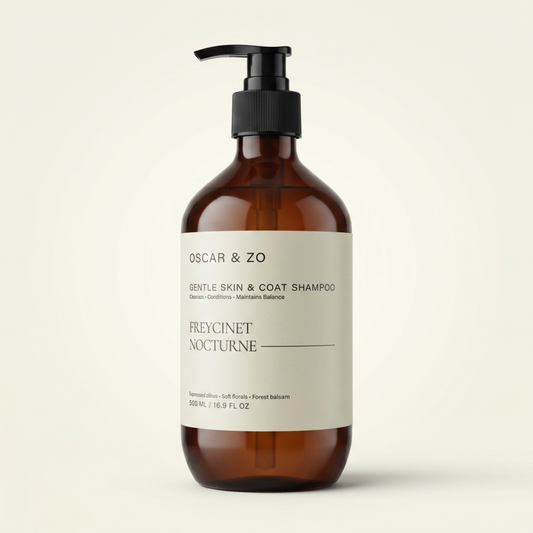
Oscar & Zo: Skin & Coat Shampoo
Oscar & Zo’s Skin & Coat Shampoo can be part of your Golden Retriever’s bathing routine alongside regular brushing. Use it when your dog needs a bath, rinse thoroughly and let the coat dry before brushing it again. It complements grooming, but doesn’t replace a suitable brush for lifting loose hair or working through tangles.
For a calm, considered routine, pair gentle brushing with bathing when needed. Explore Oscar & Zo’s grooming essentials to find options for your dog’s everyday care.
For more information, visit oscarandzo.com.au.
Make grooming a calm part of your day
The best brush for Golden Retriever shedding is one you can use comfortably and consistently, with care for your dog’s coat and response. Treat each grooming session as a small check-in: notice what your dog enjoys, where they feel sensitive and what helps them settle. That awareness can shape a considered routine rather than a hurried one.
Around brushing, Oscar & Zo’s Skin & Coat Shampoo, Pet Fragrance and Ritual Sets offer options for everyday pet care. Choose what suits your routine, keeping your Golden Retriever’s comfort at the centre.
If you’d like to explore Oscar & Zo’s care essentials, visit Oscar & Zo. A gentle, steady approach can make coat care a welcome moment you share.
Frequently asked questions
What is a slicker dog brush?
A slicker brush has a flat or slightly curved head covered with fine wire pins. On a Golden Retriever, it can lift surface loose hair and debris and help separate small tangles. Use short, light strokes rather than pressing the pins into the skin. If the coat catches, pause and loosen the area by hand before brushing again.
Which brushes are best for removing loose undercoat from Golden Retrievers?
An undercoat rake or de-shedding tool is designed to reach loose hair beneath the outer coat. Choose a rake that moves through the coat without snagging, and use careful strokes on one small area at a time. A slicker can help with surface hair and tangles, but serves a different purpose from a deeper-reaching undercoat tool.
What are the best-rated Golden Retriever shedding brushes available in Australia?
Choose by design rather than relying on a star rating alone: a long-pin slicker can suit surface grooming, while an undercoat rake targets loose hair beneath the topcoat. Check that the brush feels comfortable to hold and its pins suit your dog’s coat depth. Introduce a new tool gradually, then watch your dog’s response during the first sessions.
How much do Golden Retriever grooming brushes cost in Australia?
Brush costs depend on the tool type and design, such as pin length, handle shape or a fur-release feature. A simple pin brush and a deeper-reaching rake serve different purposes, so compare like with like rather than choosing by price alone. Consider which tool you’ll use regularly and whether it feels comfortable to guide through your dog’s coat.
How often should you brush a Golden Retriever during shedding season?
During spring and fall coat-blow season, use an undercoat rake daily for the period when your Golden Retriever is shedding heavily. Coat-blow commonly lasts about 3-4 weeks. Keep strokes controlled, and reduce rake use as loose undercoat decreases. Between seasonal peaks, let visible loose hair and developing tangles guide whether your dog needs an extra brushing session.
How do you brush a Golden Retriever to reduce shedding without damaging the coat?
Start with dry, untangled hair and work through one small section at a time, following the direction of growth. Keep pressure light, especially with a slicker or rake, and don’t force a tool through a knot. Lift the coat gently to see where hair is gathering, then stop if brushing causes discomfort. Never shave the coat to manage shedding.
What brush should you use on a Golden Retriever puppy or sensitive skin?
Begin puppy grooming with a soft, gentle brush and brief, positive handling. Puppies can start getting used to brushing at around 8 weeks, with sessions a few times a week. For sensitive skin, avoid firm pressure and sharp, forceful strokes. If brushing causes ongoing discomfort or the skin appears irritated, stop and speak with your veterinarian about suitable grooming care.