



Bonding with your dog through grooming: a gentle guide

What if the most meaningful part of grooming is knowing when to pause? Bonding with your dog grooming can feel less like a chore when care is guided by your dog’s comfort, not a need to finish quickly.
It’s understandable if brushing, bathing or handling paws feels awkward at first. Dogs can show they’re comfortable in subtle ways, and signs of unease can be easy to miss. Building trust doesn’t mean asking your dog to accept every touch. It means offering patience, predictability and room to step away.
This guide explains how to make grooming a calmer, more connected part of everyday life. You’ll learn to notice your dog’s comfort signals, introduce handling gently and shape a simple ritual around what suits them. From a brief brush to bath time, small moments of choice can help care feel more settled for both of you. The aim isn’t perfect cooperation. It’s a shared routine where your dog feels heard and closeness grows at their pace.
Key Takeaways
- Grooming can support bonding with your dog when their comfort and choice guide each interaction.
- Notice your dog’s signals and preferences to understand which kinds of touch feel welcome.
- Make grooming more predictable by preparing a calm space, moving slowly and offering pauses.
- Brushing, coat checks and bathing can each be a chance to connect, though your dog may respond differently to each.
- Keep sessions flexible and finish on a positive note. If your dog needs a break, return to grooming another time.
How grooming can become a bonding experience for your dog
Grooming doesn’t automatically bring you closer. A brush, bath or coat check is a bonding moment only if your dog feels safe enough to take part. If they’re tense or trying to move away, continuing just to finish the task may make the interaction less comfortable, even when your intentions are kind.
That doesn’t mean grooming has to be perfect to be worthwhile. A brief, calm interaction can offer more reassurance than a longer session that asks your dog to tolerate too much. The aim isn’t to turn every grooming task into affection. It’s to make care feel respectful, familiar and responsive to the dog in front of you.
What does bonding with your dog through grooming mean?
Bonding through grooming means building trust through calm, respectful care. Rather than simply completing a task, pay attention to how your dog responds, handle them gently and adjust when they need space. Bonding with your dog grooming is about creating this kind of shared experience, not expecting your dog to enjoy every touch or remain still throughout.
For example, let your dog approach the brush before using it, then try a few gentle strokes and pause. If they stay nearby or re-engage, you can continue at an easy pace. This small exchange gives you a chance to respond to each other. Familiar handling may help your dog anticipate what comes next, making routine care feel more settled.
Why the dog’s experience comes first
Dogs have individual preferences. One may settle during brushing but feel unsure about having their paws handled; another may enjoy a bath but need time to adjust to the sound of running water. A general overview of dog grooming describes its hygienic and cosmetic purposes, but the way you approach care also shapes how comfortable it feels for your dog.
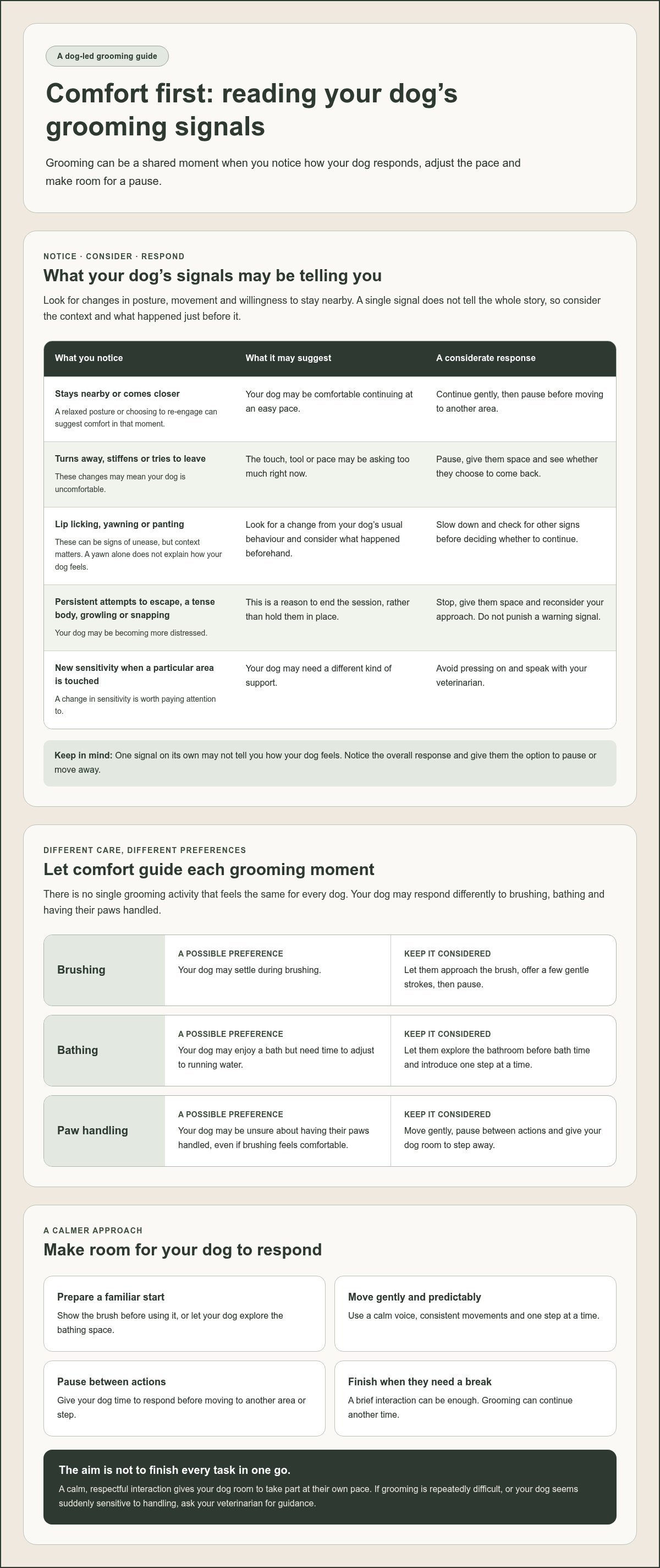
Notice your dog’s response, not just whether the task gets done. A dog who turns away, stiffens or tries to leave may be asking for a pause. A relaxed posture or choosing to come closer can suggest they’re comfortable in that moment, though no single signal tells the whole story. Give them space, then see whether they choose to re-engage.
Predictable handling can make care easier to understand: approach in a familiar way, use a gentle touch and pause before moving to another area. If your dog needs a break, stopping is a useful response, not a failure. Grooming alone can’t guarantee a stronger bond, but repeated experiences of being handled with patience and respect give trust room to grow.
How gentle grooming supports trust and communication
Grooming gives you a chance to notice how your dog responds to different kinds of touch, tools and movements. A familiar sequence, such as showing the brush before using it, can make the next step easier to anticipate. Keep your voice calm and your movements consistent, then pause between actions so your dog has time to respond.
Think of grooming as a conversation, not a test of obedience. Your dog’s willingness to stay nearby, move away or return can all help you understand what they’re comfortable with. A dog-led approach means adapting the pace and handling to your dog’s responses, without assuming they’ll enjoy every part or promising a particular result.
Reading your dog’s comfort signals during grooming
Watch for changes in posture, movement and willingness to remain near you. A dog who becomes still, turns away or repeatedly tries to leave may be uncomfortable. Lip licking, yawning or panting can also be signs of unease, but context matters. A yawn alone, for example, doesn’t tell you exactly how your dog feels.
Look for a change from your dog’s usual behaviour and consider what happened just before it. If discomfort continues or your dog tries to escape, stop the session and give them space. If a new sensitivity appears when you touch a particular area, avoid pressing on and speak with your veterinarian.
Making handling predictable and respectful
Let your dog approach the brush or bathing space at their own pace. Place the brush nearby and allow a sniff before lifting it, or let your dog explore the bathroom before bath time. Use gentle movements and introduce one step at a time. These small cues can make handling feel less sudden.
A brief interaction that ends while your dog is still comfortable can be more useful than forcing the task to completion. If they pull away, pause and reassess rather than holding them in place. Calmly touching the brush to their coat can be enough progress for one session.
There’s a difference between a moment’s hesitation and a dog who is becoming more distressed. A brief pause to investigate something unfamiliar may pass when you give them time. Persistent attempts to get away, a tense body, growling or snapping are reasons to end the session and reconsider your approach. Don’t punish a warning signal. If grooming is repeatedly difficult, or your dog seems suddenly sensitive to handling, ask your veterinarian for guidance.
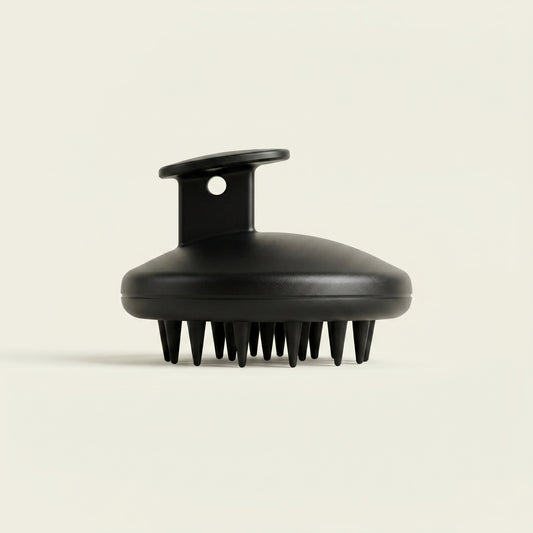
With bonding with your dog grooming, the value lies in responding thoughtfully, not completing every step in one go. If you’re choosing a brush or other grooming tools for your dog, select something suited to the care you’re practising and introduce it gradually. The tool supports the interaction; your dog’s comfort remains the guide.
Which grooming moments help your dog feel more connected?
There isn’t one grooming activity that creates closeness for every dog. One may enjoy the steady rhythm of brushing but feel unsure about water, while another may be relaxed in the bath and sensitive about having their paws handled. Treat each kind of care as a different interaction, and let your dog’s comfort guide what feels connecting for them.
For bonding with your dog grooming, the value lies in sharing an attentive moment, not completing every task or achieving a perfectly finished coat. A quiet coat check, a few gentle brush strokes or an unhurried bath can each offer a chance to notice what your dog welcomes.
Brushing and quiet coat-care moments
Brushing can feel calm and companionable when your dog is comfortable with the touch. Begin in an area where they already enjoy being stroked, and keep the brush light. If they lean away or move off, pause rather than following them with the brush.
You don’t need to finish the whole coat for the interaction to count. A few gentle strokes followed by a pause can help you learn whether your dog wants to continue. Focus on their response rather than a perfectly smooth result.
Coat checks as moments of attention
A brief coat check can be a quiet way to notice what’s normal for your dog. As you stroke or part the coat gently, you might notice a leaf caught in the fur or an area your dog doesn’t want touched. There’s no need to turn this into a medical assessment or search for problems. If you notice a change that concerns you, speak with your veterinarian rather than trying to diagnose it yourself.
Some dogs are happy to have their back touched but less comfortable around their ears, legs or tail. Let that preference shape the interaction. A calm check of one area can be enough for that moment.
Bathing as a shared care ritual
Bathing brings new sensations: water, sound, the feel of a wet coat and the space around the tub or shower. Keep the experience unhurried so you can notice how your dog responds at each stage. Allow time to approach the bathing space, and avoid rushing through steps if they seem uncertain.
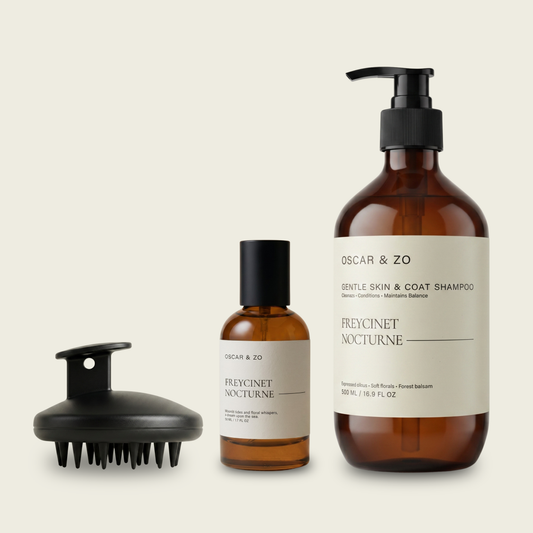
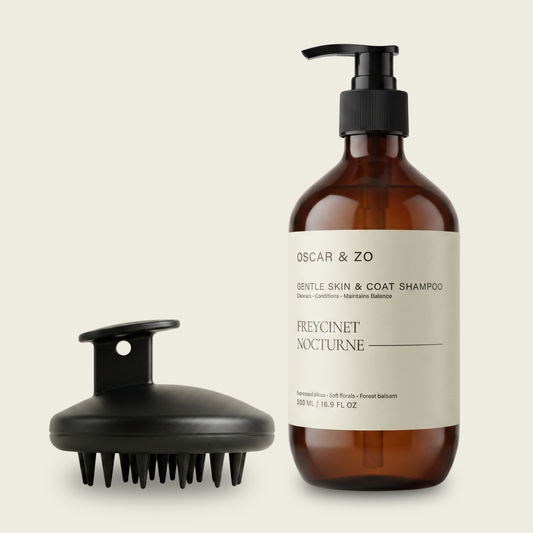
If shampoo is part of your dog’s bath, Oscar & Zo Skin & Coat Shampoo is thoughtfully crafted for sensitive skin and coats. It cleanses without stripping, leaving the coat soft and fresh. The shampoo can support the practical side of bathing, while the care you take with your dog remains central to the shared ritual.
None of these moments needs to outrank the others. Let your dog’s preferences, coat and comfort shape the care that suits them. A dog who enjoys brushing may need a gentler introduction to bathing, and that difference is useful information, not a setback. The best grooming moment is one where your dog has room to feel comfortable and understood.
How to make grooming calmer and more rewarding for your dog
A little preparation can make home grooming feel more settled. Choose a familiar, quiet space, allow your dog room to move away, and have the tools you need ready before inviting them over. This lets you focus on your dog rather than searching for a brush midway through.
A dog-led grooming sequence at home
Use this gentle sequence as a guide, not a checklist to complete at all costs. The aim of bonding with your dog grooming is to make care responsive to their comfort, so you can pause or stop at any point.
- Prepare the space. Set out familiar tools and make sure the area feels calm and uncluttered.
- Invite participation. Let your dog approach and explore the brush or grooming space without being brought over or held in place.
- Begin with an accepted touch. Try a brief stroke in an area your dog is comfortable having touched, then pause and observe.
- Adjust as you go. Continue gently if your dog remains settled. If they withdraw, stop, give them room or return to a more familiar kind of touch.
- Finish on a calm note. End while your dog is comfortable, with a quiet moment together rather than a rushed final step.
Use these principles as you work through each grooming task, adapting the steps to your dog’s comfort.
When grooming does not feel comfortable
Reluctance is information, not misbehaviour. If your dog turns away or leaves when you bring out a tool, don’t follow them and try to finish anyway. Put the tool aside and return to an easier, familiar interaction, such as a gentle stroke they usually welcome. You can try the grooming step another time.
Notice what changed just before your dog became unsettled. Perhaps the brush touched a sensitive area, the room was noisy or the next step felt too sudden. Adjusting one part of the experience can help you understand what your dog finds difficult, without asking them to push through discomfort.
If you notice signs of pain, a skin concern or distress that keeps returning, pause grooming and seek advice from your veterinarian. Some coat-care tasks may also need a different approach if your dog is uncomfortable. There’s no need to force a home session to completion.
Let your dog’s response set the pace. A few calm moments can be enough for today, and stopping early is a considerate choice. If you’re gathering supplies for a gentler routine, explore grooming essentials for home care and choose what suits the task and your dog.
Bring more connection into your dog's everyday grooming ritual
A grooming ritual doesn’t need to be elaborate to feel meaningful. A familiar place, gentle handling and a pace that suits your dog can turn ordinary care into a small moment of attention. Over time, you may notice which parts they accept readily and which call for more space or a different approach.
Create a ritual that suits your dog
Let your dog’s preferences shape the rhythm. Perhaps they settle beside you for a brief coat check after a walk but find a longer brushing session too much. Keep the setting and opening cues familiar, then follow their response rather than aiming for the same routine every time. Consistency can mean returning to a recognisable, comfortable start, not expecting an identical result.
This kind of attention can extend beyond grooming. The article about mindful everyday pet care offers a useful perspective on bringing more intention to the small routines you share. A calm greeting, a quiet pause or a few comfortable brush strokes can all become part of a caring daily rhythm.
Choose care essentials with intention
Suitable tools and shampoo can support the practical parts of a grooming ritual, but they don’t create trust on their own. Choose what fits the task and your dog’s comfort, and introduce each item at a pace they can manage. If your dog is unsure, put the tool away and return to an interaction they already find familiar.
For bath time, Oscar & Zo Skin & Coat Shampoo is thoughtfully crafted for sensitive skin and coats. It cleanses without stripping, leaving the coat soft and fresh. It can be one considered part of bathing, with your dog’s comfort and the way you handle the experience remaining central. The pet grooming set guide can also help you think about how care essentials fit together in a home routine.
There’s no need to make every grooming session a milestone. A calm start, a little care and a respectful finish are enough to make the moment feel more connected. If you’d like to bring thoughtful tools and bathing essentials into your routine, explore Oscar & Zo’s grooming essentials and find what feels suitable for you and your dog.
Let trust shape the next grooming moment
Your next step doesn’t need to be a complete grooming session. Choose one small moment that suits your dog, then let their response guide what happens next. The aim of bonding with your dog grooming is not to make every task effortless, but to create care that feels more thoughtful and respectful over time.
If a moment feels easy, you can build on it gradually. If your dog needs space, that pause is part of a considerate routine too. There’s no single pace to follow, only the one that allows your dog to feel comfortable and understood.
Oscar & Zo is an Australian-owned, vet-founded pet care brand, with grooming essentials designed to support considered care at home. If you’d like tools and bathing care for your routine, explore Oscar & Zo’s thoughtful grooming essentials.
Small moments of care can be a meaningful place to begin. Let your dog set the pace, and allow trust to grow one comfortable interaction at a time.
Frequently asked questions
Can grooming help you bond with your dog?
Yes, grooming can support bonding with your dog when it’s a comfortable, attentive experience. It gives you time to learn what your dog enjoys and how they respond to different kinds of care. Think of it as one part of your relationship, alongside play, walks and quiet company. If grooming feels difficult at first, begin with a type of touch your dog already welcomes.
Is it normal for my dog to dislike being groomed?
Yes, some dogs find particular parts of grooming uncomfortable or unfamiliar. Your dog might be content with a coat check but wary of a brush near their legs, or unsure of the bath area. Their response can reflect the specific task, setting or sensation. Avoid labelling reluctance as bad behaviour. If your dog’s discomfort is new or seems connected to pain, seek advice from your veterinarian.
How can I tell if my dog is enjoying grooming?
Look for signs that your dog is choosing to remain involved, such as approaching you again after a pause or settling into a position they can easily leave. Compare their posture and movement with what’s usual for them. A wagging tail alone doesn’t confirm enjoyment, as dogs communicate through several signals. Consider the whole interaction, including what your dog does before and after each touch.
What should I do if my dog walks away during grooming?
Let them leave without following or restraining them, then put the grooming tool aside. Give your dog a little space and return to something familiar, such as sitting together without handling. If they approach again, you can offer the brush for them to sniff, but there’s no need to restart grooming straight away. Their choice to walk away is useful information about what they need in that moment.
Can puppies bond with their owners through grooming?
Yes, gentle introductions can help a puppy become familiar with everyday handling while you learn their preferences. Keep early experiences simple, such as briefly touching an area they’re comfortable with or letting them investigate a brush. Pair the interaction with calm praise, then stop before they become unsettled. For handling that causes concern or discomfort, ask your veterinarian for guidance suited to your puppy.
Does grooming still help bonding if my dog needs breaks?
Yes. Breaks can be part of a considerate grooming experience because they give your dog space to move, reset or choose whether to return. You might complete a small amount of care, pause, then decide together whether to continue. Finishing before your dog becomes overwhelmed is worthwhile, even if the task is incomplete. Trust is not measured by how long your dog stays still.